THE CLASSIC COLLECTION✦Froth: A NovelCLASSIC FREE BOOKS
Froth: A Novel
Armando Palacio Valdés

THE CLASSIC COLLECTION · 1901
"The Fourth Estate, vol. 1" by Armando Palacio Valdés is a novel written in the late 19th century. This work primarily explores the dynamics of social class, societal expectations, and interpersonal relationships in a small town set on the Cantabrian coast. Central to the narrative are the lives of the Belinchon family and their interactions with other townsfolk, particularly the young couple Gonzalo and Cecilia, as they navigate the complexities of love and societal scrutiny. At the start of the novel, the stage is set in the town of Sarrio, where the local theatre serves as a backdrop for community happenings and social interactions. We are introduced to various characters, including the nervous Doña Paula and her daughters, Cecilia and Venturita, who are aware of the town's gossip surrounding them, particularly regarding their social standing and attire. The arrival of Gonzalo de las Cuevas, fresh from his studies in England, also adds new dynamics, as he holds an interest in Cecilia. As different characters exchange dialogues laden with subtext and social commentary, the initial chapters delve into themes of ambition, societal norms, and the contradictions rooted in class distinctions, effectively immersing the reader in the daily life of Sarrio and its inhabitants.
Introduction adapted from the source catalogue; source summaries may be automatically generated.
Free to read · English · 68,395 words · No account needed
MAKE TIME FOR A GOOD BOOK
On by default. Untick to stop anonymous reading totals. Each page counts after 10 seconds in view. How this works.
Anonymous counting is on unless you have switched it off.
This branch of Morana's business was exhibited in the shop by two pine wood cupboards, painted blue, with glass doors at each end of the counter. In these cupboards there was a fair show of caramels, spiral cakes, sugar cakes, almond cakes, madeleines, and above all the celebrated tablets, the renown of which must certainly have reached the ears of our readers, as it dates from remotest time. The secret of the magic composition of these tablets we have never been able to discover, but their fascination was irresistible, and, strange to say, it was based upon their extraordinary hardness. At the age when Morana's tablets are eaten, the chief thing is not that the sweets should be delicate, savory, and exquisite, but that they should last a long time. It was not easy to get the teeth into them at all, but once in this stick-jaw paste, the extrication from it presented a really difficult problem.
Allow me to offer a delicate tribute of affection and gratitude to these tablets which, from four to eight years of age, constituted the greatest joy of my existence.
It is perhaps to their sweet influence that the author of this book owes the optimistic spirit which, according to the critics, shines in his works.
Morana, daughter and successor of another Morana, who was dead, was a woman of forty years of age, of a pallid complexion, with gutta-percha plaisters on her temples for the severe pains in her head.
She married a Juan Chrysostom, who, according to Don Segis, the chaplain, did not take after his patron saint.
Nevertheless, when he administered corporal punishment to his wife, he seasoned it with rather a rare amount of learned talk.
"I who love this woman," he exclaimed, as he commenced operations--"I who love this woman like a wife, and not like a servant, according to the Apostle Paul's command--you have read the Apostle Saint Paul?--what right have you to read, you great ass!"
The wine was very good, one can almost say it was the only good thing in the place, and that was because it did not remain long in the bottle, for Don Roque, Don Segis, Don Benigno, Don Juan, "the old Salt," and Senor Anselmo, the cabinet-maker, took care to empty it. It was a white wine, strong and superior, and it went to one's head with alarming facility.
The customers of the shop left every night between eleven and twelve, rather stumbling in their gaits, but silent and quiet, which prevented any scandal. They sallied forth arm in arm, leaning one against the other, and they went along without saying a word, albeit with much puffing and blowing.
Your reading position is saved on this browser. Take it to another device with a library code. Reading pages adapt to text, rather than matching a printed edition.
Armando Palacio Valdés

Armando Palacio Valdés
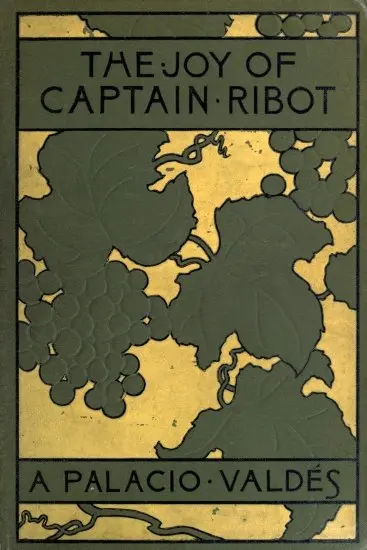
Armando Palacio Valdés
Armando Palacio Valdés
BEHIND THE BOOK
This eBook is for the use of anyone anywhere in the United States and most other parts of the world at no cost and with almost no restrictions whatsoever. You may copy it, give it away or re-use it under the terms of the Project Gutenberg License included with this eBook or online at www.gutenberg.org. If you are not located in the United States, you will have to check the laws of the country where you are located before using this eBook. Read the source licence.
The original source file, including credits and licence, is retained by this library. Request an original-format copy at no charge. Please include the book title and Project Gutenberg identifier #38393.
KEEP YOUR CURIOSITY GOING
Coulson Kernahan

Maurice Baring
Frances Wright
Cécile Tormay

Frederic Jesup Stimson

W. H. P. (William Henry Pope) Jarvis