THE CLASSIC COLLECTION✦Froth: A NovelCLASSIC FREE BOOKS
Froth: A Novel
Armando Palacio Valdés

THE CLASSIC COLLECTION · 1901
"The Fourth Estate, vol. 1" by Armando Palacio Valdés is a novel written in the late 19th century. This work primarily explores the dynamics of social class, societal expectations, and interpersonal relationships in a small town set on the Cantabrian coast. Central to the narrative are the lives of the Belinchon family and their interactions with other townsfolk, particularly the young couple Gonzalo and Cecilia, as they navigate the complexities of love and societal scrutiny. At the start of the novel, the stage is set in the town of Sarrio, where the local theatre serves as a backdrop for community happenings and social interactions. We are introduced to various characters, including the nervous Doña Paula and her daughters, Cecilia and Venturita, who are aware of the town's gossip surrounding them, particularly regarding their social standing and attire. The arrival of Gonzalo de las Cuevas, fresh from his studies in England, also adds new dynamics, as he holds an interest in Cecilia. As different characters exchange dialogues laden with subtext and social commentary, the initial chapters delve into themes of ambition, societal norms, and the contradictions rooted in class distinctions, effectively immersing the reader in the daily life of Sarrio and its inhabitants.
Introduction adapted from the source catalogue; source summaries may be automatically generated.
Free to read · English · 68,395 words · No account needed
MAKE TIME FOR A GOOD BOOK
On by default. Untick to stop anonymous reading totals. Each page counts after 10 seconds in view. How this works.
Anonymous counting is on unless you have switched it off.
Gonzalo had seen Don Rosendo, Don Mateo, Don Pedro Miranda, and the mayor the previous evening. But Gabino Maza, Don Feliciano Gomez, M. Delaunay, the French engineer, Alvaro Pena, Marin, Don Lorenzo, Don Agapito, and five or six other men whom he had not yet seen, were there, and they all rose to embrace the young man.
Don Pedro Miranda, whom we have already mentioned, was a man considerably past seventy, small and insignificant looking, with a smooth bald head, large solemn eyes, and of a retiring disposition.
He was the richest landowner in the place, and no titled person in the town could have been a better representative of the aristocracy, in virtue of his own descent from an old family of landowners.
To this distinction, however, he attached but small importance. He was an unpretentious, courteous man, who consorted with all his neighbors regardless of his superior rank; and he was always extremely particular not to allude to money, or to be in any wise dictatorial or antagonistic to anybody.
But if he entirely waived the respect due to his birth, he was very jealous of his rights as a landowner.
Never was there a proprietor more proprietary than Don Pedro Miranda.
The institutions of ancient as well as modern law, the universities, the army and navy, the political constitution, and religion itself had no other excuse for existence in his eyes but that of contributing, directly or indirectly, to the preservation of his seignorial rights.
The marvelous microcosm of the universe was designed for the support of his indisputable claim to the full possession of Praducos, a hamlet two miles from the town, and to his right of an annual fee of a hundred and fifty ducats in consideration of his title to the land at the mouth of the river.
This very clear sense of his rights engendered, from very excess of clearness, several disputes. A laborer would come to him and say:
"Senor, Joaquim the martin-breeder cut to-day some of the branches of your walnut tree which hung over into his garden."
"But the walnut tree was mine," exclaimed Don Pedro, crimson with rage
and surprise.
"Yes, senor, but it hung over into his garden."
"What! The fellow dared to touch anything which is mine--mine!"
Thereupon a little lawsuit ensued, which, of course, he lost. He lost dozens of these lawsuits in the course of his life, without growing any wiser on the subject.
Your reading position is saved on this browser. Take it to another device with a library code. Reading pages adapt to text, rather than matching a printed edition.
Armando Palacio Valdés

Armando Palacio Valdés
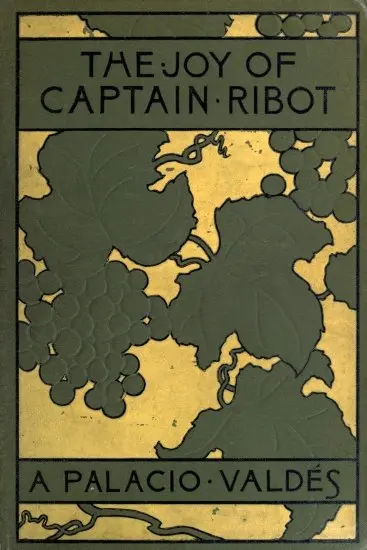
Armando Palacio Valdés
Armando Palacio Valdés
BEHIND THE BOOK
This eBook is for the use of anyone anywhere in the United States and most other parts of the world at no cost and with almost no restrictions whatsoever. You may copy it, give it away or re-use it under the terms of the Project Gutenberg License included with this eBook or online at www.gutenberg.org. If you are not located in the United States, you will have to check the laws of the country where you are located before using this eBook. Read the source licence.
The original source file, including credits and licence, is retained by this library. Request an original-format copy at no charge. Please include the book title and Project Gutenberg identifier #38393.
KEEP YOUR CURIOSITY GOING
Coulson Kernahan

Maurice Baring
Frances Wright
Cécile Tormay

Frederic Jesup Stimson

W. H. P. (William Henry Pope) Jarvis