
Cakes & Ale A Dissertation on Banquets Interspersed with Various Recipes, More or Less Original, and anecdotes, mainly veracious
Edward Spencer
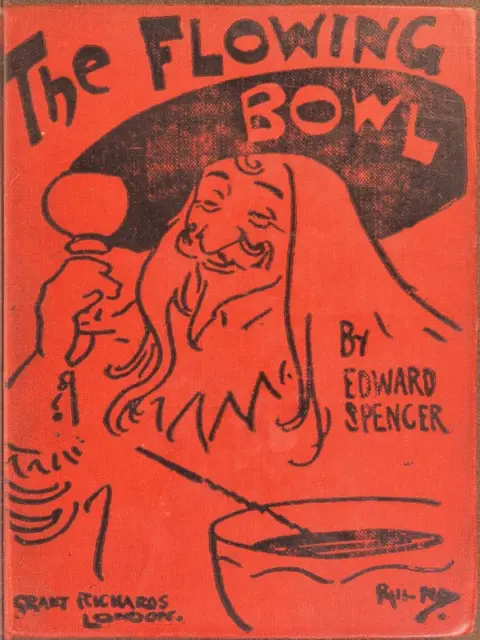
THE CLASSIC COLLECTION · 1903
"The Flowing Bowl" by Edward Spencer is a treatise on drinks of all kinds, written in the early 20th century. The work combines historical anecdotes and recipes, celebrating the culture of drinking through the ages. It reflects on how alcohol has been viewed and enjoyed in various societies, providing an insightful commentary on the connection between beverages and social practices. At the start of the book, the author presents his preface, humorously touching upon motivations for compiling this collection. He emphasizes the importance of moderation in drinking while revealing that much of the content is a compilation of quotes and anecdotes from classical and historical sources. The opening sets the stage for a discussion of drinking customs, opening with reflections on the ancient world's fondness for beverages and their habits, leading naturally into an exploration of notable figures and their drinking behaviors. Spencer's engaging style invites readers to consider the intersections of culture, morality, and enjoyment associated with drinking throughout history.
Introduction adapted from the source catalogue; source summaries may be automatically generated.
Free to read · English · 59,994 words · No account needed
MAKE TIME FOR A GOOD BOOK
On by default. Untick to stop anonymous reading totals. Each page counts after 10 seconds in view. How this works.
Anonymous counting is on unless you have switched it off.
Mix together one pint of raspberries, one pint of {236} strawberries, and one pint of white currants, all free from stalks; mash them well together, and then add two quarts of boiling water, and three quarters of a pound of sifted sugar. Let the mixture remain in a bowl all night—unless you make it early in the morning, when all day will do as well—then strain, and give it the dear children before their dinner.
Raspberry Squash.
Put into a large soda-water tumbler one tablespoonful of raspberry syrup, one tablespoonful of lemon squash (vide above) and a lump of ice; nearly fill the glass with soda-water, and ornament with a thin slice of lemon, and a few red and white raspberries. Drink through straws.
Raspberry Vinegar.
Take ripe, dry raspberries, and pour over them sufficient good malt vinegar to cover them; let them stand three or four days, stirring occasionally with a silver spoon. On the fourth day, strain through a sieve, and let them drain for some hours; measure the juice, and add an equal quantity of sifted sugar; put into a lined preserving pan, and let the mixture boil gently for five or six minutes. Carefully remove the scum as it rises. When cold, bottle, and cork well. A wine-glassful with a bottle of soda-water is a refreshing “cooler” in illness.
Elderberry Punch.
Put two bottles of elderberry wine, ⸺ hallo! what’s this? I turn to the recipe for Elder Wine, and read: “A quart of brandy thrown into the cask {237} when it is about to be sealed up will greatly improve the wine.” Then what sort of a temperance drink can Elderberry Punch be? No more on that head, in the name of St. Wilfrid.
I also read, in the work of reference from which I am quoting, under the same heading, “Temperance Drinks,” that:—
“Many of the British wines, mixed with an equal quantity of water, with a little ice, make very cool and refreshing drinks.” Very, very likely. But can there be wine without fermentation? And are the total abstainers, not content with drinking alcoholic gingerade and stone ginger-beer, getting the wedge in still further. Forbid it!
Cold Spring-water
is a most excellent drink, and according to so great an authority as Sir Henry Thompson, not only the cheapest drink in the world but the best. For my own poor part I prefer milk-punch. And as the Scotchman said, I have “tried baith.”
Absinthe, 115.
Ale, Brasenose, 59 ;
brewing of, 52, 53, 70 ;
cock, 41, 42 ;
cup, see cup ;
flip, see flip ;
mulled, 55 ;
posset, see posset ;
rum and, see rum ;
sangaree, see sangaree.
Almond comfy, 234 ;
punch, see punch.
Anchovy toast, 204.
Anisette, 191.
Apple Jack sour, see sour.
Apricock wine, 34.
Your reading position is saved on this browser. Take it to another device with a library code. Reading pages adapt to text, rather than matching a printed edition.
BEHIND THE BOOK
This eBook is for the use of anyone anywhere in the United States and most other parts of the world at no cost and with almost no restrictions whatsoever. You may copy it, give it away or re-use it under the terms of the Project Gutenberg License included with this eBook or online at www.gutenberg.org. If you are not located in the United States, you will have to check the laws of the country where you are located before using this eBook. Read the source licence.
The original source file, including credits and licence, is retained by this library. Request an original-format copy at no charge. Please include the book title and Project Gutenberg identifier #57179.
KEEP YOUR CURIOSITY GOING
Cécile Tormay

Moritz Busch
John L. Ransom
Frances Wright
Cécile Tormay

Mabel Potter Daggett