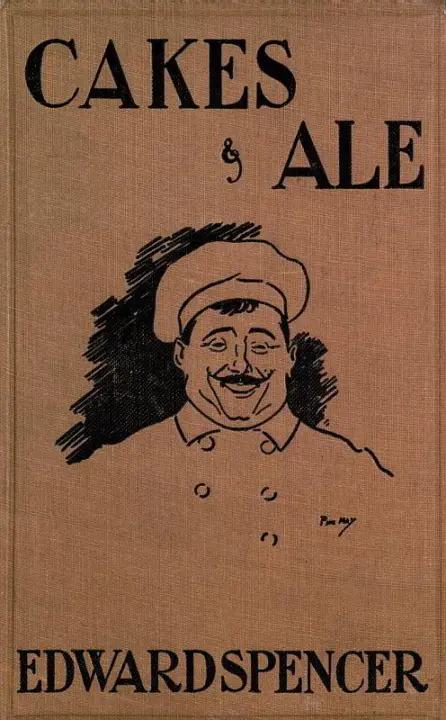
Cakes & Ale A Dissertation on Banquets Interspersed with Various Recipes, More or Less Original, and anecdotes, mainly veracious
Edward Spencer
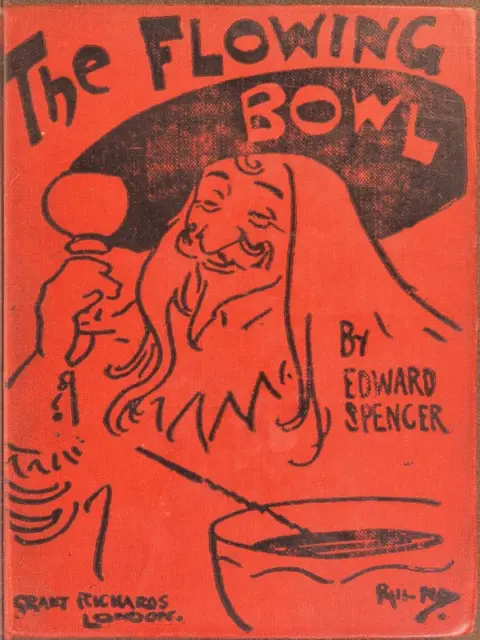
THE CLASSIC COLLECTION · 1903
"The Flowing Bowl" by Edward Spencer is a treatise on drinks of all kinds, written in the early 20th century. The work combines historical anecdotes and recipes, celebrating the culture of drinking through the ages. It reflects on how alcohol has been viewed and enjoyed in various societies, providing an insightful commentary on the connection between beverages and social practices. At the start of the book, the author presents his preface, humorously touching upon motivations for compiling this collection. He emphasizes the importance of moderation in drinking while revealing that much of the content is a compilation of quotes and anecdotes from classical and historical sources. The opening sets the stage for a discussion of drinking customs, opening with reflections on the ancient world's fondness for beverages and their habits, leading naturally into an exploration of notable figures and their drinking behaviors. Spencer's engaging style invites readers to consider the intersections of culture, morality, and enjoyment associated with drinking throughout history.
Introduction adapted from the source catalogue; source summaries may be automatically generated.
Free to read · English · 59,994 words · No account needed
MAKE TIME FOR A GOOD BOOK
On by default. Untick to stop anonymous reading totals. Each page counts after 10 seconds in view. How this works.
Anonymous counting is on unless you have switched it off.
At the next Sandown Park race-meeting I met the whisky agent, who, I forgot to mention before, was a bit of a stammerer.
“And wh-wh-wh-what,” he asked, “d’you think of that wh-wh-wh-wh-whisky?”
Stammering is occasionally to be caught.
“I think,” was my reply, “it’s the d-d-d-dashedest m-m-m-muck I ever
t-t-t-t-tasted.”
“Wh-wh-what’s the m-m-m-matter with it?”
“It f-f-f-fizzes like g-g-g-ginger p-p-p-pop.”
“My d-d-dear sir,” he protested, “that is no dr-dr-drawback. That’s the p-p-p-peat-r-r-reek.”
Peat-reek or no, that whisky was not used for household purposes-not even for the Christmas pudding; but was kept for the special benefit of such police-constables, Inland Revenue officers, process-servers, tax-gatherers, book agents, and retailers of certain winners, as might call around, with a thirst in them.
Strange whisky reminds me of the American story of the proprietor of a spirit-store in Arizona, who found the ordinary brand of “Rye” was not sufficiently attractive to his customers. So he fitted together a blend of his own, consisting of {124} essence of ginger, capsicums, croton oil, snuff, carbolic acid, pain-killer, turpentine, and a little very young and very potent spirit distilled from old junk. He placed a bottle of this on the counter, and the first customer who came along helped himself to a tumblerful, and, taking it “straight,” swallowed it at a gulp.
As soon as he had got his second wind, he gasped out: “That’s the best doggoned whisky I’ve sampled in this yer camp. Sonny, guess you’ve fixed me up to rights. It’s like swallerin’ a circ’lar saw and pullin’ it up again. So long.”
And with the tears pouring down his cheeks, and holding on to his diaphragm with both hands, he staggered into the open. The saloon-keeper watched him from the doorway, until he had passed the second block, and rounded the corner; and returned to his counter and his bottles, with the pious exclamation: “The Lord be praised.! He hasn’t died in our parish!”
No chapter on strange drinks would be complete without the following story, which, I confess at the outset, is one of the most venerable of “chestnuts.” It appeared in the Sporting Times four-and-twenty years ago, and I will not affirm that it was strictly original even then. It has since been translated into every known language; but it is just possible that some of the rising generation may not have heard it.
A well-dressed gentleman entered a chemist’s shop one morning,
evidently in a violent hurry.
“Can you make me up a dose of castor-oil?”
“Certainly, sir,” said the dispenser, with a bow. {125}
Your reading position is saved on this browser. Take it to another device with a library code. Reading pages adapt to text, rather than matching a printed edition.
BEHIND THE BOOK
This eBook is for the use of anyone anywhere in the United States and most other parts of the world at no cost and with almost no restrictions whatsoever. You may copy it, give it away or re-use it under the terms of the Project Gutenberg License included with this eBook or online at www.gutenberg.org. If you are not located in the United States, you will have to check the laws of the country where you are located before using this eBook. Read the source licence.
The original source file, including credits and licence, is retained by this library. Request an original-format copy at no charge. Please include the book title and Project Gutenberg identifier #57179.
KEEP YOUR CURIOSITY GOING
Cécile Tormay

Moritz Busch
John L. Ransom
Frances Wright
Cécile Tormay

Mabel Potter Daggett