THE CLASSIC COLLECTION✦My diaries, being a personal narrative of events 1888-1914, Part 2 (1900-1914)CLASSIC FREE BOOKS
My diaries, being a personal narrative of events 1888-1914, Part 2 (1900-1914)
Wilfrid Scawen Blunt
THE CLASSIC COLLECTION · 1882
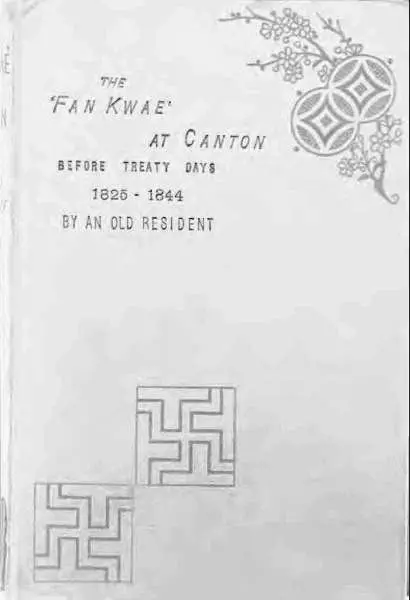
"The 'Fan Kwae' at Canton Before Treaty Days 1825-1844" by William C. Hunter is a historical account written in the late 19th century. The book explores the unique conditions of foreign traders in Canton, China, prior to the major treaties that altered these dynamics. It delves into the lives of foreign merchants and their interactions with local Chinese society, providing insights into an era marked by stark cultural contrasts and emerging global trade networks. The opening of the book serves as an introduction to the foreign community in Canton, illustrating the restrictions placed on foreign presence and trade by the Chinese government. Hunter reflects on the landscape of the Canton River and its bustling environment, filled with ships and diverse cultures, creating a vivid picture of the unique position of foreign residents. Through anecdotes and observations about the traders aboard the ship 'Citizen,' the narrative sets the stage for a deeper exploration of the complex relationships established between "foreign barbarians" and the local Chinese populace amidst rigid regulations and cultural barriers.
Introduction adapted from the source catalogue; source summaries may be automatically generated.
Free to read · English · 46,220 words · No account needed
MAKE TIME FOR A GOOD BOOK
On by default. Untick to stop anonymous reading totals. Each page counts after 10 seconds in view. How this works.
Anonymous counting is on unless you have switched it off.
[32] Known as 'Sycee,' which means literally 'fine silk.'
[33] 10 cash = 1 candareen, 10 candareen = 1 mace, 10 mace = 1 tael.
[34] Bar gold, Sycee silver, chopped dollars.
[35] The Chinese called these boats 'scrambling dragons' and 'fast
crabs.'
[36] A chest contained 1 picul = 133-1/3 pounds.
[37] Often so called in official language.
[38] The 'Omega' belonged to Dent & Co.
[39] The 'Governor Findlay' to Jardine, Matheson, & Co.
[40] All opium vessels carried Shroffs.
[41] The Chinese character which represents 'day' is literally 'sun.'
[42] When a Chinese takes leave, he says, 'Kaou-tsze' ('I inform you of
taking leave').
[43] The 'Colonel Young' belonged to Jardine, Matheson, & Co., as well
as the 'Fairy.'
[44] The 'Harriet' belonged to Jardine, Matheson, & Co.
[45] Literally 'great wind,' not those destructive storms which occur but once in three or four years, unroof houses and tear ships to pieces; they are called Teĕt-kuy, 'iron whirlwinds.'
[46] Country ships and coasters carried Manila men--Portuguese of Bombay or Macao--as helmsmen; they hove the lead, &c., and were called 'Sea-cunnies.'
[47] Strangling is by means of a wooden cross driven into the ground to which the prisoner's neck and outstretched arms are secured. A more ghastly and ignominious death than beheading.
[48] Called the Praya Grande, temporarily destroyed by the taiphoon of
1875.
[49] The Fragrant Hill.
[50] 'Cumsha' means 'a present.'
[51] A catty is 1-1/3 pounds English.
[52] The Imperial Commissioner.
[53] A subordinate officer of the chief magistrate's department.
[54] The currency being taels, mace, candareens, and cash.
[55] 'Flowery flag,' the United States.
[56] Presents to the captains and officers.
[57] Buddha.
[58] A very common exclamation on any occasion.
[59] The late Sir James Matheson was the reputed founder of the foreign press in China (The Canton Register); but it was an open question whether it was he or Mr. Wood. I contributed to that paper (translations from Chinese) when started; but in the consequent daily intercourse with Wood, he never hinted that he was not its sole founder. If my memory serves me Sir James was at the time on a trip up the coast. Nevertheless there is but one 'old Canton' who can decide the point, the present Sir Alexander Matheson.
[60] Confucius.
[61] Kung-Ming, a celebrated warrior of the third century A.D.
[62] Celebrated gardens, near Canton, visited by foreigners.
[63] 'Fan-Kwae,' foreign devils.
[64] The offspring of European Spaniards and natives.
[65] The privilege was 140 piculs weight.
[66] Public office.
[67] Equivalent to Excellency.
[68] At Macao, 1841.
[69] Whole dollars were so called put up in red paper--a neat way of
paying small sums.
[70] 'Eaten them.'
[71] The resident physician of the foreign community, apart from the Honourable East India Co. He was from Philadelphia.
[72] An old Chinese fort so called, east of the Factories.
Your reading position is saved on this browser. Take it to another device with a library code. Reading pages adapt to text, rather than matching a printed edition.
BEHIND THE BOOK
This eBook is for the use of anyone anywhere in the United States and most other parts of the world at no cost and with almost no restrictions whatsoever. You may copy it, give it away or re-use it under the terms of the Project Gutenberg License included with this eBook or online at www.gutenberg.org. If you are not located in the United States, you will have to check the laws of the country where you are located before using this eBook. Read the source licence.
The original source file, including credits and licence, is retained by this library. Request an original-format copy at no charge. Please include the book title and Project Gutenberg identifier #42685.
KEEP YOUR CURIOSITY GOING
Wilfrid Scawen Blunt
Wilfrid Scawen Blunt

E. W. (Edgar Watson) Howe
Cécile Tormay

Moritz Busch
John L. Ransom