THE CLASSIC COLLECTION✦My diaries, being a personal narrative of events 1888-1914, Part 2 (1900-1914)CLASSIC FREE BOOKS
My diaries, being a personal narrative of events 1888-1914, Part 2 (1900-1914)
Wilfrid Scawen Blunt
THE CLASSIC COLLECTION · 1882
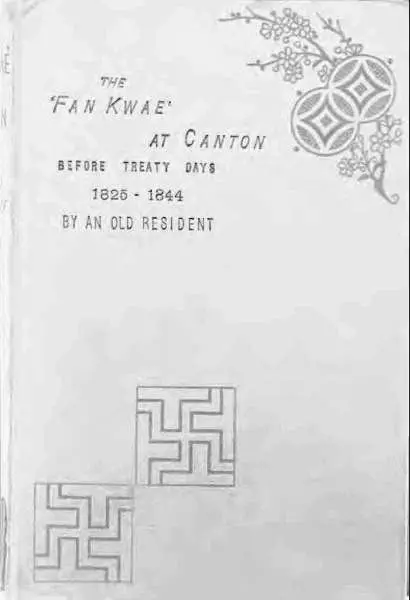
"The 'Fan Kwae' at Canton Before Treaty Days 1825-1844" by William C. Hunter is a historical account written in the late 19th century. The book explores the unique conditions of foreign traders in Canton, China, prior to the major treaties that altered these dynamics. It delves into the lives of foreign merchants and their interactions with local Chinese society, providing insights into an era marked by stark cultural contrasts and emerging global trade networks. The opening of the book serves as an introduction to the foreign community in Canton, illustrating the restrictions placed on foreign presence and trade by the Chinese government. Hunter reflects on the landscape of the Canton River and its bustling environment, filled with ships and diverse cultures, creating a vivid picture of the unique position of foreign residents. Through anecdotes and observations about the traders aboard the ship 'Citizen,' the narrative sets the stage for a deeper exploration of the complex relationships established between "foreign barbarians" and the local Chinese populace amidst rigid regulations and cultural barriers.
Introduction adapted from the source catalogue; source summaries may be automatically generated.
Free to read · English · 46,220 words · No account needed
MAKE TIME FOR A GOOD BOOK
On by default. Untick to stop anonymous reading totals. Each page counts after 10 seconds in view. How this works.
Anonymous counting is on unless you have switched it off.
[1] Viz., 'The Huntress,' 'Beaver,' 'Europa,' 'America,' 'Maria,' and
'Mary Lord.'
[2] A fast pulling and sailing boat.
[3] A poetical term for small-footed women.
[4] One of the most famous Chinese dynasties, 2nd and 3rd centuries A.D., from which the name 'children of Han.'
[5] Bogue is a corruption of the Portuguese word bocca (mouth). When the Portuguese first approached it, about 1525, the strong resemblance of the red sandstone eminence to the left of the narrow mouth of the Pearl River to a tiger's mouth, caused the exclamation, still perpetuated in its name, 'Bocca Tigre!' The Chinese name for it is 'the Lion's Gate.'
[6] Sampan, a small skiff or boat.
[7] 'Chow-Chow,' mixed.
[8] Siamese teak.
[9] Any Mandarin or official station was locally known as 'Chop-house.'
[10] The Chinese name for Sweden is Suy-Kwŏ.
[11] An assistant-magistrate. Up to 1848 Macao was under the joint government of the Portuguese and Chinese.
[12] At this time the ships' Compradores were engaged at Macao, and not
at Whampoa.
[13] Buddhist Temple.
[14] The Dutch East India Company.
[15] 'Man-ta-le'--Pigeon-English for 'Mandarin'
[16] A lac is 100,000.
[17] Pigeon-English for 'cold.'
[18] The best quality of birds' nests was brought from Java. This 'whimsical luxury' was worth 4,000 Spanish dollars per picul of 133-1/3 pounds.
[19] Pigeon-English for 'old friend.'
[20] Pigeon-English for 'quicksilver.'
[21] 'Unfortunate.'
[22] A complimentary term.
[23] Captain Elliot.
[24] Baring Brothers & Co.
[25] Pigeon-English for 'gentlemen.'
[26] A complimentary term.
[27] One of our partners whom we had sent to London. Lord Byron once wrote of him to Murray as full of 'Entusymusy;' so we called him 'Tusymusy.'
[28] Their Chinese names were Tan and Tung, but these words not being readily distinctive to the foreign ear, they both became Tom, while 'Old' and 'Young' were added to suit their respective ages.
[29] 'My compliments to you.'
[30] The chief of a foreign house was known as 'Tai-pan.' The word signifies 'head manager.' The assistants or clerks were called 'pursers.' This word was undoubtedly taken from the office of 'purser,' whom the Chinese had only known as transacting business for the commanders of the East India Company's ships. The latter enjoyed the privilege of forty tons of space (English measurement) in each vessel homeward, which involved the presence at Canton of the 'pursers' to act for them in selling their outward and buying their homeward investments. The 'pursers' frequently hired a portion of a Factory (when to be had), and resided in it more or less while their ships were at Whampoa.
[31] Since the Conquest the reverse bears the name of the Emperor in
Manchoo Tartar letters.
Your reading position is saved on this browser. Take it to another device with a library code. Reading pages adapt to text, rather than matching a printed edition.
BEHIND THE BOOK
This eBook is for the use of anyone anywhere in the United States and most other parts of the world at no cost and with almost no restrictions whatsoever. You may copy it, give it away or re-use it under the terms of the Project Gutenberg License included with this eBook or online at www.gutenberg.org. If you are not located in the United States, you will have to check the laws of the country where you are located before using this eBook. Read the source licence.
The original source file, including credits and licence, is retained by this library. Request an original-format copy at no charge. Please include the book title and Project Gutenberg identifier #42685.
KEEP YOUR CURIOSITY GOING
Wilfrid Scawen Blunt
Wilfrid Scawen Blunt

E. W. (Edgar Watson) Howe
Cécile Tormay

Moritz Busch
John L. Ransom