
On the Development and Distribution of Primitive Locks and Keys
Augustus Henry Lane-Fox Pitt-Rivers
THE CLASSIC COLLECTION · 1906
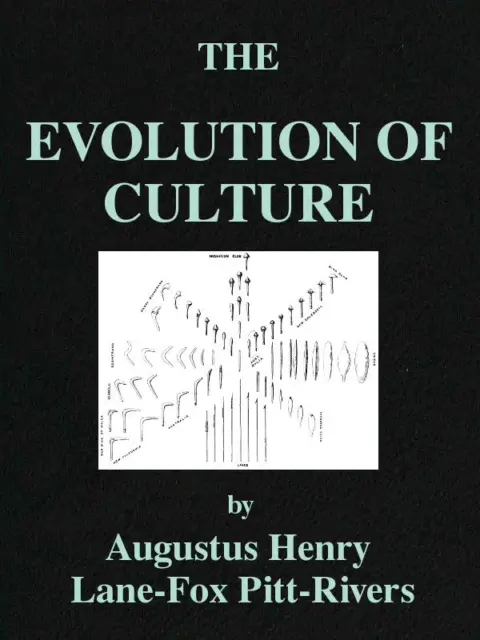
"The Evolution of Culture and Other Essays" by Augustus Henry Lane-Fox Pitt-Rivers is a scientific publication written in the late 19th century. This collection features a series of essays and lectures that explores the application of evolutionary theory to human culture, particularly focusing on the development of material arts and technology throughout history. The work aims to provide a systematic approach to understanding the gradual changes and improvements in human craftsmanship and ideation over time. At the start of the book, the editor, Henry Balfour, recounts the initial efforts of Colonel Lane Fox to apply evolutionary principles to the understanding of human artifacts. He describes how Lane Fox's passion for ethnology led to the establishment of a comprehensive collection that seeks to link different forms of cultural expressions through a classification system based on their evolutionary history. Balfour emphasizes that these early studies serve not only to document artifacts from various cultures but also aim to illustrate the continuous progression from primitive to complex forms of tools and crafts, showcasing how traditional technologies embody traces of ancient practices and ideas.
Introduction adapted from the source catalogue; source summaries may be automatically generated.
Free to read · English · 101,057 words · No account needed
MAKE TIME FOR A GOOD BOOK
On by default. Untick to stop anonymous reading totals. Each page counts after 10 seconds in view. How this works.
Anonymous counting is on unless you have switched it off.
CLASS C.--Bronze celts of the same outline as Class B, but having a cross ridge or stop on both faces, to prevent the blade from burying itself in the handle.--Figs. 27, 28, bronze celts from Ireland, in my collection; this form is common to the British Isles.
CLASS D.[216]--Bronze celts, having four longitudinal ridges or flanges, one on each edge, but no cross stop. The flanges are for the purpose of fixing the blade in a bent handle; they exhibit a gradual development of the flange, and an expansion of the cutting edge, which latter takes a semicircular, and in some cases nearly a circular form.--Figs. 29, 30, from Ireland, in my collection, showing front view and section.--Fig. 31, from Versailles, in my collection, with section.--Fig. 32, from France; with side view; see Matériaux pour l’Histoire de l’Homme.--Fig. 33, from Loyette, Department of Isère, from Horae Ferales, front view.--Fig. 34, from the South of France, British Museum, the blade very circular.--Fig. 35, from Alps [Aps?], in Ardèche, British Museum, the circular form of the blade still more developed. This form appears peculiar to the neighbourhood of the Rhone, Horae Ferales.--Fig. 36, from France; with side view; Matériaux.--Fig. 37, from Denmark, British Museum, of copper; this form is rarely found in copper; with section.--Fig. 38, from Denmark, of bronze, from Madsen, Heft iii.--Fig. 39, from Denmark, with semicircular blade, Madsen, Heft iii.--Fig. 40, from Hessen, now in the collection at Hanover, Lindenschmit, Heft i, Taf. iii.--Fig. 41, from near Baltringen, Lindenschmit.--Fig. 42, from Neinheiligen, in Thuringia, British Museum; with section.--Fig. 43, from the Terramara Beds, Castione, Switzerland; with section; Keller, Plate lix.--Fig. 44, from Unter Uhldingen; with section; Keller, Plate xxix.--Fig. 45, from the Terramara Beds, Castione; with section; Keller, Plate lix.--Fig. 46, from the Terramara Beds, Castione; with section; Keller, Plate lix.--Fig. 47, from Hallstatt, in Austria, von Sacken, Das Grabfeld von Hallstatt in Oberösterreich und dessen Alterthümer (Vienna, 1868), Taf. vii; with side view.--Fig. 48, ditto, ditto, found with the body of a child.--Fig. 49, ditto, the shaft of bronze, and the blade of iron, from Hallstatt.--Fig. 50, the same form in iron, also from Hallstatt, in Mr. John Evans’ collection.--Figs. 51 and 52, similar forms, in bronze, from Italy, British Museum.--Fig. 53, the same form, from Telsch, Vilna, Russia, British Museum; with two sections.
Your reading position is saved on this browser. Take it to another device with a library code. Reading pages adapt to text, rather than matching a printed edition.
Augustus Henry Lane-Fox Pitt-Rivers
Augustus Henry Lane-Fox Pitt-Rivers
BEHIND THE BOOK
This eBook is for the use of anyone anywhere in the United States and most other parts of the world at no cost and with almost no restrictions whatsoever. You may copy it, give it away or re-use it under the terms of the Project Gutenberg License included with this eBook or online at www.gutenberg.org. If you are not located in the United States, you will have to check the laws of the country where you are located before using this eBook. Read the source licence.
The original source file, including credits and licence, is retained by this library. Request an original-format copy at no charge. Please include the book title and Project Gutenberg identifier #44844.
KEEP YOUR CURIOSITY GOING

David Patterson (Spirit) Hatch

David Patterson (Spirit) Hatch

David Patterson (Spirit) Hatch

Ralph Waldo Emerson

Maurice Baring

Oscar Wilde & James McNeill Whistler