THE CLASSIC COLLECTION✦An outlaw’s diary: the CommuneCLASSIC FREE BOOKS
An outlaw’s diary: the Commune
Cécile Tormay
THE CLASSIC COLLECTION · 1919
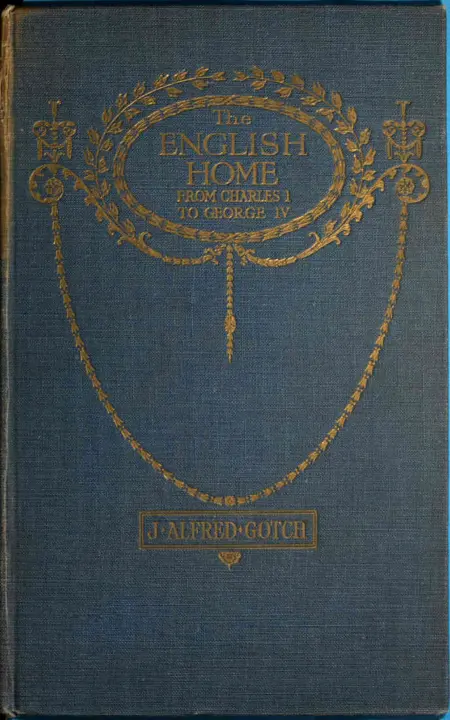
"The English Home from Charles I. to George IV." by J. Alfred Gotch is a historical account written in the early 20th century. The book examines the evolution of English domestic architecture, decoration, and garden design from the 17th to the early 19th centuries. It reflects on how societal changes influenced the design and functionality of homes during this period, focusing on a transition from fortresses to spaces of comfort and elegance. At the start of the book, the author provides a broad overview of the history of the English house, marking the significant changes that began in the Elizabethan era. He discusses how homes evolved with a shift in focus toward pleasure and domesticity, influenced by a growing interest in classic architectural styles from Italy. Gotch emphasizes the importance of key figures like Inigo Jones in shaping this architectural landscape. The introduction sets the tone for a comprehensive exploration of various architectural styles and design principles that emerged over the centuries, encouraging readers to consider the personal and historical significance of homes within the context of English culture.
Introduction adapted from the source catalogue; source summaries may be automatically generated.
Free to read · English · 83,522 words · No account needed
MAKE TIME FOR A GOOD BOOK
On by default. Untick to stop anonymous reading totals. Each page counts after 10 seconds in view. How this works.
Anonymous counting is on unless you have switched it off.
[18] In the year 1620, King James I., being at Wilton on one of his progresses, sent for Inigo Jones, and instructed him to produce out of his own practice in architecture and experience in antiquities abroad, what he could discover about Stonehenge. The “few undigested notes” which Jones made were amplified by John Webb and published by him as “Stone-Heng Restored” in 1655. They went to show that Stonehenge was a Roman temple. A Dr. Charleton attacked this conclusion in a pamphlet called “Chorea Gigantum,” whereupon Webb retaliated in his “Vindication of Stone-Heng Restored.” From the antiquarian point of view the controversy is of no value, but it is interesting because of the references to Inigo Jones.
[19] Webb’s “Vindication,” p. 11. It would seem that Vandyke is here quoted as using the phrase “designing with his pen,” and not (as biographers have freely supposed) as having given Jones a certificate of ability.
[20] In the collection at the Royal Institute of British Architects.
[21] See Appendix II.
[22] See p. 69.
[23] “London Past and Present,” by Wheatley and Cunningham.
[24] Peter Cunningham’s “Life,” where it is stated that the register of St Bennet’s records his burial on the 26th June.
[25] Peter Cunningham’s “Inigo Jones,” p. 39.
[26] John Aubrey’s “Brief Lives,” ed. by Andrew Clark. Oxford, 1898,
vol. ii. 10.
[27] One of this series is illustrated in Fig. 39.
[28] Those who desire to pursue the subject more fully are referred to two papers by the author--“The Burlington-Devonshire Drawings,” in the Journal of the Royal Institute of British Architects, Third Series, vol. xviii., No. 10, and “The Original Drawings for the Palace at Whitehall, attributed to Inigo Jones,” Architectural Review, June 1912.
[29] “State Papers, Domestic: Charles II.,” vol. v., Nos. 74, 74, I.
[30] It is the version published by Kent which is here dealt with, as
being the best known.
[31] In an article by Mr. W. Grant Keith, published in the Burlington Magazine of January 1913, are given some reproductions of half a dozen drawings by Inigo Jones, which are among the most carefully finished specimens of his handiwork that survive. They include a ceiling for Wilton, 1649, and some decorative work at Oatlands Palace in Surrey.
[32] Mostly preserved at Chatsworth; there are also a few at the
British Museum.
[33] It has not been found possible to illustrate this scene, as was intended, owing to the war having rendered the drawings at Chatsworth inaccessible for the time being.
[34] “Cal. State Papers, Domestic,” xcv. 12.
[35] Horace Walpole’s “Anecdotes of Painting.”
[36] See the article on the Burlington-Devonshire Drawings in the Journal of the Royal Institute of British Architects, Third Series, vol. xviii., No. 10.
[37] Vol. vi. p. 129, printed in full in Peter Cunningham’s “Life of
Inigo Jones,” p. 48.
Your reading position is saved on this browser. Take it to another device with a library code. Reading pages adapt to text, rather than matching a printed edition.
BEHIND THE BOOK
This eBook is for the use of anyone anywhere in the United States and most other parts of the world at no cost and with almost no restrictions whatsoever. You may copy it, give it away or re-use it under the terms of the Project Gutenberg License included with this eBook or online at www.gutenberg.org. If you are not located in the United States, you will have to check the laws of the country where you are located before using this eBook. Read the source licence.
The original source file, including credits and licence, is retained by this library. Request an original-format copy at no charge. Please include the book title and Project Gutenberg identifier #67419.
KEEP YOUR CURIOSITY GOING
Cécile Tormay

Moritz Busch
John L. Ransom
Frances Wright
Cécile Tormay

Mabel Potter Daggett