THE CLASSIC COLLECTION✦An outlaw’s diary: the CommuneCLASSIC FREE BOOKS
An outlaw’s diary: the Commune
Cécile Tormay
THE CLASSIC COLLECTION · 1919
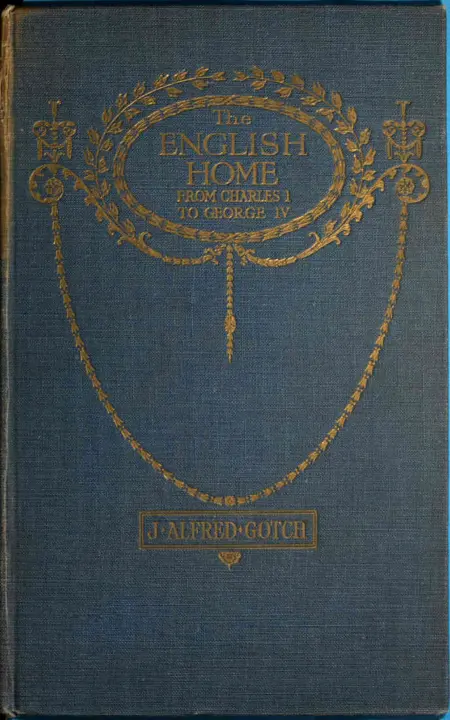
"The English Home from Charles I. to George IV." by J. Alfred Gotch is a historical account written in the early 20th century. The book examines the evolution of English domestic architecture, decoration, and garden design from the 17th to the early 19th centuries. It reflects on how societal changes influenced the design and functionality of homes during this period, focusing on a transition from fortresses to spaces of comfort and elegance. At the start of the book, the author provides a broad overview of the history of the English house, marking the significant changes that began in the Elizabethan era. He discusses how homes evolved with a shift in focus toward pleasure and domesticity, influenced by a growing interest in classic architectural styles from Italy. Gotch emphasizes the importance of key figures like Inigo Jones in shaping this architectural landscape. The introduction sets the tone for a comprehensive exploration of various architectural styles and design principles that emerged over the centuries, encouraging readers to consider the personal and historical significance of homes within the context of English culture.
Introduction adapted from the source catalogue; source summaries may be automatically generated.
Free to read · English · 83,522 words · No account needed
MAKE TIME FOR A GOOD BOOK
On by default. Untick to stop anonymous reading totals. Each page counts after 10 seconds in view. How this works.
Anonymous counting is on unless you have switched it off.
Wrest, Bedfordshire, gardens, 236, =158=
Wynne, Captain, 163, 168
„ „ drawings by, 171 (footnote), =109=, =110=, =112=
Yarmouth, lay out of streets, 296
„ porch at, 337, =260=
York, streets in, 296
„ Assembly Rooms, 214, =146=, =147=
„ doorway, 333, =255=
York House, London, 60, 161
„ „ water-gate, 60, 322
Printed in Great Britain at THE DARIEN PRESS,
Edinburgh
[1] The publication of “Gothic Architecture, Improved by Rules and Proportions,” by B. and T. Langley, in 1742, does not invalidate this statement, for the illustrations are intended to show how a kind of Gothic detail might be applied to a kind of classic “order.” The “Historical Dissertation on Gothic Architecture,” attached by way of introduction, is absolutely negligible in the light of modern knowledge, and could have helped nobody to a comprehension of the subject.
[2] Evelyn’s “Account of Architects and Architecture.”
[3] See a communication from Mr. Walter L. Spiers to the Journal of the Royal Institute of British Architects, 10th Dec. 1908, where a short pedigree is given.
[4] “As appears by his name over the gate.”
[5] It was, however, John Smithson’s son, Huntingdon, who died in 1648. John Smithson died in 1634.
[6] “A Relation of a Short Survey of 26 Counties observed in a seven weekes Journey begun on August 11, 1634, by a Captain, a Lieutenant, and an Ancient.”
[7] “Lives of the British Architects,” by E. Beresford Chancellor.
[8] It is true that his spelling, especially that of the notes in his sketch-book, is eccentric, even for those days.
[9] “Cal. State Papers, Domestic,” Sept. 2, 1611.
[10] John Webb, in his “Vindication of Stone-Heng Restored” (1725), p. 119, says he resided “many years” in Italy, especially at Venice. This refers to his first visit. He was back in England before Twelfth Night, 1605, as he designed the “Masque of Blackness,” which was produced on that day. (See Peter Cunningham’s “Life of Inigo Jones.”)
[11] Peter Cunningham’s “Life of Inigo Jones,” p. 6.
[12] “Cal. State Papers, Domestic,” April 27, 1613.
[13] “A Vindication of Stone-Heng Restored,” p. 27. All this work was destroyed in the great fire. The loss of the portico was considered a national misfortune.
[14] “A Vindication,” p. 36. This work has been much altered.
[15] Destroyed.
[16] “A Vindication,” p. 119.
[17] Kennet, in Wood’s “Ath. Ox.,” by Bliss, iii. 806; quoted in Peter Cunningham’s “Inigo Jones.”
Your reading position is saved on this browser. Take it to another device with a library code. Reading pages adapt to text, rather than matching a printed edition.
BEHIND THE BOOK
This eBook is for the use of anyone anywhere in the United States and most other parts of the world at no cost and with almost no restrictions whatsoever. You may copy it, give it away or re-use it under the terms of the Project Gutenberg License included with this eBook or online at www.gutenberg.org. If you are not located in the United States, you will have to check the laws of the country where you are located before using this eBook. Read the source licence.
The original source file, including credits and licence, is retained by this library. Request an original-format copy at no charge. Please include the book title and Project Gutenberg identifier #67419.
KEEP YOUR CURIOSITY GOING
Cécile Tormay

Moritz Busch
John L. Ransom
Frances Wright
Cécile Tormay

Mabel Potter Daggett