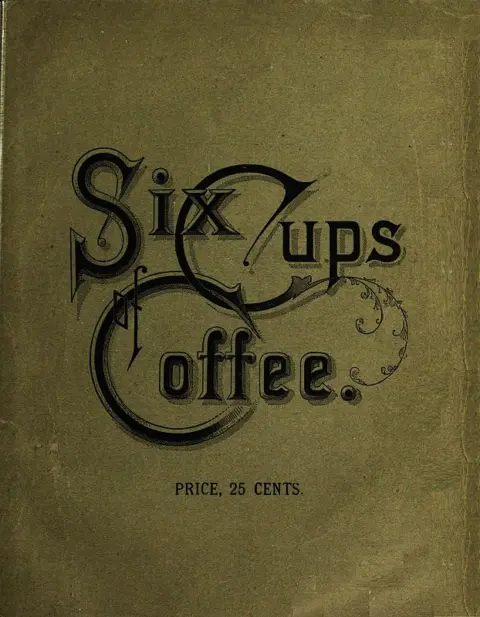
Six Cups of Coffee Prepared for the Public Palate by the Best Authorities on Coffee Making
Maria Parloa & Helen Campbell & Juliet Corson & Marion Harland & Mary J. (Mary Johnson) Lincoln & Catherine Owen & Hester M. (Hester Martha) Poole
THE CLASSIC COLLECTION · 1893
"The Easiest Way in Housekeeping and Cooking" by Helen Campbell is a practical guide on domestic management and culinary techniques, written in the late 19th century. This comprehensive work aims to equip housekeepers—especially those with limited experience—with the necessary knowledge and skills to manage their homes effectively, from strategic kitchen layouts to food preparation and household science. The opening of the book introduces the author’s vision behind its creation, stating that the text is intended to bridge the gap between existing cookbooks and the practical needs of inexperienced housekeepers. Campbell emphasizes the importance of understanding household management principles, especially in rural settings, and advocates for careful consideration of a home's location, ventilation, and overall arrangement to ensure health and efficiency. She outlines clear objectives for the reader, who is presented with a balanced approach that includes both cooking and essential domestic science principles. The detailed structure suggests that the contents of the book will be not only instructional but philosophically enriching for the homemaker.
Introduction adapted from the source catalogue; source summaries may be automatically generated.
Free to read · English · 79,486 words · No account needed
MAKE TIME FOR A GOOD BOOK
On by default. Untick to stop anonymous reading totals. Each page counts after 10 seconds in view. How this works.
Anonymous counting is on unless you have switched it off.
We come now to the vegetable kingdom, the principal points that we are to consider arranging themselves somewhat as follows:--
Farinaceous seeds,
Oleaginous seeds,
Leguminous seeds,
Tubers and roots,
Herbaceous articles,
Fruits,
Saccharine and farinaceous preparations.
Under the first head, that of farinaceous seeds, are included wheat, rye, oats, Indian corn, rice, and a variety of less-known grains, all possessing in greater or less degree the same constituents. It will be impossible to more than touch upon many of them; and wheat must stand as the representative, being the best-known and most widely used of all grains. Each one is made up of nitrogenous compounds, gluten, albumen, caseine, and fibrine, gluten being the most valuable. Starch, dextrine, sugar, and cellulose are also found; fatty matter, which gives the characteristic odor of grain; mineral substances, as phosphates of lime and magnesia, salts of potash and soda, and silica, which we shall shortly mention again.
Hard Wheat, or that grown in hot climates and on fertile soil, has much more nitrogen than that of colder countries. In hard wheat, in a hundred parts, twenty-two will be of nitrogen, fifty-nine starch, ten dextrine, &c, four cellulose, two and a half of fatty matter, and three of mineral, thus giving many of the constituents found in animal food.
This wheat is taken as bread, white or brown, biscuits, crackers, various preparations of the grain whether whole or crushed, and among the Italians as macaroni, the most condensed form of cereal food. The best macaroni is made from the red wheat grown along the Mediterranean Sea, a hot summer and warm climate producing a grain, rich, as already mentioned, in nitrogen, and with a smaller proportion of water than farther north. The intense though short summer of our own far North-west seems to bring somewhat the same result, but the outer husk is harder. This husk was for years considered a necessity in all really nutritious bread; and a generation of vegetarians taking their name from Dr. Graham, and known as Grahamites, conceived the idea of living upon the wheaten flour in which husk and kernel were ground together. Now, to stomachs and livers brought to great grief by persistent pie and doughnuts and some other New-England wickednesses, these husks did a certain office of stimulation, stirring up jaded digestions, and really seeming to arrest or modify long-standing dyspepsia. But they did not know what we do, that this outer husk is a layer of pure silica, one of the hardest of known minerals. Boil it six weeks, and it comes out unchanged. Boil it six years, or six centuries, and the result would be the same. You can not stew a grindstone or bring granite to porridge, and the wheat-husk is equally obstinate. So long as enthusiasts ate husk and kernel ground together, little harm was done. But when a more progressive soul declared that in bran alone the true nutriment lay, and a host of would-be healthier people proceeded to eat bran and preach bran, there came a time when eating and preaching both stopped, from sheer want of strength to go on. The enthusiasts were literally starving themselves to death--for starvation is by no means mere deprivation of food: on the contrary, a man may eat heartily to the day of his death, and feel no inconvenience, so far as any protest of the stomach is concerned, yet the verdict of the wise physician would be, "Died of starvation." If the food was unsuitable, and could not be assimilated, this was inevitable. Blood, muscle, nerve--each must have its fitting food; and thus it is easy to see why knowledge is the first condition of healthful living. The moral is: Never rashly experiment in diet till sure what you are about, and, if you can not for yourselves find out the nature of your projected food, call upon some one who can.
Your reading position is saved on this browser. Take it to another device with a library code. Reading pages adapt to text, rather than matching a printed edition.
Maria Parloa & Helen Campbell & Juliet Corson & Marion Harland & Mary J. (Mary Johnson) Lincoln & Catherine Owen & Hester M. (Hester Martha) Poole
Helen Campbell
Helen Campbell
BEHIND THE BOOK
This eBook is for the use of anyone anywhere in the United States and most other parts of the world at no cost and with almost no restrictions whatsoever. You may copy it, give it away or re-use it under the terms of the Project Gutenberg License included with this eBook or online at www.gutenberg.org. If you are not located in the United States, you will have to check the laws of the country where you are located before using this eBook. Read the source licence.
The original source file, including credits and licence, is retained by this library. Request an original-format copy at no charge. Please include the book title and Project Gutenberg identifier #15360.
KEEP YOUR CURIOSITY GOING

Charles G. (Charles Griffith) Ross
Hannah Webster Foster

Emily Lawless
Edwin Hamlin Carr

Charles De Lano Hine
Andrew Ure