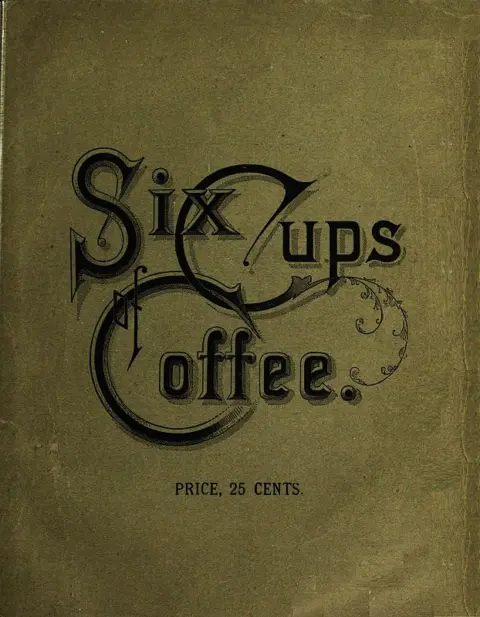
Six Cups of Coffee Prepared for the Public Palate by the Best Authorities on Coffee Making
Maria Parloa & Helen Campbell & Juliet Corson & Marion Harland & Mary J. (Mary Johnson) Lincoln & Catherine Owen & Hester M. (Hester Martha) Poole
THE CLASSIC COLLECTION · 1893
"The Easiest Way in Housekeeping and Cooking" by Helen Campbell is a practical guide on domestic management and culinary techniques, written in the late 19th century. This comprehensive work aims to equip housekeepers—especially those with limited experience—with the necessary knowledge and skills to manage their homes effectively, from strategic kitchen layouts to food preparation and household science. The opening of the book introduces the author’s vision behind its creation, stating that the text is intended to bridge the gap between existing cookbooks and the practical needs of inexperienced housekeepers. Campbell emphasizes the importance of understanding household management principles, especially in rural settings, and advocates for careful consideration of a home's location, ventilation, and overall arrangement to ensure health and efficiency. She outlines clear objectives for the reader, who is presented with a balanced approach that includes both cooking and essential domestic science principles. The detailed structure suggests that the contents of the book will be not only instructional but philosophically enriching for the homemaker.
Introduction adapted from the source catalogue; source summaries may be automatically generated.
Free to read · English · 79,486 words · No account needed
MAKE TIME FOR A GOOD BOOK
On by default. Untick to stop anonymous reading totals. Each page counts after 10 seconds in view. How this works.
Anonymous counting is on unless you have switched it off.
Potatoes, baked, 198.
baked with beef, 198.
boiled, 197.
Lyonnaise, 187.
mashed, 198.
Saratoga, 188.
Potatoes, stewed, 187.
sweet, 199.
what to do with cold, 187.
Poultry, to clean, 161.
dressing for, 162.
Porridge, milk, 264.
Preserves, 254.
Pudding, any-day plum, 240.
batter, 240.
bread, 241.
bread-and-apple, 242.
bread-and-butter, 241.
bird's-nest, 242.
corn-starch, 243.
cabinet, 244.
corn-meal or Indian, 245.
English plum, 239.
gelatine, 244.
minute, 243.
plain rice, 243.
Sunder land, 241.
tapioca, 242.
tapioca cream, 243.
tipsy, 246.
Puff paste, 233.
Purées, 128.
Rammekins, 237.
Rice, boiled, 207.
croquettes, 207.
water, 265.
parched, 267.
Rolls, plain, 214.
Parker-House, 215,
Roux, to make, 174.
Salads, 173.
Salmi of duck or game, 169.
Sauces, 173.
Sauce, apple, 176.
bread, 174.
celery, 175
cranberry, 175.
foaming, 176.
fruit, 177.
hard, 177.
mayonnaise, 178.
mint, 175.
molasses, 176.
plain pudding, 176.
Spanish tomato, 178.
Sausage, fried, 190.
Short-cake, 217.
Sinks and drains, to purify, 270.
Soft soap, 270.
Soup, amber or clear, 123.
beef, with vegetables, 122.
clam, 127.
mock turtle, 125.
onion, 130.
oyster, 127.
pea, 129.
tomato, without meat, 126.
tomato, hasty, 126.
turtle-bean, 129.
white, 124.
Spanish tomato sauce, 178.
Spinach, 205.
Spice salt, 272.
Spices, mixed, 271.
Stew, Brunswick, 154.
brown, 152.
Irish, 151.
white, 152.
Stock and seasoning, 119.
Squash, winter, 202.
summer, 202.
Succotash, 203.
Tea, 194.
Time table for roasted meats, 273.
for boiled meats, 274.
for fish, 274.
for vegetables, 274.
bread, cake, &c., 275.
Toast, dry or buttered, 192.
for sick, 266.
milk, 193, 266,
water, 193, 265.
Topics for twenty lessons, 285.
Tomato catchup, 259.
chutney, 257.
Tomatoes, baked, 206.
canned, 253.
stewed, 206.
fried, 206.
boiled, 207.
Tongue, boiled, 150.
deviled, 170.
Tripe, 161.
Turkey, boiled, 167.
boned, 171.
roasted, 163.
Turnips, 200.
Twelve lessons, 282.
Veal, 156.
cutlets, 159.
loaf, 191.
minced, 192.
Venison, roast, 157.
Wafers, 216.
Waffles, 216.
rice or hominy, 217.
Water, apple, 269.
toast, 266.
hard, to make soft, 271.
ices, 250.
Weights and measures, 272.
Wine whey, 264.
Yeast, 209.
16mo. Cloth. Price, $1.00.
Besides being equal to Mrs. Campbell's best work in the past, it is strikingly original in presenting the ethics of the body as imperiously claiming recognition in the radical cure of inebriety. It forces attention to the physical and spiritual value of foods, and weaves precedent and precept into one of the most beguiling stories of recent date.
It is the gospel of good food, with the added influence of fresh air, sunlight, cleanliness, and physical exercise that occupy profitably the attention of Helen Campbell. Martha is a baby when the story begins, and a child not yet in her teens when the narrative comes to an end, but she has a salutary power over many lives. Her father is a wise country physician, who makes his chaise, in his daily progress about the hills, serve as his little daughter's cradle and kindergarten. When she gets old enough to understand he expounds to her his views of the sins committed against hygiene, and his lessons sink into an appreciative mind. When he encounters particularly hard cases she applies his principles with unfailing logic, and is able to suggest helpful means of cure. The old doctor is delightfully sagacious in demonstrating how the confirmed pie-eater marries the tea inebriate, with the result in doughnut-devouring, dyspeptic, and consumptive offspring. "What did they die of?" asked little Martha, in the village graveyard; and her father answers solemnly, "Intemperance." So Martha declares that she will be a "food doctor," and later on she helps her father in saving several victims of strong drink. The book is one that should find hosts of earnest readers, for its admonitions are sadly needed, not in the country alone, but in the city, where, if better ideas of diet prevail, people have yet as a rule a long way to go before they attain the path of wisdom. Meanwhile it remains true, as Mrs. Campbell makes Dr Scarborough declare, that the cabbage soup and black bread of the poorest French peasants are really better suited to the sustenance of healthy life than the "messes" that pass for food in many parts of rural New England.--The Beacon.
Your reading position is saved on this browser. Take it to another device with a library code. Reading pages adapt to text, rather than matching a printed edition.
Maria Parloa & Helen Campbell & Juliet Corson & Marion Harland & Mary J. (Mary Johnson) Lincoln & Catherine Owen & Hester M. (Hester Martha) Poole
Helen Campbell
Helen Campbell
BEHIND THE BOOK
This eBook is for the use of anyone anywhere in the United States and most other parts of the world at no cost and with almost no restrictions whatsoever. You may copy it, give it away or re-use it under the terms of the Project Gutenberg License included with this eBook or online at www.gutenberg.org. If you are not located in the United States, you will have to check the laws of the country where you are located before using this eBook. Read the source licence.
The original source file, including credits and licence, is retained by this library. Request an original-format copy at no charge. Please include the book title and Project Gutenberg identifier #15360.
KEEP YOUR CURIOSITY GOING

Charles G. (Charles Griffith) Ross
Hannah Webster Foster

Emily Lawless
Edwin Hamlin Carr

Charles De Lano Hine
Andrew Ure