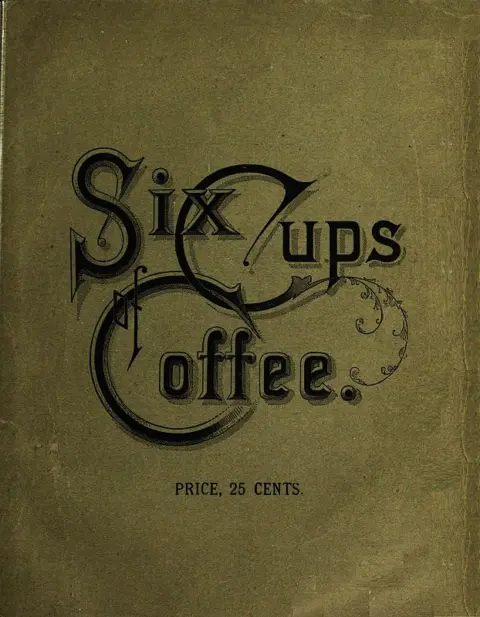
Six Cups of Coffee Prepared for the Public Palate by the Best Authorities on Coffee Making
Maria Parloa & Helen Campbell & Juliet Corson & Marion Harland & Mary J. (Mary Johnson) Lincoln & Catherine Owen & Hester M. (Hester Martha) Poole
THE CLASSIC COLLECTION · 1893
"The Easiest Way in Housekeeping and Cooking" by Helen Campbell is a practical guide on domestic management and culinary techniques, written in the late 19th century. This comprehensive work aims to equip housekeepers—especially those with limited experience—with the necessary knowledge and skills to manage their homes effectively, from strategic kitchen layouts to food preparation and household science. The opening of the book introduces the author’s vision behind its creation, stating that the text is intended to bridge the gap between existing cookbooks and the practical needs of inexperienced housekeepers. Campbell emphasizes the importance of understanding household management principles, especially in rural settings, and advocates for careful consideration of a home's location, ventilation, and overall arrangement to ensure health and efficiency. She outlines clear objectives for the reader, who is presented with a balanced approach that includes both cooking and essential domestic science principles. The detailed structure suggests that the contents of the book will be not only instructional but philosophically enriching for the homemaker.
Introduction adapted from the source catalogue; source summaries may be automatically generated.
Free to read · English · 79,486 words · No account needed
MAKE TIME FOR A GOOD BOOK
On by default. Untick to stop anonymous reading totals. Each page counts after 10 seconds in view. How this works.
Anonymous counting is on unless you have switched it off.
Four ounces of salt; one of black pepper; one each of thyme, sweet marjoram, and summer savory; half an ounce each of clove, allspice, and mace; quarter of an ounce of cayenne pepper; one ounce of celery salt. Mix all together; sift three times, and keep closely covered. Half an ounce will flavor a stuffing for roast meat; and a tablespoonful is nice in many soups and stews.
Pour a few drops of ammonia into every greasy roasting-pan, first half-filling with warm water. A bottle of ammonia should always stand near the sink for such uses. Never allow dirty pots or pans to stand and dry; for it doubles the labor of washing. Pour in water, and use ammonia, and the work is half done.
Scrape a little rotten-stone fine, and make into a paste with sweet oil. Rub on with a piece of flannel; let it dry, and polish with a chamois-skin. Copper is cleaned either with vinegar and salt mixed in equal parts, or with oxalic acid. The latter is a deadly poison, and must be treated accordingly.
As many families have no scales for weighing, a table of measures is given which can be used instead. Weighing is always best, but not always convenient. The cup used is the ordinary coffee or kitchen cup, holding half a pint. A set of tin measures, from a gill up to a quart, is very useful in all cooking operations.
One quart of sifted flour is one pound.
One pint of granulated sugar is one pound.
Two cups of butter packed are one pound.
Ten eggs are one pound.
Five cupfuls of sifted flour are one pound.
A wine-glassful is half a gill.
Eight even tablespoonfuls are a gill.
Four even saltspoonfuls make a teaspoonful.
A saltspoonful is a good measure of salt for all custards, puddings,
blancmanges, &c.
One teaspoonful of soda to a quart of flour.
Two teaspoonfuls of soda to one of cream of tartar.
The teaspoonful given in all these receipts is just rounded full, not
heaped.
Two heaping teaspoonfuls of baking powder to one quart of flour.
One cup of sweet or sour milk as wetting for one quart of flour.
Beef, from six to eight pounds, one hour and a half, or twelve minutes to
the pound.
Mutton, ten minutes to the pound for rare; fifteen for well-done.
Lamb, a very little less according to age and size of roast.
Veal, twenty minutes to a pound.
Pork, half an hour to a pound.
Turkey of eight or ten pounds weight, not less than three hours.
Your reading position is saved on this browser. Take it to another device with a library code. Reading pages adapt to text, rather than matching a printed edition.
Maria Parloa & Helen Campbell & Juliet Corson & Marion Harland & Mary J. (Mary Johnson) Lincoln & Catherine Owen & Hester M. (Hester Martha) Poole
Helen Campbell
Helen Campbell
BEHIND THE BOOK
This eBook is for the use of anyone anywhere in the United States and most other parts of the world at no cost and with almost no restrictions whatsoever. You may copy it, give it away or re-use it under the terms of the Project Gutenberg License included with this eBook or online at www.gutenberg.org. If you are not located in the United States, you will have to check the laws of the country where you are located before using this eBook. Read the source licence.
The original source file, including credits and licence, is retained by this library. Request an original-format copy at no charge. Please include the book title and Project Gutenberg identifier #15360.
KEEP YOUR CURIOSITY GOING

Charles G. (Charles Griffith) Ross
Hannah Webster Foster

Emily Lawless
Edwin Hamlin Carr

Charles De Lano Hine
Andrew Ure