THE CLASSIC COLLECTION✦Harps Hung up in BabylonCLASSIC FREE BOOKS
Harps Hung up in Babylon
Arthur Colton
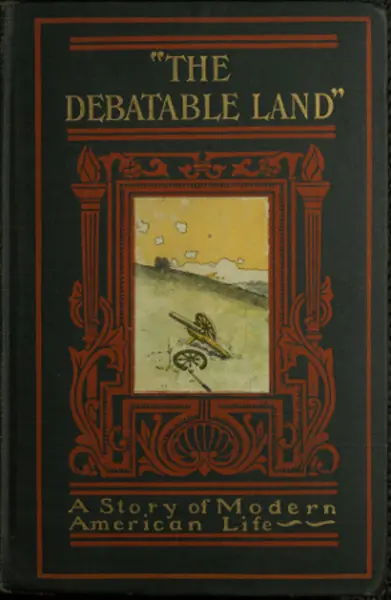
THE CLASSIC COLLECTION · 1901
"The Debatable Land" by Arthur Colton is a novel written in the early 20th century. This work explores themes of identity, community, and the contrast between individual aspirations and societal expectations, primarily through the lives of its characters within a small New England town and the larger city of Hamilton. The opening of the novel introduces widow Bourn and her daughter Helen, hinting at a generational struggle and the emotional weight of legacy and regret. Through vivid descriptions of their surroundings and Helen's youthful aspirations, we see a backdrop steeped in a sense of nostalgia and expectation. The narrative shifts to include characters such as Thaddeus Bourn, who embodies societal expectations, and Morgan Map, whose ambitions and aspirations challenge conventional boundaries. As relationships begin to intertwine—especially concerning Helen and Morgan—the story sets the stage for a rich exploration of human connections against the contrasting landscapes of Hagar and Hamilton, providing a poignant reflection on the "debatable land" between personal hopes and the realities of life.
Introduction adapted from the source catalogue; source summaries may be automatically generated.
Free to read · English · 59,359 words · No account needed
MAKE TIME FOR A GOOD BOOK
On by default. Untick to stop anonymous reading totals. Each page counts after 10 seconds in view. How this works.
Anonymous counting is on unless you have switched it off.
"It doesn't read like it in the newspapers," he said, and rose presently to go. Thaddeus, too, must run down to his club; would Mrs. Mavering forgive him and stay with Helen till he came back? Morgan took his leave with conventional phrases. And the three having each taken himself and his egoism away, Helen and Mrs. Mavering were left with Thaddeus's trim sea-coal fire, marble mantle, china figurines of the neat ankles, gilt chandeliers, and flowered carpet.
Helen took her favorite place at Mrs. Mavering's feet, and said, "Uncle Tad's fires always have company manners."
As for Morgan, Mrs. Mavering thought, he did not like to see that Helen could be moved by powers that he could not himself attain; perhaps neither knew nor cared what those powers were, only knew that he could not attain them. But Thaddeus's airy structure, his theory of the primitive, did not follow necessarily. Yet she felt that a certain atmosphere of animosity surrounded Morgan; he was either aggressively or indifferently hostile; or else it was because one felt his intention to dominate, and indifference whether the dominance were admitted with peace or in process of war.
"Don't you want to confess, Helen?"
"I'm always confessing, Lady Rachel."
"But about Morgan Map?"
"Oh, why, Morgan is--just Morgan, don't you see?"
"That sounds like a whole dictionary, but the words don't seem to be
arranged."
"It's arranged by the alphabet," Helen laughed. "It begins with A, when
I was born."
"I was wondering if it went through to Z."
"Oh! But, Lady Rachel, I don't think I know what you mean."
"Has he asked you to marry him?"
"Not that, of course not. But he said he was going to marry me."
"When? How long ago?"
"Oh, I don't remember."
"But what did you think about it?"
"Well, you see, Lady Rachel, I suppose I thought it was too good of him to believe, and I suppose I wondered if he wouldn't forget about it by-and-by. And do you know, he didn't--that is, I don't think so."
"But, you funny child, you don't tell me at all. Did you promise to
marry him?"
"Promise! He never asked me to do that."
"Do you love him, dear?"
"Never asked me to do that, either."
"But, Helen, you dodge like a wild thing. If you don't love him and he expects you to marry him, you must tell him you won't."
Your reading position is saved on this browser. Take it to another device with a library code. Reading pages adapt to text, rather than matching a printed edition.
Arthur Colton
Arthur Colton
Arthur Colton
Arthur Colton
BEHIND THE BOOK
This eBook is for the use of anyone anywhere in the United States and most other parts of the world at no cost and with almost no restrictions whatsoever. You may copy it, give it away or re-use it under the terms of the Project Gutenberg License included with this eBook or online at www.gutenberg.org. If you are not located in the United States, you will have to check the laws of the country where you are located before using this eBook. Read the source licence.
The original source file, including credits and licence, is retained by this library. Request an original-format copy at no charge. Please include the book title and Project Gutenberg identifier #41963.
KEEP YOUR CURIOSITY GOING
Coulson Kernahan

Maurice Baring
Frances Wright
Cécile Tormay

Frederic Jesup Stimson

W. H. P. (William Henry Pope) Jarvis