THE CLASSIC COLLECTION✦Harps Hung up in BabylonCLASSIC FREE BOOKS
Harps Hung up in Babylon
Arthur Colton
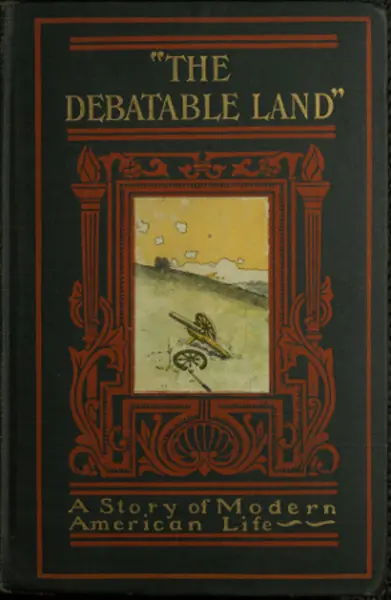
THE CLASSIC COLLECTION · 1901
"The Debatable Land" by Arthur Colton is a novel written in the early 20th century. This work explores themes of identity, community, and the contrast between individual aspirations and societal expectations, primarily through the lives of its characters within a small New England town and the larger city of Hamilton. The opening of the novel introduces widow Bourn and her daughter Helen, hinting at a generational struggle and the emotional weight of legacy and regret. Through vivid descriptions of their surroundings and Helen's youthful aspirations, we see a backdrop steeped in a sense of nostalgia and expectation. The narrative shifts to include characters such as Thaddeus Bourn, who embodies societal expectations, and Morgan Map, whose ambitions and aspirations challenge conventional boundaries. As relationships begin to intertwine—especially concerning Helen and Morgan—the story sets the stage for a rich exploration of human connections against the contrasting landscapes of Hagar and Hamilton, providing a poignant reflection on the "debatable land" between personal hopes and the realities of life.
Introduction adapted from the source catalogue; source summaries may be automatically generated.
Free to read · English · 59,359 words · No account needed
MAKE TIME FOR A GOOD BOOK
On by default. Untick to stop anonymous reading totals. Each page counts after 10 seconds in view. How this works.
Anonymous counting is on unless you have switched it off.
"I'll look at him. Reckon I know who you are. Haven't captured
Washington yet?"
The men around grinned.
"The difficulty, seh, with the management of this campaign, is its impe'viousness to ideas. Good-mo'ning, seh."
It was the first week in November when he rode across the Long Bridge into Washington and fastened his horse to a tree in front of the War Department.
He sent in his name, and the summons came promptly. He entered an inner office, and was alone with a thick-set man with a grim mouth, and beard falling half-way down his chest, who rapidly turned the leaves of a book of entry.
"Captain Windham?" he said, and went on turning the leaves.
"Yes, sir."
"I have received three despatches from you. September 30th, by an old negro. Christian name, Joe."
"Daddy Joe," murmured Gard.
"Not at all! Simply Joe."
"Oh! I thought it was Daddy," said Gard, sadly.
"Joe--simply Joe. October 15th, by an officer of General ----'s brigade, on sick leave; name, Burton. October 24th, by Army Post. Harper's Ferry. Is that correct?"
"Yes, sir. I'm the fourth. I'm dated November 7th."
"I am aware of the date," said the other, sharply.
He seemed to suspect some frivolous irony in his visitor, a lack of seriousness and respect, a motion of humor repellent to the authoritative and downright atmosphere of that office. Then he glanced suddenly at the calendar and frowned.
"You are mistaken, sir. It is the 6th."
Gard dropped his eyes to his torn and weather-stained old gray hat, and turned it slowly around his finger.
"It comes from being so long down there," he said, regretfully. "I thought their calendar was one day ahead of ours. They seemed to get there about one day ahead."
The other glared at him through his spectacles, then said, shortly:
"I will take your information."
After the questioning and writing were finished he continued:
"I will forward this to the new commander-in-chief, appointed yesterday, the 5th"--with another glance at the calendar for security--"in place of the late commander-in-chief, relieved," and looked up quickly as if expecting to find some revenge or satisfaction in his surprise. But Gard did not seem to be surprised or interested. He looked at a vigorous clump of hair at the top of the official's head, then down at his old hat indifferently.
"I think that I should like a furlough."
The other was irritated, almost fierce.
"Send in your application and I will see that it is granted. That's all. Good-day. Captain Windham, it remains for me to say that you have done very well--remarkably well--and appear to be exhausted in proportion. I repeat, you have done very well."
Your reading position is saved on this browser. Take it to another device with a library code. Reading pages adapt to text, rather than matching a printed edition.
Arthur Colton
Arthur Colton

Arthur Colton
Arthur Colton
BEHIND THE BOOK
This eBook is for the use of anyone anywhere in the United States and most other parts of the world at no cost and with almost no restrictions whatsoever. You may copy it, give it away or re-use it under the terms of the Project Gutenberg License included with this eBook or online at www.gutenberg.org. If you are not located in the United States, you will have to check the laws of the country where you are located before using this eBook. Read the source licence.
The original source file, including credits and licence, is retained by this library. Request an original-format copy at no charge. Please include the book title and Project Gutenberg identifier #41963.
KEEP YOUR CURIOSITY GOING
Coulson Kernahan

Maurice Baring
Frances Wright
Cécile Tormay

Frederic Jesup Stimson

W. H. P. (William Henry Pope) Jarvis