THE CLASSIC COLLECTION✦Karl GrierCLASSIC FREE BOOKS
Karl Grier
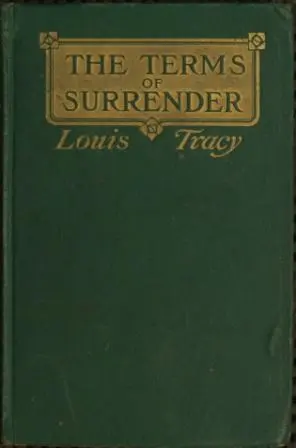
Louis Tracy
THE CLASSIC COLLECTION · 1910
"The de Bercy Affair" by Gordon Holmes is a fictional murder mystery written in the early 20th century. The story revolves around the tragic death of Mademoiselle de Bercy, a popular French actress, and the subsequent investigation led by Chief Inspector Winter and his colleague Inspector Clarke. As the narrative unfolds, suspicions are raised about various characters, including American millionaire Rupert Osborne, who was romantically linked to the deceased. The opening portion of the novel introduces readers to the tense atmosphere at New Scotland Yard, where Chief Inspector Winter is preoccupied with the disappearance of Inspector Furneaux and the investigation into the brutal murder. The details surrounding Mademoiselle de Bercy's death are chilling, as her body is discovered by a distressed housemaid, with signs of a violent struggle. Notably, a stone tool, which is later central to the investigation, is found at the crime scene. As the narrative progresses, various leads are explored, highlighting the complexities of the case and setting the stage for deeper investigations into the actress’s past and the people connected to her, including the mysterious Anarchists on the loose. The intricate plot is established early, ensuring the reader's intrigue as they anticipate the revelation of the murderer and their motives.
Introduction adapted from the source catalogue; source summaries may be automatically generated.
Free to read · English · 73,934 words · No account needed
MAKE TIME FOR A GOOD BOOK
On by default. Untick to stop anonymous reading totals. Each page counts after 10 seconds in view. How this works.
Anonymous counting is on unless you have switched it off.
"Conclusion, no," murmured Furneaux comfortingly--"I avoid conclusions as traps for the unwary. Interesting, of course, that's all. Tell me what you know, and fear nothing. Conclusion, you say! I don't jump to conclusions. Tell me what was the shape of the dagger that has disappeared."
She was silent again for many seconds. She was wrung with doubt, whether to speak or not to speak.
At last she voiced her agony.
"Either I must refuse to say, or I must tell the truth--and if I tell the truth, you will think----"
She stopped again, all her repose of manner fled.
"You don't know what I will think," put in Furneaux. "Sometimes I think the most unexpected things. The best way is to give me the plain facts. The question is, whether the blade that has gone from there was shaped like the one supposed to have committed the crime in the flat?"
"It was labeled 'Saracen Stiletto: about 1150,'" muttered the girl brokenly, looking Furneaux straight in the face, though the fire was now dead in her eyes. "It had a square bone handle, with a crescent carved on one of the four faces--a longish, thin blade, like a skewer, only not round--with blunt-edged corners to it."
Furneaux took up a little tube containing radium from a table at his hand, looked at it, and put it down again.
Hylda Prout was too distraught to see that his hand shook a little. It was half a minute before he spoke.
"Well, all that proves nothing, though it is of interest, of course," he said nonchalantly. "How long has that stiletto been lying there?"
"Since--since I entered Mr. Osborne's employment, twelve months ago."
"And you first noticed that it was gone--when?"
"On the second afternoon after the murder, when I noticed that the celt,
too, was gone."
"The second--I see."
"I wondered what had become of them! I could imagine that Mr. Osborne might have given the celt to some friend. But the stiletto was so rare a thing--I couldn't think that he would give that. I assumed--I assume--that they were stolen. But, then, by whom?"
"That's the question," said Furneaux.
"Was it this same stiletto that I have described to you that the murder was done with?" asked Hylda.
"Now, how can I tell that?" said Furneaux. "I wasn't there, you know."
"Was not the weapon, then, found in the unfortunate woman's flat?"
"No--no weapon."
"Well, but that is excessively odd," she said in a low voice.
"Why so excessively odd?" demanded Furneaux.
Your reading position is saved on this browser. Take it to another device with a library code. Reading pages adapt to text, rather than matching a printed edition.
Louis Tracy
Louis Tracy
Louis Tracy
Louis Tracy
BEHIND THE BOOK
This eBook is for the use of anyone anywhere in the United States and most other parts of the world at no cost and with almost no restrictions whatsoever. You may copy it, give it away or re-use it under the terms of the Project Gutenberg License included with this eBook or online at www.gutenberg.org. If you are not located in the United States, you will have to check the laws of the country where you are located before using this eBook. Read the source licence.
The original source file, including credits and licence, is retained by this library. Request an original-format copy at no charge. Please include the book title and Project Gutenberg identifier #50705.
KEEP YOUR CURIOSITY GOING
Coulson Kernahan

Maurice Baring
Frances Wright
Cécile Tormay

Frederic Jesup Stimson

W. H. P. (William Henry Pope) Jarvis