THE CLASSIC COLLECTION✦Karl GrierCLASSIC FREE BOOKS
Karl Grier
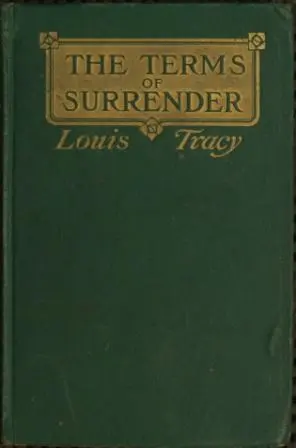
Louis Tracy
THE CLASSIC COLLECTION · 1910
"The de Bercy Affair" by Gordon Holmes is a fictional murder mystery written in the early 20th century. The story revolves around the tragic death of Mademoiselle de Bercy, a popular French actress, and the subsequent investigation led by Chief Inspector Winter and his colleague Inspector Clarke. As the narrative unfolds, suspicions are raised about various characters, including American millionaire Rupert Osborne, who was romantically linked to the deceased. The opening portion of the novel introduces readers to the tense atmosphere at New Scotland Yard, where Chief Inspector Winter is preoccupied with the disappearance of Inspector Furneaux and the investigation into the brutal murder. The details surrounding Mademoiselle de Bercy's death are chilling, as her body is discovered by a distressed housemaid, with signs of a violent struggle. Notably, a stone tool, which is later central to the investigation, is found at the crime scene. As the narrative progresses, various leads are explored, highlighting the complexities of the case and setting the stage for deeper investigations into the actress’s past and the people connected to her, including the mysterious Anarchists on the loose. The intricate plot is established early, ensuring the reader's intrigue as they anticipate the revelation of the murderer and their motives.
Introduction adapted from the source catalogue; source summaries may be automatically generated.
Free to read · English · 73,934 words · No account needed
MAKE TIME FOR A GOOD BOOK
On by default. Untick to stop anonymous reading totals. Each page counts after 10 seconds in view. How this works.
Anonymous counting is on unless you have switched it off.
When he turned round, it was to move straight to a little rack on the left, in which glittered a fine array of daggers--Japanese kokatanas, punals of Salamanca, cangiars of Morocco, bowie-knives of old California, some with squat blades, coming quickly to a point, some long and thin to transfix the body, others meant to cut and gash, each with its label of minute writing.
Furneaux's eye had duly noted them before, but he had passed them without stopping. Now, after seeing the celts, he went back to them.
To his surprise, Miss Prout did not come with him. She stood looking on the ground, her lower lip somewhat protruded, silent, obviously distrait.
"And these, Miss Prout?" chirped he, "are they of high value?"
She neither answered nor moved.
"Perhaps you haven't studied their history?" ventured Furneaux again.
Now, all at once, she moved to the rack of daggers, and without saying a word, tapped with the fore-finger of her right hand, and kept on tapping, a vacant hole in the rack, though her eyes peered deeply into Furneaux's face. And for the first time Furneaux made acquaintance with the real splendor of her eyes--eyes that lived in sleep, torpid like the dormouse; but when they woke, woke to such a lambency of passion that they fascinated and commanded like the basilisk's.
With eyes so alight she now kept peering at Furneaux, standing tall above him, tapping at the empty hole.
"Oh, I see," muttered Furneaux, his eyes, too, alight like live coals, "there's an article missing here, also--one from the celts, one from the daggers."
"He is innocent!" suddenly cried Hylda Prout, in a tempest of passionate
reproach.
"She loves him," thought Furneaux.
And the girl thought: "He knew before now that these things were missing. His acting would deceive every man, but not every woman. How glad I am that I drew him on!"
Now, though the fact of the discovery of the celt by Inspector Clarke under the dead actress's piano had not been published in the papers, the fact that she had been stabbed through the eye by a long blade with blunt edges was known to all the world. There was nothing strange in this fierce outburst of Osborne's trusted secretary, nor that tears should spring to her eyes.
"Mr. Furneaux, he is innocent," she wailed in a frenzy. "Oh, he is! You noticed me hesitate just now to bring you in here: well, this was the reason--this, this, this----" she tapped with her forefinger on the empty hole--"for I knew that you would see this, and I knew that you would be jumping to some terrible conclusion as to Mr. Osborne."
Your reading position is saved on this browser. Take it to another device with a library code. Reading pages adapt to text, rather than matching a printed edition.
Louis Tracy
Louis Tracy
Louis Tracy
Louis Tracy
BEHIND THE BOOK
This eBook is for the use of anyone anywhere in the United States and most other parts of the world at no cost and with almost no restrictions whatsoever. You may copy it, give it away or re-use it under the terms of the Project Gutenberg License included with this eBook or online at www.gutenberg.org. If you are not located in the United States, you will have to check the laws of the country where you are located before using this eBook. Read the source licence.
The original source file, including credits and licence, is retained by this library. Request an original-format copy at no charge. Please include the book title and Project Gutenberg identifier #50705.
KEEP YOUR CURIOSITY GOING
Coulson Kernahan

Maurice Baring
Frances Wright
Cécile Tormay

Frederic Jesup Stimson

W. H. P. (William Henry Pope) Jarvis