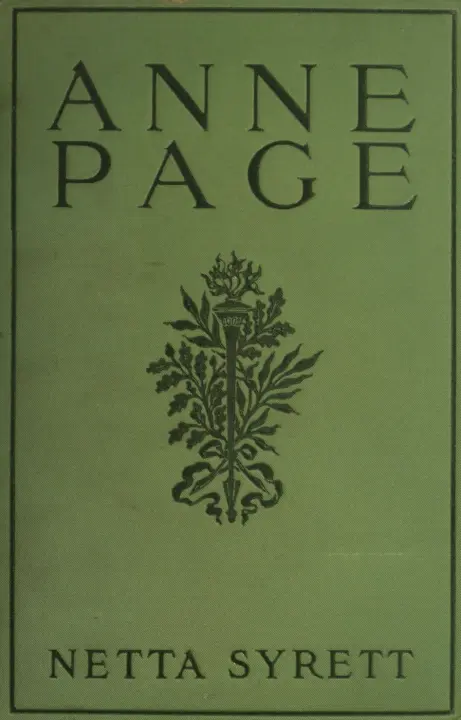
Anne Page
Netta Syrett
THE CLASSIC COLLECTION · 1906
"The Day's Journey" by Netta Syrett is a novel written in the early 20th century. The story centers around Rose Summers, who has returned from living abroad and is visiting her cousin Cecily Kingslake at her picturesque home in the English countryside. The opening chapters hint at the complexities of Cecily's marriage and the emotional undercurrents that exist between the characters, particularly in the context of domestic roles, ambition, and friendship. The beginning of the novel introduces Rose as she arrives at Cecily's home, reflecting on her cousin's life and their past friendship. Rose notices the changes in Cecily since her marriage to Robert Kingslake, a writer who has not achieved the success projected for him. As the characters reconnect, underlying tensions regarding personal fulfillment and dissatisfaction in marriage start to surface. Through their conversations, themes of identity, societal expectations, and the sacrifices women make in personal relationships begin to emerge, setting the stage for deeper exploration of these issues as the story unfolds.
Introduction adapted from the source catalogue; source summaries may be automatically generated.
Free to read · English · 58,178 words · No account needed
MAKE TIME FOR A GOOD BOOK
On by default. Untick to stop anonymous reading totals. Each page counts after 10 seconds in view. How this works.
Anonymous counting is on unless you have switched it off.
“To love less selfishly,” she returned, looking down at him; “to admit the value of every ennobling friendship--a friendship such as ours, Fergus! What can it mean but good? Good for both of us. Good for her, too, if only she would take it so,” she added, softly.
Robert made a restless movement. The spell of her presence was somehow broken. He felt worried, exasperated, angry with himself--almost angry with Philippa. She expected too much of human nature. Certainly too much of his.
“But, as a matter of fact, you can’t get a woman to take it like that!” he exclaimed, in spite of himself. “Consider our case if you like,” he added, in an injured tone. “What woman would believe in mere friendship, if she knew we had met--how often? Nearly every day, as a matter of fact, for the last three months. It isn’t in human nature!” He spoke almost irritably, prompted by an undefined notion that, having put such a strain upon any woman’s credulity, it was ridiculous not to have justified her disbelief. For a moment he wished Philippa had been a less noble woman.
She sighed. “Then I suppose you were quite right not to tell her,” she said, descending abruptly upon the personal pronoun. “Your idea is to let her grow used to our friendship, here in the country, under her eyes, so that she may gradually come to believe in its purity?”
Robert felt a little nonplussed. He had thought this particular idea emanated from Philippa herself, but as she spoke of it decidedly as his, she must have no doubt that he had suggested it. In any case, it was scarcely chivalrous to undeceive her.
“Perhaps you are right,” she murmured, after a moment. Presently, as Robert watched her, she smiled, slowly, indulgently, as a mother smiles at the waywardness of a little child. “How charming Cecily is!” she said. “She always appealed to me, even as a schoolgirl. I always wanted to protect her in some way. She was so fragile--so sweet. She had very little character,--as a child, I mean,--but then she was so graceful, so lovable, one scarcely missed it.”
Robert was silent. He felt vaguely uncomfortable.
“Oh, what a pity! What a pity!” she exclaimed, softly, after a pause. There was the tenderest commiseration and regret in her emotional voice. Robert felt his heart stirred painfully. He wanted to kiss her dress, but refrained.
“What is a pity?” he asked, in a low tone.
“That she doesn’t understand you, Fergus!”
“She thinks she does.”
“Ah, yes!--that is the tragedy.”
“Oh, we all have them!” said Robert, lightly.
Your reading position is saved on this browser. Take it to another device with a library code. Reading pages adapt to text, rather than matching a printed edition.
Netta Syrett
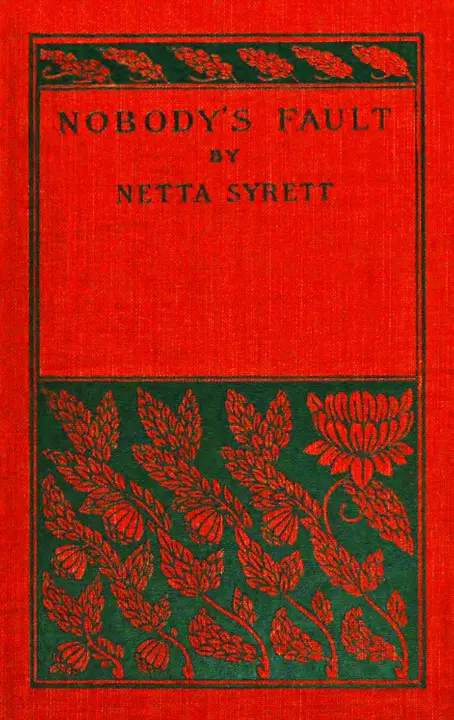
Netta Syrett
BEHIND THE BOOK
This eBook is for the use of anyone anywhere in the United States and most other parts of the world at no cost and with almost no restrictions whatsoever. You may copy it, give it away or re-use it under the terms of the Project Gutenberg License included with this eBook or online at www.gutenberg.org. If you are not located in the United States, you will have to check the laws of the country where you are located before using this eBook. Read the source licence.
The original source file, including credits and licence, is retained by this library. Request an original-format copy at no charge. Please include the book title and Project Gutenberg identifier #71317.
KEEP YOUR CURIOSITY GOING
Coulson Kernahan

Maurice Baring
Frances Wright
Cécile Tormay

Frederic Jesup Stimson

W. H. P. (William Henry Pope) Jarvis