THE CLASSIC COLLECTION✦An outlaw’s diary: the CommuneCLASSIC FREE BOOKS
An outlaw’s diary: the Commune
Cécile Tormay
THE CLASSIC COLLECTION · 1890
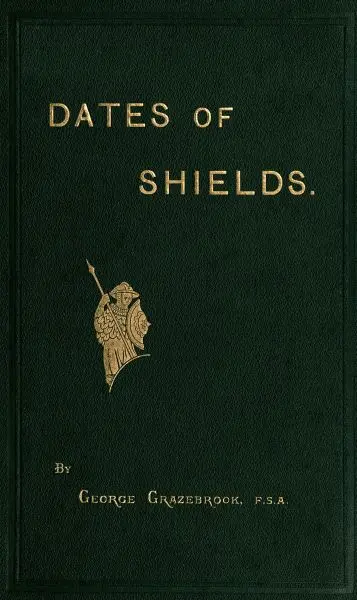
"The Dates of Variously-shaped Shields, with Coincident Dates and Examples" by George Grazebrook is an historical account written in the late 19th century. This work explores the evolution and classification of variously-shaped heraldic shields primarily in England, with a focus on dating them accurately through historical seals, medieval manuscripts, and other contemporary sources. The author aims to provide a structured reference for students and antiquarians interested in the history and development of heraldry. At the start of the text, Grazebrook introduces the topic by emphasizing the lack of comprehensive studies on the dating of shields throughout history. He reflects on the importance of seals as a reliable source of evidence for dating these artifacts and highlights several shapes of shields used from the 11th to the 15th centuries, explaining their materials and design features. The opening portion sets the stage for a detailed examination of shield shapes while outlining the historical context and significance of the research. Grazebrook also expresses his hope for constructive criticism that would enhance the future editions of this work.
Introduction adapted from the source catalogue; source summaries may be automatically generated.
Free to read · English · 23,853 words · No account needed
MAKE TIME FOR A GOOD BOOK
On by default. Untick to stop anonymous reading totals. Each page counts after 10 seconds in view. How this works.
Anonymous counting is on unless you have switched it off.
Another Scotch seal, the Earl of Eglinton, 1620 (engraved Herald and Genealogist, vol. iv, p. 18).
Engravings in The English Baronetage, 1741, show the same.
Also in Principal Historical and Allusive Arms, by De la Motte, 1803, which work, indeed, aims at variety in its shapes and designs.
No. 15--In the printer's mark of Ant. du Ry, of Leyden, 1525.
In the shield of Anne Bullen, 1533 (Willement's Regal Heraldry).
Also a seal, 1575, Miscell. Genealogica, vol. ii, p. 170.
These shapes lend themselves particularly to decorations in stained glass, where variations may be constantly found, but it is generally difficult in such cases to give an exact date.
From all which it appears that these shapes--Nos. 13 to 15--began about 1520, and prevailed till about the third quarter of the sixteenth century; and from their beautiful outlines, they occasionally are used even to the present day. During the sixteenth and seventeenth centuries they may often be found hacked and scrolled.
No. 16 occurs in a monument to Raynes, 1689 (engraved in Drake's
Eboracum, p. 515).
This is a shape which would lend itself peculiarly to monuments or
stained glass.
The shields engraved in Chauncey's History of Hertfordshire, 1700, are of this shape, slightly eared, and very slightly hollowed out in the sides.
Nos. 17 and 18.--In these a decidedly German influence is visible.
They occur in the German book of Virgil Solis, 1555.
The earliest English instance of No. 17 which I have noticed appears in the Visit. Hunts, 1613 (Camden Society), p. 4, with the arms of Clifton, but no exact date is attached.
In the 1724 edition of Guillim's Display similar shields are engraved, with scroll work round the edges.
Nos. 19, 20, 21, and 22.
No. 19 is found on the tomb of Margaret, Countess of Richmond, in Westminster Abbey, who died 1509 (Sandford's Genealogical History, p. 326), see No. 73.
Again in a ledger tomb at Brent-eleigh, in memory of Mrs. Sawyer, and dated 1734 (Miscellanea Genealogica et Heraldica for January, 1886).
Also in the engravings in Blomfield's Norfolk, 1739, with a shaped
base.
No. 20, may be seen in stained glass, in Grappenhall Old Rectory
window, of date about 1527.
Again in a brass in Antringham Church, Suffolk, dated 1562.
No. 21, a brass at St. Mary Quay, Ipswich, 1525 (Boutell's Brasses,
p. 132).
Also on a seal, 1575 (engraved, Miscell. Genealogica et Heraldica,
vol. ii, p. 170).
Also on a seal, 1578, in Oliver Vredius (Seals of the Counts of
Flanders).
Again in a grant of arms, 1715 (Miscell. Genealogica et Heraldica, second series, vol. i, p. 188).
A ledger at Kelston churchyard, Gibbes quartering Harrington and Specott, 1730 (engraved in Miscellanea Genealogica et Heraldica for Jan., 1884).
Thus showing that its present use so extensively by the College of Arms is a return to an old pattern existing at any rate since 1509.
Your reading position is saved on this browser. Take it to another device with a library code. Reading pages adapt to text, rather than matching a printed edition.
BEHIND THE BOOK
This eBook is for the use of anyone anywhere in the United States and most other parts of the world at no cost and with almost no restrictions whatsoever. You may copy it, give it away or re-use it under the terms of the Project Gutenberg License included with this eBook or online at www.gutenberg.org. If you are not located in the United States, you will have to check the laws of the country where you are located before using this eBook. Read the source licence.
The original source file, including credits and licence, is retained by this library. Request an original-format copy at no charge. Please include the book title and Project Gutenberg identifier #47761.
KEEP YOUR CURIOSITY GOING
Cécile Tormay

Moritz Busch
John L. Ransom
Frances Wright
Cécile Tormay

Mabel Potter Daggett