THE CLASSIC COLLECTION✦An outlaw’s diary: the CommuneCLASSIC FREE BOOKS
An outlaw’s diary: the Commune
Cécile Tormay
THE CLASSIC COLLECTION · 1890
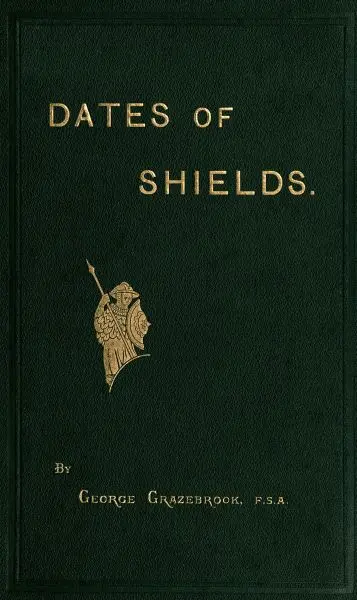
"The Dates of Variously-shaped Shields, with Coincident Dates and Examples" by George Grazebrook is an historical account written in the late 19th century. This work explores the evolution and classification of variously-shaped heraldic shields primarily in England, with a focus on dating them accurately through historical seals, medieval manuscripts, and other contemporary sources. The author aims to provide a structured reference for students and antiquarians interested in the history and development of heraldry. At the start of the text, Grazebrook introduces the topic by emphasizing the lack of comprehensive studies on the dating of shields throughout history. He reflects on the importance of seals as a reliable source of evidence for dating these artifacts and highlights several shapes of shields used from the 11th to the 15th centuries, explaining their materials and design features. The opening portion sets the stage for a detailed examination of shield shapes while outlining the historical context and significance of the research. Grazebrook also expresses his hope for constructive criticism that would enhance the future editions of this work.
Introduction adapted from the source catalogue; source summaries may be automatically generated.
Free to read · English · 23,853 words · No account needed
MAKE TIME FOR A GOOD BOOK
On by default. Untick to stop anonymous reading totals. Each page counts after 10 seconds in view. How this works.
Anonymous counting is on unless you have switched it off.
No. 8 in the accompanying plate of shapes appears in stained glass to the memory of Sir Wm. Berdwell (will, dated 1434), Blomefield's Norfolk, vol. i, p. 203.
An Irish instance, but of very ungraceful proportions, date 1507, is engraved Archæological Journal, vol. xv, p. 188.
It also occurs in the mantelpiece at Helmdon, Northants, 1533; described in Archæologia, vol. xiii, plate 12.
Nos. 9, 10, 11, and 12 all occur on the beautiful monument to Abbot Thomas Ramrage, in St. Alban's Cathedral,--of the date 1529; Boutell's Heraldry, p. 357. Engravings of which may also be frequently found elsewhere.
No. 10 occurs in a small signet seal, two impressions of which are attached as a counterseal to a lease by the Priory of Dartford, co. Kent, bearing date 24th December, 1529. This sealing on the back rendered it impossible to detach the large wax seal and apply it fraudulently to another document. This is engraved Proceedings of the Society of Antiquaries, 27th May, 1875.
Occurs also in a brass, Okeover impaling Aston, date 1520 (Boutell's Brasses, p. 127), see No. 75.
Also in another brass, at Sprouston, Norfolk, dated 1559.
No. 11 occurs without the bouche on a chimney-piece at the Episcopal
Palace, Exeter, 1486.
With the bouche, in the Ramrage Chantry, St. Alban's Abbey, of about the same date (Boutell's Heraldry, p. 98).
Also in heraldic drawings of 1536, in Willement's Regal Heraldry.
No. 12, but without the bouche, occurs in Henry VII.'s chapel (Archæologia, vol. xvi, p. 194).
The annexed engraving shows a most interesting knightly shield of the Schutz family, of Shotover, co. Oxford, dating from the fifteenth century. It is 2 feet 8 inches long by 1 foot 1½ inches broad, and was, when Mr. Hewitt wrote his book, in the possession of the Rev. J. Wilson, President of Trinity College, Oxford. It is engraved and described, Ancient Arms and Armour, vol. ii, p. 496.
It will be remembered that John of Gaunt's shield, described at p. 29, very closely resembles No. 12.
Nos. 13, 14, and 15.
No. 13 is shown in the seal of the Free School of Richmond, Yorkshire, founded 1535-6 (Gale's Registrum Honoris de Richmond, p. 254).
In an old engraving, showing Henry VIII. and his Parliament, in Hall's Chronicle, published 1548, a shield of this shape appears on the curtain extending behind the throne.
No. 14--In a heraldic drawing, 1558, of the arms of Elizabeth, in Harl. MS. 6096, three of these shields are grouped (Willement's Regal Heraldry).
Annexed engraving of an enamelled plaque, supposed to have formed originally the centre of a large salver or dish, is taken from Proceed. Soc. Antiq., 7th Dec., 1876, and shows our shield No. 14 with the date 1563. Sir Thomas Bell died in 1566; he was thrice Mayor of the City of Gloucester, and also represented it in Parliament.
A Scotch seal, Francis Earl of Bothwell, 1587 (engraved Herald and Genealogist, vol. iv, p. 19).
Your reading position is saved on this browser. Take it to another device with a library code. Reading pages adapt to text, rather than matching a printed edition.
BEHIND THE BOOK
This eBook is for the use of anyone anywhere in the United States and most other parts of the world at no cost and with almost no restrictions whatsoever. You may copy it, give it away or re-use it under the terms of the Project Gutenberg License included with this eBook or online at www.gutenberg.org. If you are not located in the United States, you will have to check the laws of the country where you are located before using this eBook. Read the source licence.
The original source file, including credits and licence, is retained by this library. Request an original-format copy at no charge. Please include the book title and Project Gutenberg identifier #47761.
KEEP YOUR CURIOSITY GOING
Cécile Tormay

Moritz Busch
John L. Ransom
Frances Wright
Cécile Tormay

Mabel Potter Daggett