THE CLASSIC COLLECTION✦An outlaw’s diary: the CommuneCLASSIC FREE BOOKS
An outlaw’s diary: the Commune
Cécile Tormay
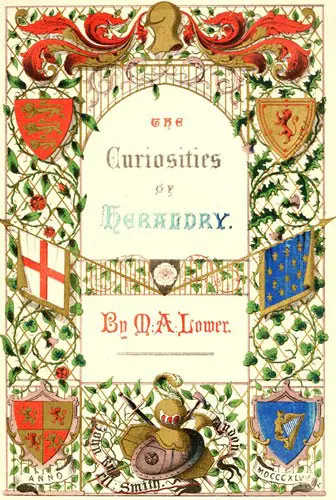
THE CLASSIC COLLECTION · 1845
"The Curiosities of Heraldry" by Mark Antony Lower is a historical account written in the mid-19th century. This work delves into the principles and practices of heraldry, a system that denotes family lineage and nobility through intricate symbols and designs. The book aims to shed light on the often-overlooked significance and utility of heraldic study, enlivened by historical anecdotes and examples. The opening of the text presents a preface where Lower establishes the value of heraldry as an essential study for understanding not only genealogy but also the broader historical context of the Middle Ages. He reflects on the misconceptions surrounding heraldry, countering the view that it is merely an outdated collection of symbols. He emphasizes the poetic and practical aspects of heraldry, asserting that it is a rich field worthy of attention. The introduction sets the stage for a detailed exploration of the science of heraldry, hinting at its deep historical roots and its role in the social fabric of medieval society, ultimately preparing the reader for a thorough investigation into the subject throughout the subsequent chapters.
Introduction adapted from the source catalogue; source summaries may be automatically generated.
Free to read · English · 86,967 words · No account needed
MAKE TIME FOR A GOOD BOOK
On by default. Untick to stop anonymous reading totals. Each page counts after 10 seconds in view. How this works.
Anonymous counting is on unless you have switched it off.
"A foole's bolte is soone shot, and fleeth oftymes fer; But the foole's bolte and the mark cum few times ner."[114]
From sedentary games are borrowed playing-tables, dice, chess-rooks, &c.
War has naturally supplied heraldry with a numerous list of charges, as banners, spears, beacons, drums, trumpets, cannons, or chamber-pieces, 'murthering chain-shot,' burning matches (of rope), portcullises, battering-rams, crossbows, swords, sabres, lances, battle-axes, and scaling-ladders; also shields, generally borne in threes, helmets, morions, gauntlets, greaves (leg armour), horse-trappings, bridles, saddles, spurs, horse-shoes, shackles, cum multis aliis. Many of these, though disused in modern warfare, will require no explanation, but a few others whose use is less obvious may be added, as swepes, caltraps, and water-bowgets.
The swepe, sometimes called a mangonel, and as such borne in the canting arms of Magnall, was a war-engine, used for the purpose of hurling stones into a besieged town or fortress; a species of balista.
In the celebrated lampoon upon Richard, king of the Romans, who was obliged, at the battle of Lewes, to take refuge in a windmill, the following lines occur:
"The Kynge of Alemaigne wende to do full wel,
He saisede the mulne for a castel;
With hare sharpe swerdes he ground the stel,
He wende that the sayles were mangonel!"[115]
The caltrap was a cruel contrivance for galling the feet of horses. It was made of iron, and so constructed that, however it might fall, one of its four sharp points should be erect. Numbers of them strewed in the enemy's path served to retard the advance of cavalry, and a retreat was sometimes secured by dropping them in the flight, and thus cutting off the pursuit. Its etymology is uncertain, cheval-trap and gall-trap have been suggested with nearly equal claims to probability.
Water-bowgets, or budgets, date from the Crusades, when water had often to be conveyed across the sandy deserts from a great distance. They are represented in various grotesque forms as--
so that it is a matter of curiosity to know in what manner they were carried. Leigh and others call them gorges; but the charge properly known by that name is a whirlpool, as borne in the armes parlantes of the family of Gorges.
Your reading position is saved on this browser. Take it to another device with a library code. Reading pages adapt to text, rather than matching a printed edition.
BEHIND THE BOOK
This eBook is for the use of anyone anywhere in the United States and most other parts of the world at no cost and with almost no restrictions whatsoever. You may copy it, give it away or re-use it under the terms of the Project Gutenberg License included with this eBook or online at www.gutenberg.org. If you are not located in the United States, you will have to check the laws of the country where you are located before using this eBook. Read the source licence.
The original source file, including credits and licence, is retained by this library. Request an original-format copy at no charge. Please include the book title and Project Gutenberg identifier #38951.
KEEP YOUR CURIOSITY GOING
Cécile Tormay

Moritz Busch
John L. Ransom
Frances Wright
Cécile Tormay

Mabel Potter Daggett