THE CLASSIC COLLECTION✦An outlaw’s diary: the CommuneCLASSIC FREE BOOKS
An outlaw’s diary: the Commune
Cécile Tormay
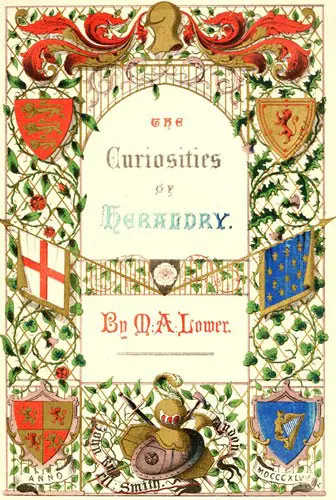
THE CLASSIC COLLECTION · 1845
"The Curiosities of Heraldry" by Mark Antony Lower is a historical account written in the mid-19th century. This work delves into the principles and practices of heraldry, a system that denotes family lineage and nobility through intricate symbols and designs. The book aims to shed light on the often-overlooked significance and utility of heraldic study, enlivened by historical anecdotes and examples. The opening of the text presents a preface where Lower establishes the value of heraldry as an essential study for understanding not only genealogy but also the broader historical context of the Middle Ages. He reflects on the misconceptions surrounding heraldry, countering the view that it is merely an outdated collection of symbols. He emphasizes the poetic and practical aspects of heraldry, asserting that it is a rich field worthy of attention. The introduction sets the stage for a detailed exploration of the science of heraldry, hinting at its deep historical roots and its role in the social fabric of medieval society, ultimately preparing the reader for a thorough investigation into the subject throughout the subsequent chapters.
Introduction adapted from the source catalogue; source summaries may be automatically generated.
Free to read · English · 86,967 words · No account needed
MAKE TIME FOR A GOOD BOOK
On by default. Untick to stop anonymous reading totals. Each page counts after 10 seconds in view. How this works.
Anonymous counting is on unless you have switched it off.
[39] Dallaway.
[40] Lybbardes--leopards. It has long been a matter of controversy between French and English armorists, whether the charges of our royal arms were originally leopards or lions. Napoleon always derisively called them leopards. The author of the 'Roll of Karlaverok,' described in a future page, speaking of the banner of Edward I, says it contained "three leopards courant of fine gold, set on red, fierce, haughty, and cruel."--Nicolas' Karlav. p. 23.
Nisbet, who, as a Scotchman, viewed English heraldry with a somewhat supercilious eye, decides in favour of leopards, and cites the 'Survey of London,' by John Stowe, who quotes a record of the city of London, stating that Frederick, Emperor of Germany, in 1225, sent to Henry III three living leopards, "in token of the regal shield of arms." The same author likewise mentions an order of Edward II to the Sheriff of London, to pay the keeper of the King's leopards in the Tower of London sixpence a day for the sustenance of the leopards.--Nisbet's Essay on Armories, p. 163.
[41] Dallaway; but Nisbet (Armories, p. 61,) alludes to earlier examples
abroad.
[42] Salverte. Essai sur les Noms d'Hommes, (Paris, 1824.) vol. I, p. 240.
[43] Dall. pp. 31-32. The offering of trophies to the Deity is of a much earlier origin, and it was derived from the nations of antiquity. The Old Testament furnishes us with several instances, the classics with many more: "It was very common," says Robinson, "to dedicate the armour of the enemy, and to suspend it in temples."--Vide Homer, Iliad, vii. 81, "I will bear his armour to Troy, and hang it up in the temple of Apollo;" and Virgil, AEn. vii, describes a temple hung round with
----"helmets, darts and spears, And captive chariots, axes, shields, and bars, And broken beaks of ships, the trophies of their wars." Dryden, vii. 252.
But, what is more to our purpose, "It was also customary to dedicate to the gods their own weapons, when they retired from the noise of war to a private life." (Rob. Archaeolog. Graec.) From I Sam. xxi, 9, it appears that David, after his victory over Goliath, had dedicated the Philistine's sword to God as a trophy. "Behold it is here," says the priest, on a subsequent occasion, "wrapped in a cloth behind the ephod." In I Chron. x, 10, we read that the Philistines put the armour of Saul "in the house of their gods, and fastened his head in the temple of Dagon;" and, in xxvi, 27, we are told that "out of the spoils won in battles did they (the Israelites) dedicate to maintain the House of the Lord."
[44] Hist. Poet. i, 302.
Your reading position is saved on this browser. Take it to another device with a library code. Reading pages adapt to text, rather than matching a printed edition.
BEHIND THE BOOK
This eBook is for the use of anyone anywhere in the United States and most other parts of the world at no cost and with almost no restrictions whatsoever. You may copy it, give it away or re-use it under the terms of the Project Gutenberg License included with this eBook or online at www.gutenberg.org. If you are not located in the United States, you will have to check the laws of the country where you are located before using this eBook. Read the source licence.
The original source file, including credits and licence, is retained by this library. Request an original-format copy at no charge. Please include the book title and Project Gutenberg identifier #38951.
KEEP YOUR CURIOSITY GOING
Cécile Tormay

Moritz Busch
John L. Ransom
Frances Wright
Cécile Tormay

Mabel Potter Daggett