THE CLASSIC COLLECTION✦An outlaw’s diary: the CommuneCLASSIC FREE BOOKS
An outlaw’s diary: the Commune
Cécile Tormay
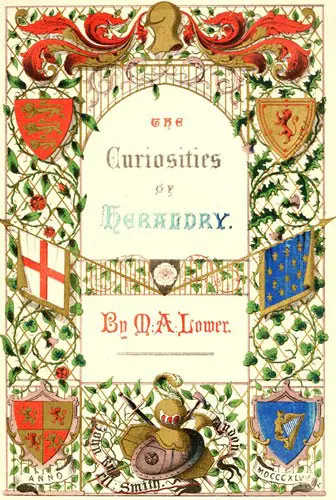
THE CLASSIC COLLECTION · 1845
"The Curiosities of Heraldry" by Mark Antony Lower is a historical account written in the mid-19th century. This work delves into the principles and practices of heraldry, a system that denotes family lineage and nobility through intricate symbols and designs. The book aims to shed light on the often-overlooked significance and utility of heraldic study, enlivened by historical anecdotes and examples. The opening of the text presents a preface where Lower establishes the value of heraldry as an essential study for understanding not only genealogy but also the broader historical context of the Middle Ages. He reflects on the misconceptions surrounding heraldry, countering the view that it is merely an outdated collection of symbols. He emphasizes the poetic and practical aspects of heraldry, asserting that it is a rich field worthy of attention. The introduction sets the stage for a detailed exploration of the science of heraldry, hinting at its deep historical roots and its role in the social fabric of medieval society, ultimately preparing the reader for a thorough investigation into the subject throughout the subsequent chapters.
Introduction adapted from the source catalogue; source summaries may be automatically generated.
Free to read · English · 86,967 words · No account needed
MAKE TIME FOR A GOOD BOOK
On by default. Untick to stop anonymous reading totals. Each page counts after 10 seconds in view. How this works.
Anonymous counting is on unless you have switched it off.
Another perquisite of the heraldic corps were great quantities of the rich stuffs, such as velvet, tissue, and cloth of gold, used as the furniture of great public ceremonials. The following are some of the fees claimed by the officers on state occasions, as recorded in one of the Ashmolean MSS.
"At the coronacion of the Kinge of England c{l.}[258], appareled in
scarlet.
"At the displaying of the King's banner in any campe ... c markes.
"At the displaying of a Duke's banner, L20.
"At a Marquis's, 20 markes.
"At an Earle's, x{l.}, &c. &c.
"The Kinge marrying a wife L50, with the giftes of the King's and Queen's uppermost garments!
"At the birth of the King's eldest son, 100 markes; at the birth of other younger children, L20.
"The King being at any syge (siege) with the crowne on his head, L5.
"The wages due to the officers of armes when they go owt of the land:
"Garter 8s. a day: every of the other kings 7s.: every herald 4s.: every pursuivant 2s.: and theyr ordinary expences."
To return to the thread of our history: at the death of Richard III,[259] all his public acts were declared null and void, as those of an usurper, and the heraldic body, in common with others, fell under the censure of Henry. Driven from their stately mansion of Cold-Harbour, they betook themselves to the conventual house of Rounceval, near Charing Cross, which had been a cell to the priory of Rouncevaulx, in Navarre, and suppressed with the rest of the alien priories by the jealous policy of Henry V. Here they remained for many years, though only by sufferance, for Edward VI granted the site to Sir Thomas Cawarden.
It must not be imagined that the heralds were created merely for the purpose of acting as puppets in the pageantry of the court and the camp: they had other and more useful functions to perform. The genealogies of noble and gentle families were intrusted to their keeping, and thus titular honours and territorial possessions were safely conveyed to lawful heirs, when, in the absence of proper officers, and a recognized depository for documents, much confusion might have been produced by disputed claims. The ecclesiastics had formerly been the chief conservators of genealogical facts, but at the dissolution of the monasteries by Henry VIII, the documents containing them were scattered to the winds. Hence it became necessary to adopt some more general and better regulated means of collecting and transmitting to posterity the materials of genealogy, and out of this necessity sprang those 'progresses' of the kings of arms and heralds through the various counties, called VISITATIONS. Some faint traces of these visitations occur, it is true, before the Reformation, and even before the incorporation of the heralds, namely, as early as 1412; but it was not until 1528 that they were systematically attended to.[260] After the latter date they were continued about once in every generation, or at intervals varying between twenty-five and forty years. The officers, under the warrant of the earl-marshal, were bound to make inquisitions respecting the pedigree of every family claiming the honour of gentry, and to enter the names, titles, places of abode, &c. in a book. Many such books, between the date just referred to and the year 1687, are now existing in the College of Arms, while many copies of them, and a few of the originals, are in the British Museum and in private collections. To most of the pedigrees thus entered were attached the family arms, which received the confirmation of the 'kings' when satisfactory evidence of the bearer's right to them could be adduced.[261] When a family from any circumstance did not bear arms, a coat was readily granted by the kings, who received fees proportioned to the rank of the parties; for example:
Your reading position is saved on this browser. Take it to another device with a library code. Reading pages adapt to text, rather than matching a printed edition.
BEHIND THE BOOK
This eBook is for the use of anyone anywhere in the United States and most other parts of the world at no cost and with almost no restrictions whatsoever. You may copy it, give it away or re-use it under the terms of the Project Gutenberg License included with this eBook or online at www.gutenberg.org. If you are not located in the United States, you will have to check the laws of the country where you are located before using this eBook. Read the source licence.
The original source file, including credits and licence, is retained by this library. Request an original-format copy at no charge. Please include the book title and Project Gutenberg identifier #38951.
KEEP YOUR CURIOSITY GOING
Cécile Tormay

Moritz Busch
John L. Ransom
Frances Wright
Cécile Tormay

Mabel Potter Daggett