THE CLASSIC COLLECTION✦An outlaw’s diary: the CommuneCLASSIC FREE BOOKS
An outlaw’s diary: the Commune
Cécile Tormay
THE CLASSIC COLLECTION · 1845
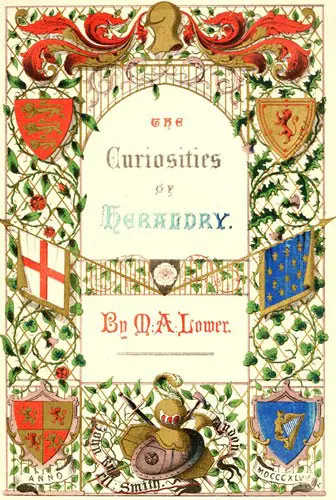
"The Curiosities of Heraldry" by Mark Antony Lower is a historical account written in the mid-19th century. This work delves into the principles and practices of heraldry, a system that denotes family lineage and nobility through intricate symbols and designs. The book aims to shed light on the often-overlooked significance and utility of heraldic study, enlivened by historical anecdotes and examples. The opening of the text presents a preface where Lower establishes the value of heraldry as an essential study for understanding not only genealogy but also the broader historical context of the Middle Ages. He reflects on the misconceptions surrounding heraldry, countering the view that it is merely an outdated collection of symbols. He emphasizes the poetic and practical aspects of heraldry, asserting that it is a rich field worthy of attention. The introduction sets the stage for a detailed exploration of the science of heraldry, hinting at its deep historical roots and its role in the social fabric of medieval society, ultimately preparing the reader for a thorough investigation into the subject throughout the subsequent chapters.
Introduction adapted from the source catalogue; source summaries may be automatically generated.
Free to read · English · 86,967 words · No account needed
MAKE TIME FOR A GOOD BOOK
On by default. Untick to stop anonymous reading totals. Each page counts after 10 seconds in view. How this works.
Anonymous counting is on unless you have switched it off.
The duties of the officers of arms at this period consisted in attending all ceremonials incident to the king and the nobility, such as coronations, creations, the displaying of banners on the field of battle or in the lists, public festivities and processions, the solemnization of baptisms, marriages, and funerals, the enthronization of prelates, proclamations, and royal journeys or progresses. The importance of the presence of heralds at royal funerals of a somewhat later date, is shown in the two following extracts:[256]
"And incontinent all the heraudes did off their cote-armour, and did hange them upon the rayles of the herse, cryinge lamentably in French, 'The noble king Henry the seaveneth is dead;' and as soon as they had so done, everie heraude putt on his cote-armure againe, and cried with a loude voyce, 'Vive le noble Henry le viijth.'"
At the interment of Prince Arthur, 1502:
"At every Kurie elyeson an officer of arms with a high voyce said for Prince Arthure's soule and all Christian soules, Pater-noster.... His officer of arms, sore weeping, toke off his coate of armes, and cast it along over the cheaste right lamentablie."[257]
The fees demanded on the occasions before recited were considerable, but the officers of arms had another source of revenue, namely, the largesses or rewards for proclaiming the styles and titles of the nobility. These were optional, and generally corresponded to the rank and opulence of the donors. "On Newe-yeares-day," [1486], says Leland, "the king, being in a riche gowne, dynede in his chamber, and gave to his officers of armes vil. of his Largesse, wher he was cryed in his style accustomede. Also the quene gave to the same officers XLs. and she was cried in her style. At the same time my lady the kyngs moder gave XXs. and she was cried Largesse iij tymes. De hault, puissaunt, et excellent Princesse, la mer du Roy notre souveraigne, countesse de Richemonde et de Derbye, Largesse. Item, the Duc of Bedeforde gave XLs. and he was cried, Largesse de hault et puissaunt prince, frere et uncle des Roys, duc de Bedeforde, et counte de Penbroke, Largesse. Item, my lady his wiff gave xiijs. iiijd. and she was cried, Largesse de hault et puissaunt princesse, duchesse de Bedeforde et de Bokingham, countesse de Penbrok, Stafford, Harford, et de Northampton, et dame de Breknok, Largesse. Item, the Reverende Fader in God the Lorde John Fox, Bishop of Excester, privy seale, gave XXs. Item, th' Erle of Aroundell gave Xs., and he was cried, Largesse de noble et puissaunt seigneur le counte d'Aroundell, et seigneur de Maltravers. Item, th' Erle of Oxinforde gave xxs. and he was cryede, Largesse de noble et puissaunt le Counte d'Oxinforde, Marquis de Develyn, Vicount de Bulbik, et Seigneur de Scales, Graunde Chamberlayn, et Admirall d'Angleter, Largesse. Item, my lady his wiff XXs. and she was cried, Largesse de noble et puissaunt Dame la Countesse d'Oxinford, Marquise de Develyn, Vicountesse de Bulbik, et Dame de Scales, &c. &c."
Your reading position is saved on this browser. Take it to another device with a library code. Reading pages adapt to text, rather than matching a printed edition.
BEHIND THE BOOK
This eBook is for the use of anyone anywhere in the United States and most other parts of the world at no cost and with almost no restrictions whatsoever. You may copy it, give it away or re-use it under the terms of the Project Gutenberg License included with this eBook or online at www.gutenberg.org. If you are not located in the United States, you will have to check the laws of the country where you are located before using this eBook. Read the source licence.
The original source file, including credits and licence, is retained by this library. Request an original-format copy at no charge. Please include the book title and Project Gutenberg identifier #38951.
KEEP YOUR CURIOSITY GOING
Cécile Tormay

Moritz Busch
John L. Ransom
Frances Wright
Cécile Tormay

Mabel Potter Daggett