THE CLASSIC COLLECTION✦Harps Hung up in BabylonCLASSIC FREE BOOKS
Harps Hung up in Babylon
Arthur Colton
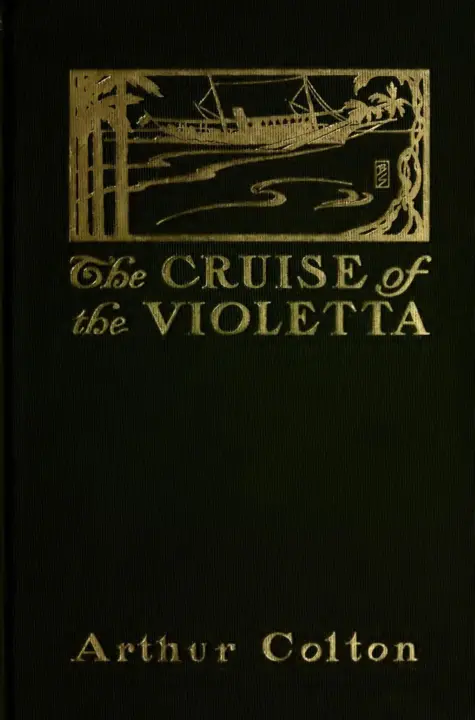
THE CLASSIC COLLECTION · 1906
"The Cruise of The Violetta" by Arthur Colton is a novel written in the early 20th century. The story centers around Christopher "Kit" Kirby, who falls ill in South America and encounters the intriguing Dr. Ulswater during his recovery in the Bahamas. The book sets sail into an exploration of tropical regions, characters, and the adventures that unfold as they encounter various situations, including the enigmatic Mrs. Mink, who owns the yacht "Violetta," and aims to engage in missionary work. At the start of the narrative, Kit Kirby describes his troublesome journey through illness and how he comes under the care of Dr. Ulswater, a well-traveled and unconventional physician. As Kit recovers, he forms a bond with Dr. Ulswater while exploring the vibrant marine life of Nassau. The introduction of Mrs. Mink aboard the yacht brings a domestic twist amid the tropical backdrop, as she reveals her motivations for engaging in foreign missions. Together, they embark on a cruise filled with lively discussions and unexpected encounters, including a diplomatic crisis involving revolutionary figures and whimsical situations, setting the stage for an adventurous exploration of character dynamics and cultural observations.
Introduction adapted from the source catalogue; source summaries may be automatically generated.
Free to read · English · 45,774 words · No account needed
MAKE TIME FOR A GOOD BOOK
On by default. Untick to stop anonymous reading totals. Each page counts after 10 seconds in view. How this works.
Anonymous counting is on unless you have switched it off.
After all, marriage would disturb my pursuits. A man with a liquid and non-resistant name like “Ulswater,” with a fleshy and floating physique, with a mind as full of refuse as a sargasso sea, and whiskers resembling sargasso,--when he proposes to ally himself in marriage to a woman like Mrs. Mink, whose rational instincts--as a capable and neat housekeeper--would be to trim his whiskers and rearrange his nature, to tidy up his mind and sweep it, hang antimacassars over its chairs, polish its andirons, fling the cuspidor out of the window, and can the tropical fruitage of his character into jellies and jams in glass jars with screw tops and rubber bands,--when such a man has in mind such an alliance, if fate prevents, if an agile Presbyterian professor is one too many for him, what should he do but remark, “Aequam memento rebus in arduis servare mentem,” that is, “In trouble take it easy,” and then immediately proceed to swear himself black in the face, and wish for a green and red parrot to take up the job after him?
Precisely. Also I dried my clothes and whistled. Time passed on, and it was perhaps six o'clock. Suddenly, as I looked up, Professor Simpson stood before me, alone.
“Professor,” I said, “you intrude.”
He seated himself on the fallen trunk of the banana tree.
“I am compelled to do so,” he said. “Mrs. Mink objects to the present arrangement; whether on the score of propriety, or because she regards my protection as inadequate, I cannot say, I refuse to discuss. It is a matter, in either case, humiliating to myself. She demands the return of Dr. Uls-water.”
“I am sorry for Mrs. Mink's feelings,” I said, “but I seem to see a lack of consideration for mine.”
“I have stated Mrs. Mink's attitude without commenting upon it,” he went on. “As regards my own, there is much more to be said. I cannot conceal from myself that the terms you have applied to my late ill-regulated conduct would, if properly qualified and defined, in the main be just. I am, further, upon Mrs. Mink's own declaration, forced to believe that her consent not for the present to decline my suit, but to consider it, perhaps favourably, was entirely due to that very action which my conscience compels me to deplore. She was attracted by that very deviation from rectitude into which I was tempted and fell. She states that she was about to decline my proposal absolutely, finally, when my action revealed to her my character, as she says, in a new light. Not to my position in the scientific world, my well-earned repute, not to my worthier qualities of mind and heart, not to her conviction of these claims, can her capitulation--if such it was--be attributed. You will understand my distress at this admission made by Mrs. Mink. I fear to infer, and yet I must infer, a want of seriousness, of strict conscience, on the part of Mrs. Mink. I showed her my distress, I intimated my fear, I begged her to allay it, to consider, to recollect the facts more carefully. She became angry and asked if I repented cutting the rope. I defined my position. She interrupted, refused to listen, and said that my proposal was now declined. I endeavoured to reason, to supplement argument by argument. She prevented me; she commanded me to go and insist on Dr. Ulswater's return. Such has been my recent painful conversation with Mrs. Mink, concluding with the command which has caused this intrusion upon you.”
Your reading position is saved on this browser. Take it to another device with a library code. Reading pages adapt to text, rather than matching a printed edition.
Arthur Colton
Arthur Colton
Arthur Colton
Arthur Colton
BEHIND THE BOOK
This eBook is for the use of anyone anywhere in the United States and most other parts of the world at no cost and with almost no restrictions whatsoever. You may copy it, give it away or re-use it under the terms of the Project Gutenberg License included with this eBook or online at www.gutenberg.org. If you are not located in the United States, you will have to check the laws of the country where you are located before using this eBook. Read the source licence.
The original source file, including credits and licence, is retained by this library. Request an original-format copy at no charge. Please include the book title and Project Gutenberg identifier #50272.
KEEP YOUR CURIOSITY GOING
Wilfrid Scawen Blunt
Wilfrid Scawen Blunt

E. W. (Edgar Watson) Howe
Coulson Kernahan

Maurice Baring
Frances Wright