THE CLASSIC COLLECTION✦The Hero of Ticonderoga; or, Ethan Allen and His Green Mountain BoysCLASSIC FREE BOOKS
The Hero of Ticonderoga; or, Ethan Allen and His Green Mountain Boys
John De Morgan
THE CLASSIC COLLECTION · 1892
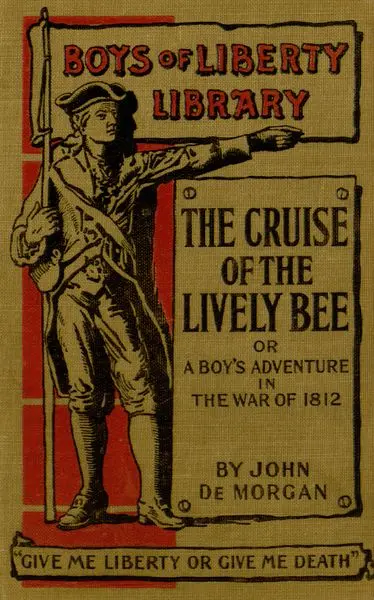
"The Cruise of the 'Lively Bee'; Or, A Boy's Adventures in the War of 1812" by John De Morgan is a historical novel written in the late 19th century. The story is set during the War of 1812 and follows the adventurous exploits of a young boy named John Tempest. He embarks on a journey aboard the privateer ship "Lively Bee" and encounters various challenges and battles as he fights for his country against the British fleet. The opening of the novel sets the stage for the declaration of war. It describes a bustling scene in New York City, where citizens are reacting to news of President Madison’s declaration against Great Britain. Young John Tempest, in the uniform of a midshipman, displays excitement and patriotic zeal as he prepares to sail into action aboard the "Lively Bee." Throughout the initial chapters, readers are introduced to the dynamics of the naval conflict, Tempest's aspirations for valor and glory, and the spirited camaraderie among the crew as they anticipate opportunities for adventure and combat on the high seas.
Introduction adapted from the source catalogue; source summaries may be automatically generated.
Free to read · English · 51,637 words · No account needed
MAKE TIME FOR A GOOD BOOK
On by default. Untick to stop anonymous reading totals. Each page counts after 10 seconds in view. How this works.
Anonymous counting is on unless you have switched it off.
"Now coil up y'r nonsense 'bout England's great navy, And take in y'r slack about oak-hearted tars; For frigates as stout, and as gallant crews have we, Or how came their Macedon decked with our stars? Yes, how came her Guerriere, her Peacock, and Java, All sent broken-ribbed to old Davy of late? How came it? Why, split me, than Britons we're braver; And that too they shall feel, whenever we meet?"
Captain Harry Vernon sang the above lines as a sort of introduction to
his story.
He felt particularly elated.
Jack either is boisterously happy, when on land, or else excessively
melancholy.
Harry Vernon was very jolly--no other word aptly describes his state of
mind.
Perhaps the generous dinner of which he had just partaken, or it may be the fact that he was the bearer of such good news, affected him; whatever the cause, the fact was unaltered, he was lively and merry, and sang the song with the fervor of a man before the mast.
"You will remember," commenced Vernon, "that Captain Hull resigned his command of the Constitution in order that some other officer might win laurels with the noble frigate.
"In his place, Bainbridge was appointed, and of course you know, Tempest, that there is not a better or braver man in the entire navy than that same Bainbridge."
"I have heard of his gallant conduct in the wars against France and
Tripoli," answered Hamilton.
"Was the Hornet with the Constitution when the fight took place?" asked Tempest, almost impatiently.
"No. It appears not. The Hornet was blockading the Bonne Citoyenne, but I must go back or you will not understand.
"Fill up, men, and let one night at least be devoted to patriotism and King Bacchus. Bertha--I beg pardon, Mistress Tempest--will excuse you for one night," and Vernon laughed heartily, as though he had perpetrated a joke.
"The Hornet and Constitution were to cruise in company, while Porter was to waylay West Indiamen, and after a certain time proceed southward, calling at several South American ports, with a view to join Bainbridge.
"When the two vessels reached the port of Praya in the island of St. Jago, it became necessary to practice a little deception.
"The two vessels floated the British flag, and the officers took off every eagle button from their uniform.
"Then, with the greatest audacity, the officers next prepared to land.
"They called on the governor, and paid their respects to his family, and asked permission to leave letters for Sir James Yeo, one of his Britannic majesty's naval commanders.
"The request was granted, and Bainbridge wrote the letters.
"But what had they to do with an English captain?" asked Hamilton.
Your reading position is saved on this browser. Take it to another device with a library code. Reading pages adapt to text, rather than matching a printed edition.
BEHIND THE BOOK
This eBook is for the use of anyone anywhere in the United States and most other parts of the world at no cost and with almost no restrictions whatsoever. You may copy it, give it away or re-use it under the terms of the Project Gutenberg License included with this eBook or online at www.gutenberg.org. If you are not located in the United States, you will have to check the laws of the country where you are located before using this eBook. Read the source licence.
The original source file, including credits and licence, is retained by this library. Request an original-format copy at no charge. Please include the book title and Project Gutenberg identifier #46371.
KEEP YOUR CURIOSITY GOING
Cécile Tormay

Moritz Busch
Coulson Kernahan
John L. Ransom

Maurice Baring
Frances Wright