THE CLASSIC COLLECTION✦The Hero of Ticonderoga; or, Ethan Allen and His Green Mountain BoysCLASSIC FREE BOOKS
The Hero of Ticonderoga; or, Ethan Allen and His Green Mountain Boys
John De Morgan
THE CLASSIC COLLECTION · 1892
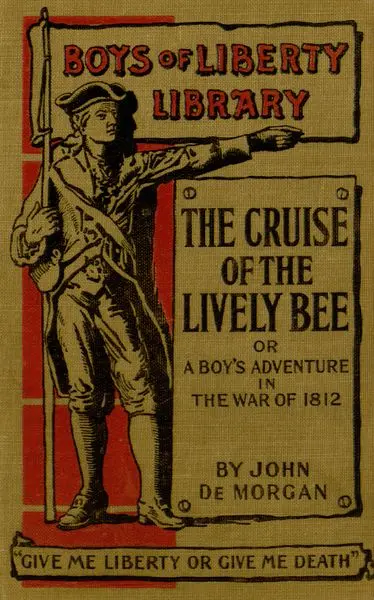
"The Cruise of the 'Lively Bee'; Or, A Boy's Adventures in the War of 1812" by John De Morgan is a historical novel written in the late 19th century. The story is set during the War of 1812 and follows the adventurous exploits of a young boy named John Tempest. He embarks on a journey aboard the privateer ship "Lively Bee" and encounters various challenges and battles as he fights for his country against the British fleet. The opening of the novel sets the stage for the declaration of war. It describes a bustling scene in New York City, where citizens are reacting to news of President Madison’s declaration against Great Britain. Young John Tempest, in the uniform of a midshipman, displays excitement and patriotic zeal as he prepares to sail into action aboard the "Lively Bee." Throughout the initial chapters, readers are introduced to the dynamics of the naval conflict, Tempest's aspirations for valor and glory, and the spirited camaraderie among the crew as they anticipate opportunities for adventure and combat on the high seas.
Introduction adapted from the source catalogue; source summaries may be automatically generated.
Free to read · English · 51,637 words · No account needed
MAKE TIME FOR A GOOD BOOK
On by default. Untick to stop anonymous reading totals. Each page counts after 10 seconds in view. How this works.
Anonymous counting is on unless you have switched it off.
With wonderful celerity Tempest picked up the corpse and threw it
overboard.
His example was instantly followed, and every dead body was given to the waves, and alas! some of the wounded met the same watery grave.
The fight did not last long.
The British were beaten so thoroughly that the few survivors begged for
mercy.
It was only after the fight that Vernon discovered that the two
men-of-war had escaped.
The merchantman drifted about helplessly, and was soon boarded by the
crew of the privateer.
She proved to be a rich prize, and her captain could not help admiring the courage of the privateer who had taken his vessel away from two of the most noted war ships of the British navy.
It was not cowardice which caused the two vessels to escape.
Just on the verge of the horizon they saw some American men-of-war, and they determined to give chase, leaving the merchantman a prize in the hands of the privateer.
The boarding crew had been deserted only when it was found that they stood no chance of capturing the Lively Bee.
Although the captain of the merchantman admired the privateer's courage, he was none the less grieved over the loss of his vessel and her rich cargo.
Five of the English boarders had been taken prisoners, and to these he
went.
He made them liberal offers if they would but break loose and aid him
in retaking his ship.
They were not averse to the project, if they saw the slightest chance
of success.
Circumstances favored them.
Captain Vernon sent the prisoners on board the merchant prize, and
placed Tempest in command.
The prisoner-captain was permitted his freedom on parole.
He gave his sacred word that he would not try to escape, and yet his heart was full of treachery, his brain occupied in hatching schemes of mutiny.
That night a heavy fog sprang up, and the two vessels dare not stay too
close together.
That was the opportunity.
With cat-like tread the captain descended to the cabin, where the English sailors were imprisoned.
Lieutenant Tempest had grave suspicions about the man's honesty, and
set himself to watch him.
From a point of vantage he heard every word, and formed his plans.
The prisoners were not placed in irons, and so only the slight barrier of a door stood between them and the freedom of the deck.
The night was dark and the fog more dense.
It was at three bells, or half-past one in the morning, that the
attempt was to be made.
Tempest arranged his plans, and to all appearance everything went on as
usual.
Your reading position is saved on this browser. Take it to another device with a library code. Reading pages adapt to text, rather than matching a printed edition.
BEHIND THE BOOK
This eBook is for the use of anyone anywhere in the United States and most other parts of the world at no cost and with almost no restrictions whatsoever. You may copy it, give it away or re-use it under the terms of the Project Gutenberg License included with this eBook or online at www.gutenberg.org. If you are not located in the United States, you will have to check the laws of the country where you are located before using this eBook. Read the source licence.
The original source file, including credits and licence, is retained by this library. Request an original-format copy at no charge. Please include the book title and Project Gutenberg identifier #46371.
KEEP YOUR CURIOSITY GOING
Cécile Tormay

Moritz Busch
Coulson Kernahan
John L. Ransom

Maurice Baring
Frances Wright