THE CLASSIC COLLECTION✦The Hero of Ticonderoga; or, Ethan Allen and His Green Mountain BoysCLASSIC FREE BOOKS
The Hero of Ticonderoga; or, Ethan Allen and His Green Mountain Boys
John De Morgan
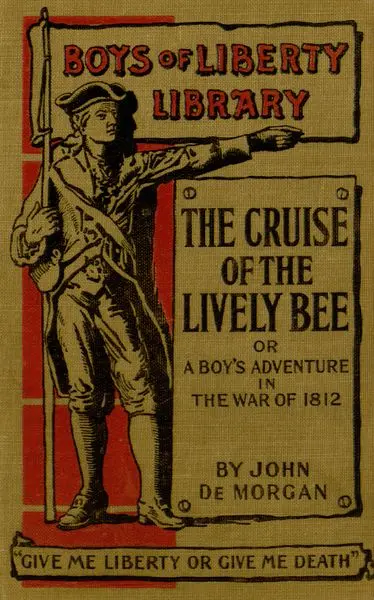
THE CLASSIC COLLECTION · 1892
"The Cruise of the 'Lively Bee'; Or, A Boy's Adventures in the War of 1812" by John De Morgan is a historical novel written in the late 19th century. The story is set during the War of 1812 and follows the adventurous exploits of a young boy named John Tempest. He embarks on a journey aboard the privateer ship "Lively Bee" and encounters various challenges and battles as he fights for his country against the British fleet. The opening of the novel sets the stage for the declaration of war. It describes a bustling scene in New York City, where citizens are reacting to news of President Madison’s declaration against Great Britain. Young John Tempest, in the uniform of a midshipman, displays excitement and patriotic zeal as he prepares to sail into action aboard the "Lively Bee." Throughout the initial chapters, readers are introduced to the dynamics of the naval conflict, Tempest's aspirations for valor and glory, and the spirited camaraderie among the crew as they anticipate opportunities for adventure and combat on the high seas.
Introduction adapted from the source catalogue; source summaries may be automatically generated.
Free to read · English · 51,637 words · No account needed
MAKE TIME FOR A GOOD BOOK
On by default. Untick to stop anonymous reading totals. Each page counts after 10 seconds in view. How this works.
Anonymous counting is on unless you have switched it off.
But he remembered his country, and if Boston wanted to rejoice with the victors, it might be of advantage nationally.
So he ordered the salute to be answered, and he anchored until the boat
could reach him.
The worthy mayor of the city came off in the boat, wearing all the
trappings of his office.
He clambered on deck with the usual awkwardness of a landsman, and bowed very low as he saluted Captain Hull.
The naval officer was blunt and honest.
He spoke to the point, and never weighed his words long.
He hated obsequiousness, and hesitated whether to deal with the mayor
courteously or brusquely.
But his sense of good manners conquered, and he greeted the citizen
with the greatest courtesy.
"How long wilt thou wait outside the harbor?" asked the mayor.
"One hour. The tide forbids me further delay," was the answer.
The mayor descended to the boat, and was rowed back to the city.
Every few minutes he forgot his dignity and shouted to fishermen, lightermen and crafts of all kinds:
"Get out your flags, England has been beaten."
It was surprising how soon the ships in the harbor were decked with
bunting.
Every flag was flying, and all sorts of things pressed into service.
One man tore up his red shirt to make a pennon; women gave up red and blue shawls; children contributed clothing; anything of bright color was utilized, and the scene was almost instantly transformed from the somberness of everyday life to the brilliancy of festival attire.
A great flotilla of gayly decorated boats went out to meet and surround
the Constitution.
The flags of surrounding vessels were dipped in salutation as the war-scarred veteran ship made her way to the wharf.
The Boston Artillery Company, that organization whose deeds will never be forgotten, assembled on the dock and fired a national salute.
As the guns of the Constitution responded, Captain Hull remarked that he fired them with more pleasure than when another vessel was the target.
The people needed cheering, for all the news had been of disaster.
The British had gained victories on land.
The Canadian frontier, near Detroit, had been the scene of American reverses, and the people were beginning to despair.
The victory gained by Captain Hull raised the people into an elysium of
excitement.
England had been empress of the seas, but on her own domain she had
been beaten.
It was no use for any English apologist to declare the Guerriere to be an inferior ship, for she had been lauded to the skies, and her invulnerability praised by poet and statesman.
Your reading position is saved on this browser. Take it to another device with a library code. Reading pages adapt to text, rather than matching a printed edition.
BEHIND THE BOOK
This eBook is for the use of anyone anywhere in the United States and most other parts of the world at no cost and with almost no restrictions whatsoever. You may copy it, give it away or re-use it under the terms of the Project Gutenberg License included with this eBook or online at www.gutenberg.org. If you are not located in the United States, you will have to check the laws of the country where you are located before using this eBook. Read the source licence.
The original source file, including credits and licence, is retained by this library. Request an original-format copy at no charge. Please include the book title and Project Gutenberg identifier #46371.
KEEP YOUR CURIOSITY GOING
Cécile Tormay

Moritz Busch
Coulson Kernahan
John L. Ransom

Maurice Baring
Frances Wright