THE CLASSIC COLLECTION✦Anderby WoldCLASSIC FREE BOOKS
Anderby Wold
Winifred Holtby
THE CLASSIC COLLECTION · 1924
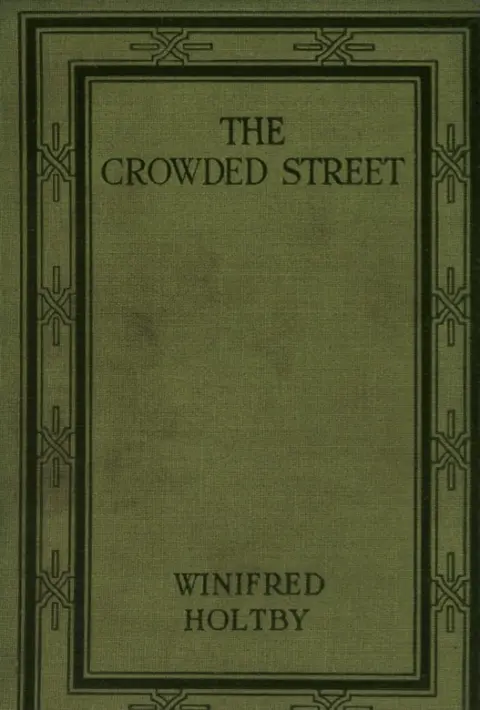
"The Crowded Street" by Winifred Holtby is a novel written in the early 20th century. The story opens with a poignant scene centered around an 11-year-old girl named Muriel Hammond, who struggles with her emotions and self-identity while attending a party. The narrative examines the challenges and pressures faced in her youth, giving insight into the complexities of social interactions and childhood aspirations. At the start of the story, Muriel is at a party that she has long awaited, yet she experiences feelings of shyness and inadequacy. The prose vividly captures her observations and thoughts as she navigates the bustling atmosphere filled with adults and other children. Despite her excitement, Muriel feels overshadowed and anxious, especially about dancing with a boy named Freddy Mason. As the evening unfolds, Muriel's desire to belong clashes with her innate shyness, culminating in an embarrassing moment where she is caught sneaking sweets—a misunderstanding that casts her in a negative light to her peers and more importantly, to her mother. This initial glimpse into Muriel's world sets the stage for her journey of self-discovery and the exploration of her relationships throughout the novel.
Introduction adapted from the source catalogue; source summaries may be automatically generated.
Free to read · English · 99,688 words · No account needed
MAKE TIME FOR A GOOD BOOK
On by default. Untick to stop anonymous reading totals. Each page counts after 10 seconds in view. How this works.
Anonymous counting is on unless you have switched it off.
Crash-crash-crash, went the gong. The room rocked to the stamp of feet and the roar of voices, while high above them, from where she stood on the sofa end, smashing at the swinging gong, shrilled Connie's wild, mad gaiety.
So Mrs. Hammond, returning to the drawing-room, found them and stood spellbound, like a frozen figure in the doorway. Lady Grainger saw her and smiled, beckoning. Muriel, between the gusts of laughter, heard their voices.
"They kept you a long time," murmured Lady Grainger. "I hope that it was nothing bothering. You--you'll excuse me saying so, you look a little tired. I hope that our rowdy boys are not too much for you."
"Oh, no. Not at all. I like it."
"I'll hang my harp on a weeping willow tree, And may the world go well with thee, well with thee."
chanted the chorus.
"Chorus again," called Connie. "I'm bandmaster to-night."
"Fare thee well for I must leave thee,
Do not let the parting grieve thee . . ."
As the refrain died down to the reverberations of the gong, Muriel
heard Lady Grainger say:
"If only more girls were brought up like yours, with such a healthy, homely influence, an atmosphere, I'm sure that you'll understand me, dear Mrs. Hammond. It does help the boys so."
Then her mother answered in that soft hurrying voice that was so much
her own:
"It's very kind of you to say so. I don't know, I'm sure. Of course I've always tried to--to give them a high ideal of--of home life and--and so on."
She faltered, and Muriel, looking over her shoulder, saw her mouth set to a despairing smile, and her tongue pass over her dry lips.
"I--we try to, you know," repeated Mrs. Hammond, as though she were
saying a lesson.
Connie, from the sofa head, turned round and looked at her mother. Muriel felt the tension in the room to be unendurable. Somehow they were torturing that gentle little lady on the sofa. The evening became abominable to her. The laughter, the rollicking songs broke round her like a nightmare sea. Her hands slid from the keyboard and she clenched them on her knee.
"Oh, come along, Muriel," called Connie. "Are you tired? Then let me
come."
Muriel was pushed aside from the stool, and Connie swung herself
into her place. Connie's red, work-soiled fingers rattled over the
keyboard.
"What shall we have now?" Her jangling discords changed to the
clashing refrain of an old song.
"I went down south to see my Sal,
Singing Polly Wolly Doodle all the day."
The party was jollier than ever.
Your reading position is saved on this browser. Take it to another device with a library code. Reading pages adapt to text, rather than matching a printed edition.
BEHIND THE BOOK
This eBook is for the use of anyone anywhere in the United States and most other parts of the world at no cost and with almost no restrictions whatsoever. You may copy it, give it away or re-use it under the terms of the Project Gutenberg License included with this eBook or online at www.gutenberg.org. If you are not located in the United States, you will have to check the laws of the country where you are located before using this eBook. Read the source licence.
The original source file, including credits and licence, is retained by this library. Request an original-format copy at no charge. Please include the book title and Project Gutenberg identifier #68629.
KEEP YOUR CURIOSITY GOING
Coulson Kernahan

Maurice Baring
Frances Wright
Cécile Tormay

Frederic Jesup Stimson

W. H. P. (William Henry Pope) Jarvis