THE CLASSIC COLLECTION✦Anderby WoldCLASSIC FREE BOOKS
Anderby Wold
Winifred Holtby
THE CLASSIC COLLECTION · 1924
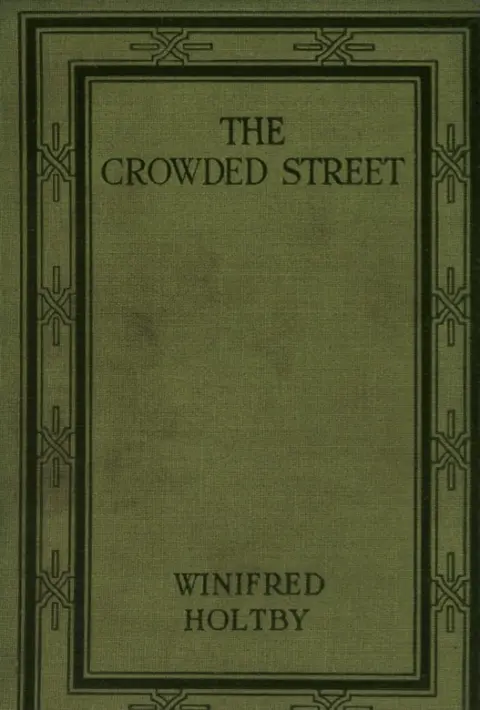
"The Crowded Street" by Winifred Holtby is a novel written in the early 20th century. The story opens with a poignant scene centered around an 11-year-old girl named Muriel Hammond, who struggles with her emotions and self-identity while attending a party. The narrative examines the challenges and pressures faced in her youth, giving insight into the complexities of social interactions and childhood aspirations. At the start of the story, Muriel is at a party that she has long awaited, yet she experiences feelings of shyness and inadequacy. The prose vividly captures her observations and thoughts as she navigates the bustling atmosphere filled with adults and other children. Despite her excitement, Muriel feels overshadowed and anxious, especially about dancing with a boy named Freddy Mason. As the evening unfolds, Muriel's desire to belong clashes with her innate shyness, culminating in an embarrassing moment where she is caught sneaking sweets—a misunderstanding that casts her in a negative light to her peers and more importantly, to her mother. This initial glimpse into Muriel's world sets the stage for her journey of self-discovery and the exploration of her relationships throughout the novel.
Introduction adapted from the source catalogue; source summaries may be automatically generated.
Free to read · English · 99,688 words · No account needed
MAKE TIME FOR A GOOD BOOK
On by default. Untick to stop anonymous reading totals. Each page counts after 10 seconds in view. How this works.
Anonymous counting is on unless you have switched it off.
"See what I've found," he cried triumphantly. "Not only a drum, but a drummer! Allow me, ladies and gentlemen, to introduce to you Miss Constance Hammond, youngest daughter of our respected host and hostess, just this moment returned on unexpected leave from her strenuous duties upon a farm in the North Riding, where she has been carrying on the splendid work of feeding our nation in its hour of peril."
They rose, they shouted, they went forward to drag Connie, blushing and protesting, into the room.
"Three cheers for Miss Constance Hammond! Hurrah! Hurrah! Hurrah! Three cheers for the land girls in khaki! Cheers for the girls who grow the spuds to beat the U Boats!"
The room rang with their cheering. Colonel Grainger stepped forward and introduced himself, shaking both Connie's red, trembling hands, and telling her how good her mother had been to his boys. Muriel, mystified, profoundly stirred by some strange premonition, stood silent while Connie shook hands with the colonel and kissed her father. Then she asked:
"Have you seen Mother?"
"Yes," said Connie, and no more, for Bobby made all the necessary explanations with delighted volubility.
"She was sneaking away upstairs because she didn't want to see us before she'd made herself look beautiful. She came from Market Burton on the 9.50 unexpectedly to give her family a surprise. I think that it was to see how they behaved while she was away. Aha, Miss Hammond, but now we've caught you, we'll keep you. You are conscripted as our drummer."
Muriel, from the piano, said:
"Connie, this is nice. How long have you?"
Then for the first time she saw Connie clearly through a crowd of chaffing, chattering boys. Connie's cheeks were flushed. She held her wild head high and recklessly, but her eyes were fierce with the desperation of a trapped animal.
"I don't know for certain," she said, in her high, shrill voice. "It depends on how you treat me." Then quickly she turned to the men. "What were you singing? Come on. Don't stop. Where's my drum?" She sprang on to the back of the sofa, and Bobby held the gong before her. "Go on. Play up, Muriel!"
With a sense of impending doom, totally unreasonable, Muriel struck the keys with stiff, frightened fingers. The voices shouted again, madly joyous, punctuated by Connie's crashings on the gong.
"He left me for a damsel dark, damsel dark, And every night they used to spark, used to spark, And now my love, without a thought of me Takes that dark damsel on his knee, on his knee."
Your reading position is saved on this browser. Take it to another device with a library code. Reading pages adapt to text, rather than matching a printed edition.
BEHIND THE BOOK
This eBook is for the use of anyone anywhere in the United States and most other parts of the world at no cost and with almost no restrictions whatsoever. You may copy it, give it away or re-use it under the terms of the Project Gutenberg License included with this eBook or online at www.gutenberg.org. If you are not located in the United States, you will have to check the laws of the country where you are located before using this eBook. Read the source licence.
The original source file, including credits and licence, is retained by this library. Request an original-format copy at no charge. Please include the book title and Project Gutenberg identifier #68629.
KEEP YOUR CURIOSITY GOING
Coulson Kernahan

Maurice Baring
Frances Wright
Cécile Tormay

Frederic Jesup Stimson

W. H. P. (William Henry Pope) Jarvis