THE CLASSIC COLLECTION✦A dead man’s diaryCLASSIC FREE BOOKS
A dead man’s diary
Coulson Kernahan
THE CLASSIC COLLECTION · 1907
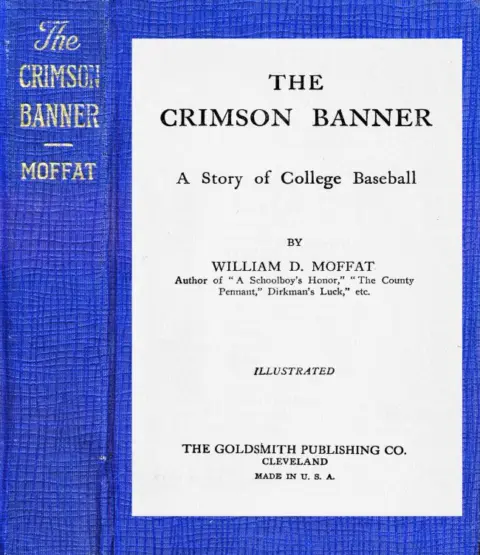
"The Crimson Banner: A Story of College Baseball" by William D. Moffat is a novel written in the early 20th century. This coming-of-age narrative revolves around the vibrant and competitive atmosphere of college baseball at Belmont College, delving into the relationships and rivalries that emerge among the students. The main characters include Ray Wendell, an admired baseball captain, and Tony Larcom, the association's secretary, alongside the narrator, Harry Elder, as they navigate the challenges of competition and camaraderie. At the start of the story, readers are introduced to the close-knit college community and the significance of baseball to the students. The opening chapter reveals a humorous yet suspenseful exchange between Harry and Tony as they prepare for a crucial meeting about the baseball season. It sets the stage for various conflicts, including a threatening letter from Park College regarding the school's beloved cannons, and hints at an impending showdown that will test the resolve and solidarity of the Belmont students. This opening promises a tale filled with youthful enthusiasm, rivalry, and the pursuit of glory in collegiate sports, making it appealing to fans of coming-of-age stories and sports fiction.
Introduction adapted from the source catalogue; source summaries may be automatically generated.
Free to read · English · 64,978 words · No account needed
MAKE TIME FOR A GOOD BOOK
On by default. Untick to stop anonymous reading totals. Each page counts after 10 seconds in view. How this works.
Anonymous counting is on unless you have switched it off.
“None at all, I think,” answered Ray. “I am sure we are well abreast of
our class.”
“So am I,” broke in Tony. “Having the advantage of lectures and recitations, I used to ask Harry questions and try to coach him, but I soon found that he knew more about the subjects than I did, so I left him alone, in order to keep my own self respect.”
Mr. Wendell was looking at his watch.
“How far is it to the depot?” he asked.
“About ten minutes’ walk,” answered Ray. “But surely you are not going
home so soon?”
“Yes,” said his father, “I must be in Boston early to-morrow morning, so I must leave here on the 10:30 train. As my valise is at the hotel I had better start now.”
All three of us accompanied Mr. Wendell, who kept up a stream of questions about our plans and purposes.
“The last time I saw you three, you were busy with baseball practice out on our lawn at Cedar Hill. You must come out again, and stay longer. I always like to have plenty of live stock on the place,” he said jokingly.
“Nothing would please us better,” I answered. “We shall never forget the delightful week we spent at Cedar Hill.”
“How is your baseball nine?” he asked.
“Very good,” answered Ray. “We have seldom had a better nine.”
“Going to win the championship?”
“I hope so,” said Ray. “We stand a good chance.”
“Well, the boys ought to win, if for no other reason than to show their gratitude for your devotion to their interest,” said Mr. Wendell. “When does your season open?”
“To-morrow,” I answered. “We play Dean College the first game.”
“I suppose you will make short work of them?”
“We don’t anticipate much trouble in that direction,” I said. “Dean College has always stood last on the list, and we count confidently on a victory over her. We would stand a small show for the championship if we could not beat the Dean men.”
“Well, I wish you luck,” said Mr. Wendell, as we reached the depot, “and I am very glad that this other matter has been settled satisfactorily.”
In a few moments the train came in.
“Good by,” said Mr. Wendell, shaking hands all round. “Be good boys now, and keep out of mischief. Give my kindest regards to Professor Fuller, Ray, when next you see him――and don’t forget Miss Nettie,” he added, as the train moved off.
Your reading position is saved on this browser. Take it to another device with a library code. Reading pages adapt to text, rather than matching a printed edition.
BEHIND THE BOOK
This eBook is for the use of anyone anywhere in the United States and most other parts of the world at no cost and with almost no restrictions whatsoever. You may copy it, give it away or re-use it under the terms of the Project Gutenberg License included with this eBook or online at www.gutenberg.org. If you are not located in the United States, you will have to check the laws of the country where you are located before using this eBook. Read the source licence.
The original source file, including credits and licence, is retained by this library. Request an original-format copy at no charge. Please include the book title and Project Gutenberg identifier #71352.
KEEP YOUR CURIOSITY GOING
Coulson Kernahan

Maurice Baring
Frances Wright
Cécile Tormay

Frederic Jesup Stimson

W. H. P. (William Henry Pope) Jarvis