THE CLASSIC COLLECTION✦A dead man’s diaryCLASSIC FREE BOOKS
A dead man’s diary
Coulson Kernahan
THE CLASSIC COLLECTION · 1907
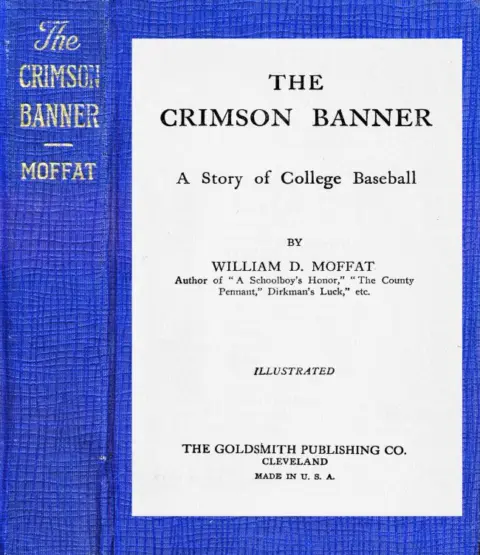
"The Crimson Banner: A Story of College Baseball" by William D. Moffat is a novel written in the early 20th century. This coming-of-age narrative revolves around the vibrant and competitive atmosphere of college baseball at Belmont College, delving into the relationships and rivalries that emerge among the students. The main characters include Ray Wendell, an admired baseball captain, and Tony Larcom, the association's secretary, alongside the narrator, Harry Elder, as they navigate the challenges of competition and camaraderie. At the start of the story, readers are introduced to the close-knit college community and the significance of baseball to the students. The opening chapter reveals a humorous yet suspenseful exchange between Harry and Tony as they prepare for a crucial meeting about the baseball season. It sets the stage for various conflicts, including a threatening letter from Park College regarding the school's beloved cannons, and hints at an impending showdown that will test the resolve and solidarity of the Belmont students. This opening promises a tale filled with youthful enthusiasm, rivalry, and the pursuit of glory in collegiate sports, making it appealing to fans of coming-of-age stories and sports fiction.
Introduction adapted from the source catalogue; source summaries may be automatically generated.
Free to read · English · 64,978 words · No account needed
MAKE TIME FOR A GOOD BOOK
On by default. Untick to stop anonymous reading totals. Each page counts after 10 seconds in view. How this works.
Anonymous counting is on unless you have switched it off.
“Gentlemen,” began Clinton Edwards, “as you are all aware, this meeting has been called for the purpose of considering baseball matters. At the close of last year’s season the nine held its customary annual meeting, and the usual elections of secretary and captain were made for the ensuing year. It now remains with you to approve and ratify these elections, and, in that event, the captain, as has been our custom heretofore, becomes also president of the association. The names of these officers were announced in the Chronicle at the time of their election, as you doubtless remember, but I will repeat them. Mr. Larcom was elected secretary――――”
The speaker paused a moment, when some one in the back of the room called out, “I forbid the banns!”
The meeting was in an uproar at this. Laughter, stamping of feet, and shouts of “Bully boy!” “Hi, hi for Tony!” threatened to destroy the secretary’s gravity. Rising, note book in hand, he said,
“Mr. Chairman, I rise to a point of information. Do I enter these
remarks in the minutes?”
Edwards, ignoring the point, continued:
“The captaincy, which was made vacant by the graduation of Mr. Terry, was filled by the election of Mr. Wendell.”
There was now a long and uproarious burst of applause. Cheer followed cheer as the name was announced.
A more popular man than Ray Wendell rarely passed through Belmont College. Bright and industrious in his studies, active and strong in athletics, generous, good humored, and with agreeable and fascinating manners Ray had been my ideal of a college man since Freshman year.
As he rose modestly from his seat in answer to the repeated cheers, I thought I had never seen him look handsomer. His tall, graceful figure and fine face never appeared to better advantage than at that moment as he blushingly acknowledged the applause that greeted his name.
Several times he attempted to speak, but the continued cheering discouraged his effort. At length silence was obtained, when Ray said smilingly, and quickly turning attention from himself:
“Gentlemen, you forget that you have not yet decided to be represented in the Berkshire League. You have first to vote on the question: do we send out a nine?”
“We scarcely need put that question,” said a student, as Ray sat down. “It has been only a form in past years, and I move, therefore, Mr. Chairman, that we approve these elections――――”
“One moment, Mr. Chairman,” broke in a voice from the back of the room.
“Mr. Pratt has the floor,” said Edwards.
“I have finished,” said Pratt. “My motion is before the meeting.”
Your reading position is saved on this browser. Take it to another device with a library code. Reading pages adapt to text, rather than matching a printed edition.
BEHIND THE BOOK
This eBook is for the use of anyone anywhere in the United States and most other parts of the world at no cost and with almost no restrictions whatsoever. You may copy it, give it away or re-use it under the terms of the Project Gutenberg License included with this eBook or online at www.gutenberg.org. If you are not located in the United States, you will have to check the laws of the country where you are located before using this eBook. Read the source licence.
The original source file, including credits and licence, is retained by this library. Request an original-format copy at no charge. Please include the book title and Project Gutenberg identifier #71352.
KEEP YOUR CURIOSITY GOING
Coulson Kernahan

Maurice Baring
Frances Wright
Cécile Tormay

Frederic Jesup Stimson

W. H. P. (William Henry Pope) Jarvis