THE CLASSIC COLLECTION✦A dead man’s diaryCLASSIC FREE BOOKS
A dead man’s diary
Coulson Kernahan
THE CLASSIC COLLECTION · 1907
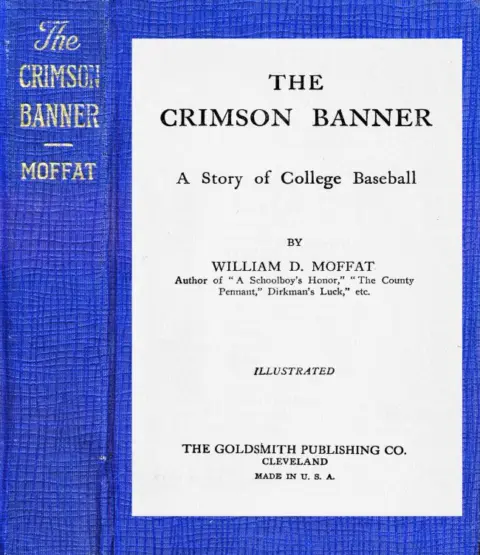
"The Crimson Banner: A Story of College Baseball" by William D. Moffat is a novel written in the early 20th century. This coming-of-age narrative revolves around the vibrant and competitive atmosphere of college baseball at Belmont College, delving into the relationships and rivalries that emerge among the students. The main characters include Ray Wendell, an admired baseball captain, and Tony Larcom, the association's secretary, alongside the narrator, Harry Elder, as they navigate the challenges of competition and camaraderie. At the start of the story, readers are introduced to the close-knit college community and the significance of baseball to the students. The opening chapter reveals a humorous yet suspenseful exchange between Harry and Tony as they prepare for a crucial meeting about the baseball season. It sets the stage for various conflicts, including a threatening letter from Park College regarding the school's beloved cannons, and hints at an impending showdown that will test the resolve and solidarity of the Belmont students. This opening promises a tale filled with youthful enthusiasm, rivalry, and the pursuit of glory in collegiate sports, making it appealing to fans of coming-of-age stories and sports fiction.
Introduction adapted from the source catalogue; source summaries may be automatically generated.
Free to read · English · 64,978 words · No account needed
MAKE TIME FOR A GOOD BOOK
On by default. Untick to stop anonymous reading totals. Each page counts after 10 seconds in view. How this works.
Anonymous counting is on unless you have switched it off.
It was not a fair question, and Ray made no immediate reply. He saw that a full and accurate answer would turn upon me the suspicion of having lighted the cannons. It was an excellent opportunity, had he been disposed to accept it, for him to retaliate upon me for my supposed falseness to him. But this, I knew, was the kind of retaliation which Ray Wendell despised. However much he may have doubted me at that moment, it could in no way affect his own sense of honor.
In answering, he measured his words carefully.
“It was dark, sir――too dark to recognize anybody, except close by. Some one behind me asked for my match box――I did not see him, but handed it back without turning around.”
“But you recognized his voice, did you not?” questioned Dr. Drayton, pushing the inquiry eagerly.
Ray hesitated.
“Dr. Drayton,” he said at length, “granted that I knew who it was, could I be expected to tell――to――――”
I could stand it no longer, so I broke in again.
“It was to me, sir, that Mr. Wendell gave his match box.”
All, Ray included, looked at me in surprise.
“To you!” exclaimed Dr. Drayton.
“Yes, sir,” I answered, “to me, but only to pass it back. Some one of those behind me asked for the box, and I got it from Mr. Wendell. I only retained it for a moment, and I do not know to whom I gave it, for the rest were masked.”
Ray was looking at me with an expression of relief on his face. He was beginning to see that he had misunderstood the position of affairs.
Dr. Drayton was plainly disappointed. He had at first thought that his inquiries had unearthed the chief offender, but now he found himself as far astray as at the beginning.
Scanning us both sharply he asked:
“Had either of you gentlemen any idea of the purpose for which that
match box was wanted?”
“No, sir,” we answered together.
“But you knew the cannons were to be discharged?”
“No, sir,” answered Ray, “not even that. It was a total surprise to us. We had no idea that masks were to be worn either.”
The professor looked at us incredulously.
“Then how came you to be identified with this party, Mr. Wendell?” asked Professor Fuller. “How is it that you, a prominent member of the Senior class, became associated with this masked company?”
Your reading position is saved on this browser. Take it to another device with a library code. Reading pages adapt to text, rather than matching a printed edition.
BEHIND THE BOOK
This eBook is for the use of anyone anywhere in the United States and most other parts of the world at no cost and with almost no restrictions whatsoever. You may copy it, give it away or re-use it under the terms of the Project Gutenberg License included with this eBook or online at www.gutenberg.org. If you are not located in the United States, you will have to check the laws of the country where you are located before using this eBook. Read the source licence.
The original source file, including credits and licence, is retained by this library. Request an original-format copy at no charge. Please include the book title and Project Gutenberg identifier #71352.
KEEP YOUR CURIOSITY GOING
Coulson Kernahan

Maurice Baring
Frances Wright
Cécile Tormay

Frederic Jesup Stimson

W. H. P. (William Henry Pope) Jarvis