THE CLASSIC COLLECTION✦A dead man’s diaryCLASSIC FREE BOOKS
A dead man’s diary
Coulson Kernahan
THE CLASSIC COLLECTION · 1907
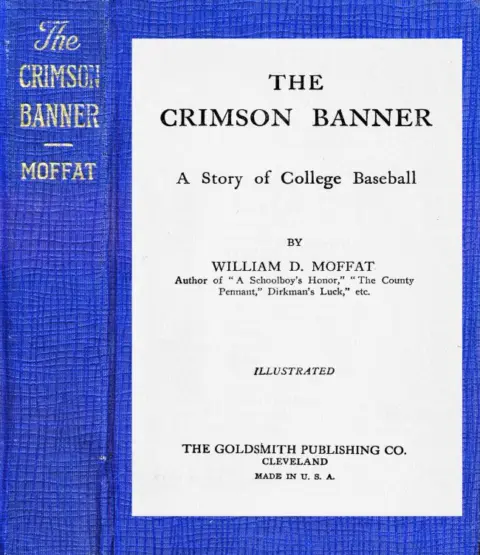
"The Crimson Banner: A Story of College Baseball" by William D. Moffat is a novel written in the early 20th century. This coming-of-age narrative revolves around the vibrant and competitive atmosphere of college baseball at Belmont College, delving into the relationships and rivalries that emerge among the students. The main characters include Ray Wendell, an admired baseball captain, and Tony Larcom, the association's secretary, alongside the narrator, Harry Elder, as they navigate the challenges of competition and camaraderie. At the start of the story, readers are introduced to the close-knit college community and the significance of baseball to the students. The opening chapter reveals a humorous yet suspenseful exchange between Harry and Tony as they prepare for a crucial meeting about the baseball season. It sets the stage for various conflicts, including a threatening letter from Park College regarding the school's beloved cannons, and hints at an impending showdown that will test the resolve and solidarity of the Belmont students. This opening promises a tale filled with youthful enthusiasm, rivalry, and the pursuit of glory in collegiate sports, making it appealing to fans of coming-of-age stories and sports fiction.
Introduction adapted from the source catalogue; source summaries may be automatically generated.
Free to read · English · 64,978 words · No account needed
MAKE TIME FOR A GOOD BOOK
On by default. Untick to stop anonymous reading totals. Each page counts after 10 seconds in view. How this works.
Anonymous counting is on unless you have switched it off.
I turned in surprise as the door again opened. Could it be that some one else had been caught? I could not avoid a slight sense of relief at the thought, for I was becoming terribly depressed in my endeavor to support alone the whole weight of professional dignity arrayed against me. The thought of companionship was extremely welcome to me.
I was not kept long in doubt. I heard Mr. Dikes’ voice say, “This way, please.” A quick, firm step sounded in the outer office, the door was thrown wide open, and Ray Wendell stood on the threshold. There was a mutual expression of surprised recognition between us, as he moved forward and stood beside me. Dr. Drayton’s tone was even more severe in addressing Ray than it had been to me.
“Mr. Wendell,” he said, “you are here to answer a charge of a very grave character. You are charged with taking an active part in the disorderly disturbances last night.”
Ray was perfectly calm.
“And may I ask, sir, on what ground that charge is brought against me?”
Dr. Drayton held up a small silver object which had been resting on his table, and which had escaped my notice.
“This is your match box, I believe,” said the president. “Your name is
upon it.”
Ray started as he recognized the box, but recovered himself almost
immediately.
“Yes, sir. It is my match box,” he answered quietly.
“It is, no doubt, from this box that the matches were taken to light the cannons last night,” continued Dr. Drayton, looking Ray steadily in the face.
Ray said nothing.
“Answer me, Mr. Wendell,” said Dr. Drayton after a pause. “Were you one of that party of students who created the disorder last night?”
“I was with them, sir,” said Ray, making the same answer as I had.
“And you were masked like the others?”
“No, sir.”
Dr. Drayton looked at him quickly.
“Mr. Wendell,” he said, in a still sharper tone of voice, “we are speaking upon information furnished us by Mr. Elder.”
Ray turned with a quick movement and looked at me. I shall never forget that look――a look of mingled surprise, disappointment, and reproach. It cut me like a knife, for I saw only too clearly what it meant. Coupling the display of the match box, which he remembered giving me the night before, with Dr. Drayton’s last words, Ray had concluded, as was only natural in the face of such evidence, that I had betrayed him. The thought that he should suspect me of such baseness, for one instant, was more than I could stand, so I hastened to correct the impression at once.
Your reading position is saved on this browser. Take it to another device with a library code. Reading pages adapt to text, rather than matching a printed edition.
BEHIND THE BOOK
This eBook is for the use of anyone anywhere in the United States and most other parts of the world at no cost and with almost no restrictions whatsoever. You may copy it, give it away or re-use it under the terms of the Project Gutenberg License included with this eBook or online at www.gutenberg.org. If you are not located in the United States, you will have to check the laws of the country where you are located before using this eBook. Read the source licence.
The original source file, including credits and licence, is retained by this library. Request an original-format copy at no charge. Please include the book title and Project Gutenberg identifier #71352.
KEEP YOUR CURIOSITY GOING
Coulson Kernahan

Maurice Baring
Frances Wright
Cécile Tormay

Frederic Jesup Stimson

W. H. P. (William Henry Pope) Jarvis