THE CLASSIC COLLECTION✦A dead man’s diaryCLASSIC FREE BOOKS
A dead man’s diary
Coulson Kernahan
THE CLASSIC COLLECTION · 1907
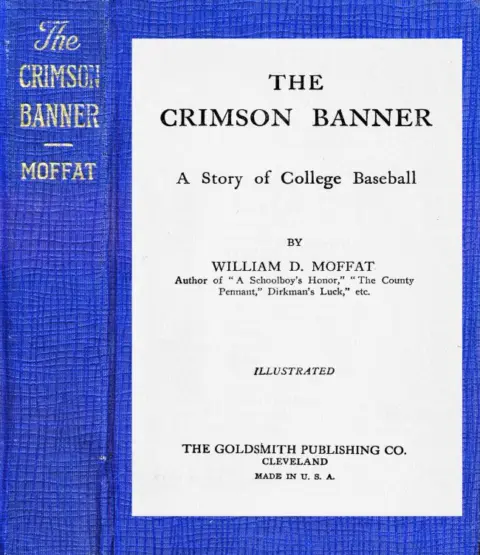
"The Crimson Banner: A Story of College Baseball" by William D. Moffat is a novel written in the early 20th century. This coming-of-age narrative revolves around the vibrant and competitive atmosphere of college baseball at Belmont College, delving into the relationships and rivalries that emerge among the students. The main characters include Ray Wendell, an admired baseball captain, and Tony Larcom, the association's secretary, alongside the narrator, Harry Elder, as they navigate the challenges of competition and camaraderie. At the start of the story, readers are introduced to the close-knit college community and the significance of baseball to the students. The opening chapter reveals a humorous yet suspenseful exchange between Harry and Tony as they prepare for a crucial meeting about the baseball season. It sets the stage for various conflicts, including a threatening letter from Park College regarding the school's beloved cannons, and hints at an impending showdown that will test the resolve and solidarity of the Belmont students. This opening promises a tale filled with youthful enthusiasm, rivalry, and the pursuit of glory in collegiate sports, making it appealing to fans of coming-of-age stories and sports fiction.
Introduction adapted from the source catalogue; source summaries may be automatically generated.
Free to read · English · 64,978 words · No account needed
MAKE TIME FOR A GOOD BOOK
On by default. Untick to stop anonymous reading totals. Each page counts after 10 seconds in view. How this works.
Anonymous counting is on unless you have switched it off.
“That remains to be seen,” said Ray, with a half smile, as he took the boy by the ear. “Now, Ridley, listen to me. Do you remember that very rainy Wednesday of last week?”
“Yes, sah.”
“Do you remember getting the mail that morning?”
“Yes, sah.”
“Do you remember any letters for me that morning?”
“No, sah.”
“No letters for me?”
“Dere wan’t no letters for you that mawnin, sah.”
“Ridley!” exclaimed Ray, with real severity this time. “There was a letter for me in that mail. Now, what became of it?”
Ridley was growing more and more frightened, but no sign of guilt appeared on his ebony countenance.
“I’s tellin’ no lies, Mistah Wendell. I swar to golly I’s tellin’ no lies. Der wan’t no letter for you.”
“Are you sure you remember the mail?” asked Ray.
“Yes, sah, perfeckly.”
“Who had letters that morning?”
“Dere was only five or six letters. I didn’t look at ’em at de post offiss, but when I kem up to de door right here, Mistah――le’s see, who was it?――Mistah, Mistah, oh, Mistah Howard was standin’ by de doorway.”
“Howard was there, was he?”
“Yes, sah, an’ he sez, ‘Ridley, hev ye got de mail?’ an’ I sez, ‘Yes, sah,’ an’ he sez, ‘Let me look at it,’ an’ I gived de letters ter him――――”
“You gave the letters to Howard that morning? Ridley, are you sure?” exclaimed Ray, letting go of the boy.
“Perfeckly. Mistah Howard took de letters, an’ he luks ’em over, an’ he sez, ‘Dese two is mine,’ an’ he gives me back de rest.”
“He kept two, did he? Well, did you see those letters?”
“No, sah, I didn’t see de names. He gived me back t’ree or four, and none of dem was fer you. I s’posed Mistah Howard unly kep’ his own letters.”
“And there were two of them?”
“Yes, sah, I knows dere was two; one was white an’ de udder pink.”
“What!” cried Ray. “You say one was pink?”
“Yes, sah. I remember dat letter well. I tuk notiss of it wen I got it at de post office, and when Mistah Howard gived me back de udder letters dat pink one was gone.”
Ray was silent for several minutes, his lips pressed firmly together.
At length he said quietly.
“All right, Ridley. Much obliged to you. That will do.” Ridley disappeared down the cellar stairs, and Ray turned to me a long look of astonishment.
“Well, what――do――you――think――of that?” he asked slowly. I shook my head.
“And so Howard took that letter!” I exclaimed.
Your reading position is saved on this browser. Take it to another device with a library code. Reading pages adapt to text, rather than matching a printed edition.
BEHIND THE BOOK
This eBook is for the use of anyone anywhere in the United States and most other parts of the world at no cost and with almost no restrictions whatsoever. You may copy it, give it away or re-use it under the terms of the Project Gutenberg License included with this eBook or online at www.gutenberg.org. If you are not located in the United States, you will have to check the laws of the country where you are located before using this eBook. Read the source licence.
The original source file, including credits and licence, is retained by this library. Request an original-format copy at no charge. Please include the book title and Project Gutenberg identifier #71352.
KEEP YOUR CURIOSITY GOING
Coulson Kernahan

Maurice Baring
Frances Wright
Cécile Tormay

Frederic Jesup Stimson

W. H. P. (William Henry Pope) Jarvis