THE CLASSIC COLLECTION✦A dead man’s diaryCLASSIC FREE BOOKS
A dead man’s diary
Coulson Kernahan
THE CLASSIC COLLECTION · 1907
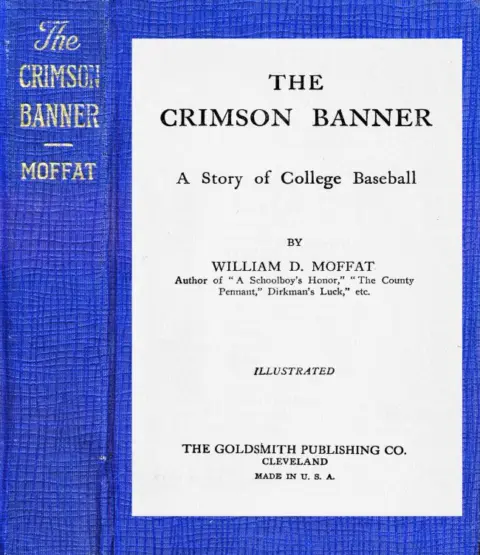
"The Crimson Banner: A Story of College Baseball" by William D. Moffat is a novel written in the early 20th century. This coming-of-age narrative revolves around the vibrant and competitive atmosphere of college baseball at Belmont College, delving into the relationships and rivalries that emerge among the students. The main characters include Ray Wendell, an admired baseball captain, and Tony Larcom, the association's secretary, alongside the narrator, Harry Elder, as they navigate the challenges of competition and camaraderie. At the start of the story, readers are introduced to the close-knit college community and the significance of baseball to the students. The opening chapter reveals a humorous yet suspenseful exchange between Harry and Tony as they prepare for a crucial meeting about the baseball season. It sets the stage for various conflicts, including a threatening letter from Park College regarding the school's beloved cannons, and hints at an impending showdown that will test the resolve and solidarity of the Belmont students. This opening promises a tale filled with youthful enthusiasm, rivalry, and the pursuit of glory in collegiate sports, making it appealing to fans of coming-of-age stories and sports fiction.
Introduction adapted from the source catalogue; source summaries may be automatically generated.
Free to read · English · 64,978 words · No account needed
MAKE TIME FOR A GOOD BOOK
On by default. Untick to stop anonymous reading totals. Each page counts after 10 seconds in view. How this works.
Anonymous counting is on unless you have switched it off.
“It was only a return of the courtesy we have always received at Belmont,” answered Slade. “We simply gave you a fair show. Everybody ought to have that. If we had received it at Berkeley, we might have been more successful. By the way, I suppose you have heard the news from Dean?”
“Yes,” said Ray. “It was only what I expected. Did you receive any word concerning Arnold?”
“No. What about him?”
“Our telegram stated he was unwell, and gave up pitching in the fourth
inning.”
“It couldn’t be of any importance,” rejoined Slade, “for the message I received said nothing about it. Did he leave the field?”
“No,” answered Tony. “My telegram reads, ‘Arnold unwell in fourth inning――changed places with Cross.’ Cross, you know, is their substitute pitcher, and plays right field.”
“Then of course it doesn’t amount to much,” said Bennett. “The game was no doubt virtually won in the first four innings, and so Arnold changed positions in order to avoid all chances of straining his arm.”
“I suppose he was bent on taking things as easily as possible, and saving up his strength for you next Monday,” added Slade with a smile.
“That is more like the real truth of the matter,” answered Ray. “Arnold no doubt felt confident of the Dean game, and didn’t want to overwork himself. I told the fellows not to put any faith in rumors of sickness.”
“What were you thinking of doing this evening?” asked Slade, looking at his watch, and changing the subject.
“Nothing in particular,” answered Ray.
“Well, our dramatic club gives an amateur performance in the college hall, and I came over here especially to invite you all to attend. Of course it doesn’t amount to much as a dramatic treat, but we always have lots of fun. What do you say?”
A chorus of assent greeted this proposition.
“Come on then,” said Slade. “I have complimentary tickets for the whole crowd. The performance begins at eight o’clock, so there is no time to lose.”
As we were going out one of the hallboys brought Tony Larcom a telegram. Tony opened it, glanced over its contents, and then, with a laugh, handed it to me.
The telegram was from Clinton Edwards, and ran as follows:
News just received. Hurrah for Belmont! Let the good work go on. I will meet you at Berkeley on Monday and bring the “baseball chorus” with me to yell for the champions.
“What is the ‘baseball chorus’?” asked Percy Randall, as the telegram passed from one to another.
Your reading position is saved on this browser. Take it to another device with a library code. Reading pages adapt to text, rather than matching a printed edition.
BEHIND THE BOOK
This eBook is for the use of anyone anywhere in the United States and most other parts of the world at no cost and with almost no restrictions whatsoever. You may copy it, give it away or re-use it under the terms of the Project Gutenberg License included with this eBook or online at www.gutenberg.org. If you are not located in the United States, you will have to check the laws of the country where you are located before using this eBook. Read the source licence.
The original source file, including credits and licence, is retained by this library. Request an original-format copy at no charge. Please include the book title and Project Gutenberg identifier #71352.
KEEP YOUR CURIOSITY GOING
Coulson Kernahan

Maurice Baring
Frances Wright
Cécile Tormay

Frederic Jesup Stimson

W. H. P. (William Henry Pope) Jarvis