THE CLASSIC COLLECTION✦An outlaw’s diary: the CommuneCLASSIC FREE BOOKS
An outlaw’s diary: the Commune
Cécile Tormay
THE CLASSIC COLLECTION · 1906
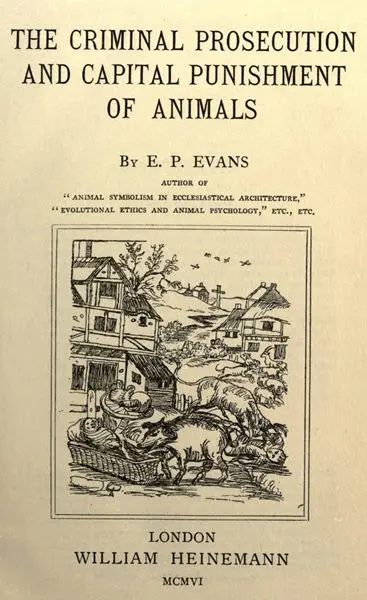
"The Criminal Prosecution and Capital Punishment of Animals" by E. P. Evans is a historical account written in the early 20th century. The book delves into the fascinating, if bizarre, legal practices of prosecuting animals for crimes in medieval and early modern Europe, exploring the absurdity and seriousness with which these cases were handled. It investigates the implications of these trials within the contexts of societal norms, religion, and the evolution of legal thought. The opening of the work outlines the origins of animal trials and the varying perspectives on their legality, notably the distinctions made between different types of prosecutions—those for domestic animals versus vermin. Evans introduces Bartholomew Chassenée, a jurist famous for defending rats charged with crop destruction, illustrating the lengths to which legal arguments were stretched to defend these creatures. He also discusses the interplay between secular and ecclesiastical courts in such cases, underscoring the peculiar belief that animals could be held accountable for their actions as if they were human actors in the legal system. Overall, this section sets the stage for a deeper exploration of the cultural and legal ramifications of treating animals as subjects of criminal law.
Introduction adapted from the source catalogue; source summaries may be automatically generated.
Free to read · English · 87,241 words · No account needed
MAKE TIME FOR A GOOD BOOK
On by default. Untick to stop anonymous reading totals. Each page counts after 10 seconds in view. How this works.
Anonymous counting is on unless you have switched it off.
VIVIO, FRANCESCO: Decisiones. No. 68. 1610.
DE WINDE: Byzonderheden uit de Geschiedeniss van het strafregt in de Nederlanden. Middelburg, 1827.
ZEROLA, THOMAS: Praxis Episcopalis. Sub verbo Superstitio. Venet. 1599.
Abbott, Rev. Lyman, regards bad impulses as suggestions of evil spirits,
76
Achan, his severe punishment by Joshua, 180
Addosio, Carlo d’, his Bestie Delinquenti cited, 1, 4; his list of animal prosecutions, 135; on pigs as a public nuisance in Italy, 159
Æschines, cited, 172
Æschylus, his Choephoroi cited, 174
Ahuramazda, 57, 61, 82, 176
Alard, Jean, burned alive as a Sodomite for coition with a Jewess, 153
Altiat, his poem quoted, 93
Amira, Prof. Karl von, his Thierstrafen und Thierprocesse cited, 1-3,
137
Anathemas, only effective when formally complete, as with all incantations and excommunications, 4, 36; citations from the Bible in proof of their power, 25; render an orchard barren and expel eels and blood-suckers from Lake Leman, 27; turn white bread black to punish heresy, 28; fatal to swallows and flies, which disturb religious services, 28, 29; sold by the Pope, 30; hurled against noxious vermin, 37; made more effective by the prompt payment of tithes, 37; differ from excommunications, 51-54; superseded in Protestantism by prayer and fasting and in science by Paris green, 53
Animals, prosecuted by civil and ecclesiastical courts, 2;
office of the Church in repressing articulate and rodent, 3, 5;
as satellites of Satan or agents of God, 5, 6, 52-57, 67;
personification of, 10, 11;
their competency as witnesses, 11;
origin of their judicial prosecution, 12;
as born criminals, 14;
tendency of modern penology to efface the distinction between men and,
14, 193;
instances of their criminal prosecution, 16, 18, 21, 37-50, 93-124,
134-157, 160-163;
methods of procedure against, 31;
whether legally laity or clergy, 32;
punitive and preventive prosecution of, 33;
their consciousness of right and wrong, 35, 247;
false conception of the purpose of their prosecution, 40;
can be anathematized, but not excommunicated, 51;
items of expense in prosecuting, 49, 138, 140-143;
not mere machines, 66;
in folk-lore, 84;
worship of, 85;
imperfect lists of prosecuted, 135-137;
burned and buried alive, 138;
put to the rack to extort confession, 139;
confiscation of valuable, 164, 189;
unclean flesh of executed, 169;
imputed criminality of, 177;
criminals as ferocious, 212;
mental and moral qualities of men and, 234;
six categories of their criminal offences, 235;
the safety of society the supreme law in the judicial punishment of
men and, 247-252
Anatolus, his “Geoponics,” 133
Angel, Emile, cited, 124
Anglo-Saxon law, its retributive character, 168;
its cruel doctrine of accessories, 178;
on tainted swords, 187
Angrô-mainyush, 57, 59, 61, 82
Anthony, St., patron of pigs, 158
Anthropologists, criminal researches of 211, 215
Aquinas. See Thomas
Arcadius, his atrocious edict, 179
Ashes, modern and mediæval use of vermifugal, 53
Augustine, St., cited, 94, 106
Aura corrumpens in houses and stalls, 8
Aurelian, Father, on diabolical possession, 75
Avesta, on exorcisms, 36;
on good and evil creations, 57;
on mad dogs, 176
Ayrault, Pierre, his protest against animal prosecutions, 109
Azpilcueta, Martin. See Dr. Navarre.
Baal-zebub (Beelzebub), fly-god, 84;
his preference for black beasts, 165
Bailly, Gaspard, his Traité des Monitoires cited, 52, 92-108
“Basilisk-egg,” 10
Basilius, St., his insect-expelling girdle, 136
Your reading position is saved on this browser. Take it to another device with a library code. Reading pages adapt to text, rather than matching a printed edition.
BEHIND THE BOOK
This eBook is for the use of anyone anywhere in the United States and most other parts of the world at no cost and with almost no restrictions whatsoever. You may copy it, give it away or re-use it under the terms of the Project Gutenberg License included with this eBook or online at www.gutenberg.org. If you are not located in the United States, you will have to check the laws of the country where you are located before using this eBook. Read the source licence.
The original source file, including credits and licence, is retained by this library. Request an original-format copy at no charge. Please include the book title and Project Gutenberg identifier #43286.
KEEP YOUR CURIOSITY GOING
Cécile Tormay

Moritz Busch
John L. Ransom
Frances Wright
Cécile Tormay

Mabel Potter Daggett