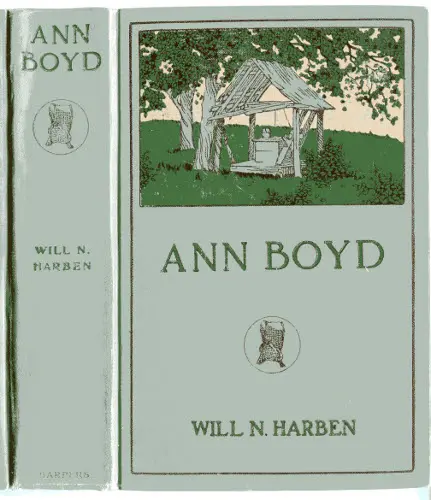
Ann Boyd: A Novel
Will N. (Will Nathaniel) Harben
THE CLASSIC COLLECTION · 1919
"The Cottage of Delight: A Novel" by Will N. Harben is a work of fiction written in the early 20th century. The story centers around John Trott, a young man working in a small Southern town, whose life is marked by a difficult home life and labor-intensive work at a local cotton mill. The novel explores themes of aspiration, social class, and the emotions surrounding love and relationships through the interactions of John with characters like Tilly and the other townsfolk. At the start of the novel, we are introduced to John Trott, who begins his day in a rundown house filled with tension stemming from his mother’s irresponsible behavior. He reluctantly attends to breakfast prepared by a young girl named Dora, who is the niece of another resident, Miss Jane Holder. The narrative vividly describes John's harsh realities and his responsibilities while establishing an emotional groundwork that hints at his yearning for a brighter future. As he interacts with various characters around him, including his employer, Cavanaugh, and the captivating Tilly Whaley, the young mason's life begins to lift from the burdens of his current existence, culminating in hints of romance and aspirations for a better life. The opening sets the stage for John's personal growth and the changing dynamics of his relationships as the story progresses.
Introduction adapted from the source catalogue; source summaries may be automatically generated.
Free to read · English · 124,443 words · No account needed
MAKE TIME FOR A GOOD BOOK
On by default. Untick to stop anonymous reading totals. Each page counts after 10 seconds in view. How this works.
Anonymous counting is on unless you have switched it off.
The residence on which John was at work was almost finished. He was on the highest scaffold one morning, superintending the slating of the roof, when, hearing Cavanaugh shouting on the sidewalk below, he glanced down. The contractor, with his thin alpaca coat on his arm, was signaling to him to come down.
"All right," John said. "In a minute. I'm busy now. Don't throw the broken ones away," he added to the workers. "Stack 'em up. We get rebates on them, and have to count the bad ones."
"Right you are, boss," a negro answered, with a chuckle. "Besides, we might split somebody's skull open."
"Oh, come on down!" Cavanaugh shouted again, with his cupped hands at his lips. "I want to see you."
"I can't do two things at once," John said, with a frown and a suppressed oath. "Say, boys, get that next line straight! Look for cracked slate, take 'em out, and lap the smooth ones right."
He found Cavanaugh near the front fence. The contractor was fond of jesting when he was in a good humor, and from his smiling face he seemed to-day to be in the best of spirits.
"No use finishing the roof," he said, squinting along the north wall of the building. "That wall is out of plumb and has to come down. Great pity. Foundation must have settled. That's bad, my boy."
"Well, it was your foundation, not mine," John retorted, seeing his
trend. "What do you want?"
Slowly Cavanaugh took a letter from the pocket of his baggy trousers and held it in his fat hands. "What you think this letter is about?" He smiled with tobacco-stained lips.
"How the devil would I know?" John asked, impatiently.
"Well, I'll tell you," Cavanaugh continued. "It is from the Ordinary of Chipley County, Tennessee. He says he is writing to all the many bidders on that court-house to let 'em know the final decision on the bids. He was powerful sorry, he said, to have to tell me that I was nowhere nigh the lowest mark. Read what he says."
Wondering over his friend's mood, John opened the letter. It was a formal and official acceptance of the bid made by Cavanaugh. Without a change of countenance John folded the sheet, put it into the envelop, and handed it back. Some negroes were passing with stacks of slates on their shoulders.
"Be careful there, Bob!" he ordered, sharply. "You drop another load of those things and I'll dock you for a day's pay."
"All right now, boss," the negro laughed. "I got erhold of 'em."
Your reading position is saved on this browser. Take it to another device with a library code. Reading pages adapt to text, rather than matching a printed edition.
Will N. (Will Nathaniel) Harben
Will N. (Will Nathaniel) Harben
Will N. (Will Nathaniel) Harben
BEHIND THE BOOK
This eBook is for the use of anyone anywhere in the United States and most other parts of the world at no cost and with almost no restrictions whatsoever. You may copy it, give it away or re-use it under the terms of the Project Gutenberg License included with this eBook or online at www.gutenberg.org. If you are not located in the United States, you will have to check the laws of the country where you are located before using this eBook. Read the source licence.
The original source file, including credits and licence, is retained by this library. Request an original-format copy at no charge. Please include the book title and Project Gutenberg identifier #33715.
KEEP YOUR CURIOSITY GOING
Coulson Kernahan

Maurice Baring
Frances Wright
Cécile Tormay

Frederic Jesup Stimson

W. H. P. (William Henry Pope) Jarvis