THE CLASSIC COLLECTION✦Quincy Adams Sawyer and Mason’s Corner Folks A Picture of New England Home LifeCLASSIC FREE BOOKS
Quincy Adams Sawyer and Mason’s Corner Folks A Picture of New England Home Life
Charles Felton Pidgin
THE CLASSIC COLLECTION · 1906
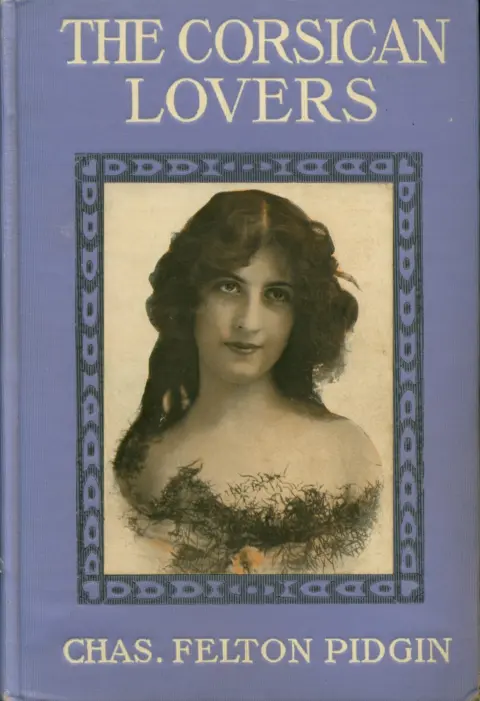
"The Corsican Lovers" by Charles Felton Pidgin is a historical novel written in the early 20th century. The story centers around the passionate and tumultuous lives of the Batistelli family, particularly focusing on Vivienne, a young woman grappling with the demands of a loveless marriage arranged by her brother Pascal, as she yearns for autonomy and true love amidst the shadow of her father’s vengeful legacy. At the start of the novel, we are introduced to Vivienne Batistelli, who fiercely opposes her brother Pascal's insistence that she marry Count Mont d'Oro's son, Napier. Vivienne is haunted by the memory of her father’s murder, and as she asserts her refusal to enter into a loveless union meant to appease family honor, her determination becomes palpable. The conflict escalates as Pascal reveals that their father's dying wish was for Vivienne to marry Napier, invoking a familial vendetta that looms over their lives. This opening sets the stage for not only personal dilemmas of love and duty but also a broader commentary on the intricacies of honor, revenge, and the expectations placed on women within their family and society.
Introduction adapted from the source catalogue; source summaries may be automatically generated.
Free to read · English · 104,285 words · No account needed
MAKE TIME FOR A GOOD BOOK
On by default. Untick to stop anonymous reading totals. Each page counts after 10 seconds in view. How this works.
Anonymous counting is on unless you have switched it off.
“It is a very simple one,” said Bertha. “The frigate was bound for Marseilles. The admiral said he would have been delighted to put us ashore at some point near Paris, but he was under strict orders to proceed at once to the Mediterranean.”
“Oh, yes, I know,” said the Countess. “Mr. De Vinne told me that there was likelihood of a war with Russia.”
“Jack De Vinne?” cried Mrs. Glynne. “Has he been here?”
“For a long time,” said the Countess. “He has been here every day to see if I had any news about you. He is a very sad, unhappy young man. He has gone to his father’s place in Scotland. I must write at once and tell him of your safety. Perhaps, though, it would be better if Miss Renville would write him. I will give you his address.”
“Oh, yes, that will be much better,” said Jennie. “And now that I have delivered you into the arms of your friend, the Countess,” she added, “I must go right back to London. I have no doubt that my husband is distracted.”
“Will you excuse me, Bertha?” said the Countess. “I cannot call you Miss Renville, it is too formal.”
“Nor do I wish you to,” said Bertha. “No one calls me Miss Renville,
except----”
“Mr. De Vinne,” said Jennie, with a laugh, “but he won’t much longer.”
“Mrs. Glynne,” said the Countess, “I have something to tell you,” and she led her into an anteroom.
“What is it,” cried Jennie. “My husband, Clarence, is he dead?”
“Oh, no,” said the Countess, “but his father writes me that he is very sick, prostrated, no doubt, by the news of your supposed death. He is at his father’s residence; I forget----”
“Oh, I know,” said Jennie--“Buckholme. I have never been there. We were secretly married. Perhaps you do not know, but Clarence’s father wished him to marry Bertha, but he couldn’t because I was his wife, but his father didn’t know that. I suppose it is all out now and I’m glad of it. I will go to him at once.”
Jennie hurried with all speed to London and took the first train thence for Buckholme. The thought uppermost in her mind was as to what her reception by Clarence’s father would be, and her first question after greeting her husband was:
“Where is your father, Clarence?”
“Gone to seek Bertha, dear,” he answered, wearily, “but I hope a kind Providence will prevent his ever finding her.”
“Amen,” exclaimed Jennie, reverently.
Your reading position is saved on this browser. Take it to another device with a library code. Reading pages adapt to text, rather than matching a printed edition.
BEHIND THE BOOK
This eBook is for the use of anyone anywhere in the United States and most other parts of the world at no cost and with almost no restrictions whatsoever. You may copy it, give it away or re-use it under the terms of the Project Gutenberg License included with this eBook or online at www.gutenberg.org. If you are not located in the United States, you will have to check the laws of the country where you are located before using this eBook. Read the source licence.
The original source file, including credits and licence, is retained by this library. Request an original-format copy at no charge. Please include the book title and Project Gutenberg identifier #67412.
KEEP YOUR CURIOSITY GOING
Cécile Tormay

Moritz Busch
Coulson Kernahan
John L. Ransom

Maurice Baring
Frances Wright