THE CLASSIC COLLECTION✦Quincy Adams Sawyer and Mason’s Corner Folks A Picture of New England Home LifeCLASSIC FREE BOOKS
Quincy Adams Sawyer and Mason’s Corner Folks A Picture of New England Home Life
Charles Felton Pidgin
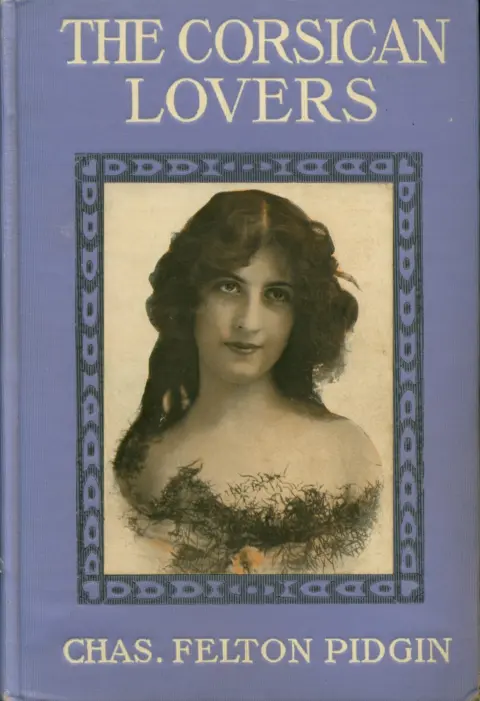
THE CLASSIC COLLECTION · 1906
"The Corsican Lovers" by Charles Felton Pidgin is a historical novel written in the early 20th century. The story centers around the passionate and tumultuous lives of the Batistelli family, particularly focusing on Vivienne, a young woman grappling with the demands of a loveless marriage arranged by her brother Pascal, as she yearns for autonomy and true love amidst the shadow of her father’s vengeful legacy. At the start of the novel, we are introduced to Vivienne Batistelli, who fiercely opposes her brother Pascal's insistence that she marry Count Mont d'Oro's son, Napier. Vivienne is haunted by the memory of her father’s murder, and as she asserts her refusal to enter into a loveless union meant to appease family honor, her determination becomes palpable. The conflict escalates as Pascal reveals that their father's dying wish was for Vivienne to marry Napier, invoking a familial vendetta that looms over their lives. This opening sets the stage for not only personal dilemmas of love and duty but also a broader commentary on the intricacies of honor, revenge, and the expectations placed on women within their family and society.
Introduction adapted from the source catalogue; source summaries may be automatically generated.
Free to read · English · 104,285 words · No account needed
MAKE TIME FOR A GOOD BOOK
On by default. Untick to stop anonymous reading totals. Each page counts after 10 seconds in view. How this works.
Anonymous counting is on unless you have switched it off.
“I didn’t mean to give it to her,” and Manassa wrung his hands, apologetically; “I didn’t mean to give it to him. I had opened the door, was telling him what nice things I had for him,--just to make him feel hungrier than ever,--when Vivienne came from behind one of the mirrors and caught at the basket. Just as I was getting it away from her, she drew a stiletto and stabbed me here,” and he placed his hand upon his wounded arm. “I fell, and before I could get up again, she had dragged the basket of food into the dungeon chamber.”
“What did you do then?” asked Pascal, excitedly.
“I did as I thought you would have done--I shut the door and left them there together. She is no longer a Batistelli--she is a Della Coscia. Let them die together!”
“You were right, Manassa. I should have done as you did. But where is
the paper?”
“Here it is,” and Manassa passed it to him.
“Come with me, Manassa,” said Pascal. “She is my sister--a poor, weak, foolish woman. It is my duty to give her one more chance to repent of her folly, and I must have a witness.”
“Vivienne, are you there?”
There were tones in her brother’s voice which the young girl could not mistake. The prisoners had gone back to the corner beneath the window, for the friendly ray of light made the dungeon seem less like a tomb.
Vivienne sprang to her feet. “Yes, Pascal, I am here,” she cried, joyfully, “and Vandemar is so strong now that he can walk.”
“Come here to the door,” said Pascal.
“What is it?” she asked, when she reached it.
“Come with me,” said her brother.
“I will bring Vandemar.”
“No,” said Pascal, “if you come out you shall come alone. You must
renounce that man.”
“Then I will not come,” said Vivienne, positively. “I love him. We will either live together or die together.”
“Is that your final answer?” questioned Pascal, angrily.
“It is,” she said.
He drew his stiletto.
“I do not fear that,” she cried. “You may kill me, but I will give you no other answer. I will not leave here without Vandemar.”
While they had been talking Pascal had stepped within the dungeon door,
still holding the paper.
“So be it!” he cried.
An instant later the door was closed and Vivienne knew that she and Vandemar were doomed to a lingering death.
Manassa had been an interested observer: “I was right, was I not, master? She is no longer a Batistelli--she is a Della Coscia. Let them die together.”
Your reading position is saved on this browser. Take it to another device with a library code. Reading pages adapt to text, rather than matching a printed edition.
BEHIND THE BOOK
This eBook is for the use of anyone anywhere in the United States and most other parts of the world at no cost and with almost no restrictions whatsoever. You may copy it, give it away or re-use it under the terms of the Project Gutenberg License included with this eBook or online at www.gutenberg.org. If you are not located in the United States, you will have to check the laws of the country where you are located before using this eBook. Read the source licence.
The original source file, including credits and licence, is retained by this library. Request an original-format copy at no charge. Please include the book title and Project Gutenberg identifier #67412.
KEEP YOUR CURIOSITY GOING
Cécile Tormay

Moritz Busch
Coulson Kernahan
John L. Ransom

Maurice Baring
Frances Wright