THE CLASSIC COLLECTION✦Quincy Adams Sawyer and Mason’s Corner Folks A Picture of New England Home LifeCLASSIC FREE BOOKS
Quincy Adams Sawyer and Mason’s Corner Folks A Picture of New England Home Life
Charles Felton Pidgin
THE CLASSIC COLLECTION · 1906
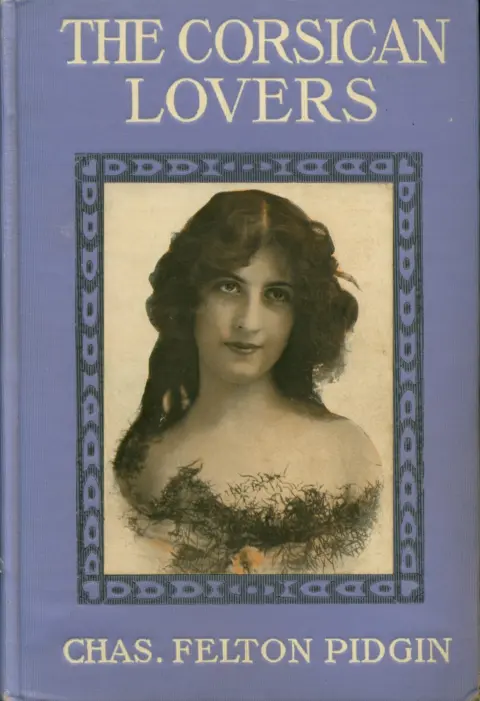
"The Corsican Lovers" by Charles Felton Pidgin is a historical novel written in the early 20th century. The story centers around the passionate and tumultuous lives of the Batistelli family, particularly focusing on Vivienne, a young woman grappling with the demands of a loveless marriage arranged by her brother Pascal, as she yearns for autonomy and true love amidst the shadow of her father’s vengeful legacy. At the start of the novel, we are introduced to Vivienne Batistelli, who fiercely opposes her brother Pascal's insistence that she marry Count Mont d'Oro's son, Napier. Vivienne is haunted by the memory of her father’s murder, and as she asserts her refusal to enter into a loveless union meant to appease family honor, her determination becomes palpable. The conflict escalates as Pascal reveals that their father's dying wish was for Vivienne to marry Napier, invoking a familial vendetta that looms over their lives. This opening sets the stage for not only personal dilemmas of love and duty but also a broader commentary on the intricacies of honor, revenge, and the expectations placed on women within their family and society.
Introduction adapted from the source catalogue; source summaries may be automatically generated.
Free to read · English · 104,285 words · No account needed
MAKE TIME FOR A GOOD BOOK
On by default. Untick to stop anonymous reading totals. Each page counts after 10 seconds in view. How this works.
Anonymous counting is on unless you have switched it off.
“Now, listen, Clarine; if the son of Manuel Della Coscia asked my hand in marriage, I would give it to him as soon as to Count Napier.”
Old Manassa had been leaning upon the head of his heavy stick. It fell from his hands to the floor with a crash.
“Why, what was that?” he cried. “Didn’t I hear somebody talking? I thought I heard the name of Manuel Della Coscia.”
“Nonsense, Manassa!” cried Clarine. “You have been at your old trick of dreaming and then waking up and thinking your dream was real. Now, go right to sleep again. You cannot have your breakfast for an hour yet.”
“I am sure he heard everything that we have said,” Vivienne whispered in
Clarine’s ear.
“Oh, no, he is always like that, but even if he did hear, I will convince him that he dreamt it.”
“Come into the garden, Clarine. I do not wish to say anything that can
be overheard.”
At some distance from the house they sat upon a bench beneath the drooping branches of a tree which formed a natural arbour.
“I have something to tell you, Vivienne,” said Clarine. “I had a dream, too, last night, but there is a good thing about my dreams--they always come true--and it was about you.”
“My fate must have been pleasanter than it is likely to be,” said Vivienne, “judging from your manner.”
“Listen, Vivienne,” said Clarine, “you can judge for yourself. I thought you were betrothed to a man whom you did not love and you were very unhappy; then a stranger came; he was young and handsome and your heart went out to him. He met Count Mont d’Oro and they quarrelled--they fought--the Count was killed and you married the stranger.”
“How foolish, Clarine! But you know they say dreams go by contraries.”
As they walked back to the house, Clarine said: “Take my advice, Vivienne, and tell the Count that you will marry him. You must trust in the One above. Your Heavenly Father doeth all things well--if it is to be, it will be.”
Old Manassa had not been sleeping. He had overheard what had passed between Vivienne and her nurse. Immediately after they had gone into the garden, he made his way to his master’s room. He found Pascal Batistelli alone.
“Ah, this is a sad day for the house of Batistelli,” he cried. “She is unworthy of the name.”
“Why, what has happened now?” asked Pascal.
“I heard her say it--your sister Vivienne.”
“Heard her say what?” cried Pascal. “Why don’t you speak out and not stand mumbling there?”
Your reading position is saved on this browser. Take it to another device with a library code. Reading pages adapt to text, rather than matching a printed edition.
BEHIND THE BOOK
This eBook is for the use of anyone anywhere in the United States and most other parts of the world at no cost and with almost no restrictions whatsoever. You may copy it, give it away or re-use it under the terms of the Project Gutenberg License included with this eBook or online at www.gutenberg.org. If you are not located in the United States, you will have to check the laws of the country where you are located before using this eBook. Read the source licence.
The original source file, including credits and licence, is retained by this library. Request an original-format copy at no charge. Please include the book title and Project Gutenberg identifier #67412.
KEEP YOUR CURIOSITY GOING
Cécile Tormay

Moritz Busch
Coulson Kernahan
John L. Ransom

Maurice Baring
Frances Wright