
Transplanted
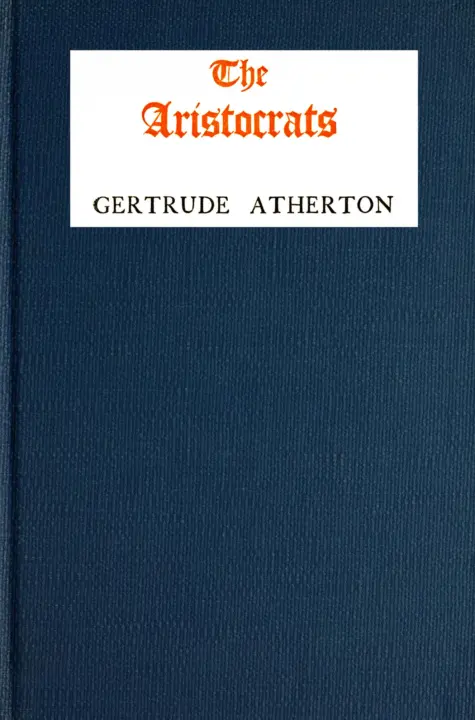
Gertrude Franklin Horn Atherton
THE CLASSIC COLLECTION · 1903
"The Conqueror: Being the True and Romantic Story of Alexander Hamilton" by Gertrude Franklin Atherton is a historical account written during the early 20th century. This work aims to dramatize the life of Alexander Hamilton, one of America's Founding Fathers, by weaving together factual history and an imaginative narrative that explores his character and the context of his times. The opening of the book introduces readers to the island of Nevis in the 18th century, setting the stage for Hamilton’s origins and the world he was born into. It details the socio-political landscape of Nevis, highlighting the wealth and prominence of its planters, while also hinting at Hamilton's humble beginnings. The narrative begins with the life of Rachael Fawcett, Hamilton's mother, illustrating her challenging marriage and determination to create a better life for her children amidst the societal expectations of the time. The opening culminates in Rachael giving birth to Alexander in a tumultuous environment, indicating the impactful confluence of his family's struggles and the vibrant yet harsh realities of colonial life that would shape his extraordinary path. This juxtaposition of a character-driven narrative with historical context sets up a vivid portrayal of Hamilton as a complex figure molded by both adversity and opportunity.
Introduction adapted from the source catalogue; source summaries may be automatically generated.
Free to read · English · 197,413 words · No account needed
MAKE TIME FOR A GOOD BOOK
On by default. Untick to stop anonymous reading totals. Each page counts after 10 seconds in view. How this works.
Anonymous counting is on unless you have switched it off.
The challenge was delivered on Wednesday. Hamilton refused to withdraw his services from his clients in the midst of the Circuit Court, and July 11th, a fortnight later, was appointed for the meeting. When Hamilton was not busy with the important interests confided to him by his clients, he arranged his own affairs, and drew up a document for publication, in the event of his death, in which he stated that he had criticised Burr freely for years, but added that he bore him no ill-will, that his opposition had been for public reasons only, that his impressions of Burr were entertained with sincerity, and had been uttered with motives and for purposes which appeared to himself commendable. He announced his intention to throw away his fire, and gave this reason for yielding to a custom which he had held in avowed abhorrence: "The ability to be in future useful, whether in resisting mischief or effecting good, in those crises of our public affairs which seem likely to happen, would probably be inseparable from a conformity with public prejudice in this particular."
Burr spent several hours of each day in pistol practice, using the cherry trees of Richmond Hill as targets. Thurlow Weed, in his "Autobiography," has told of Burr's testament, written on the night before the duel. Having neither money nor lands, but an infinitude of debts, to bequeath his daughter, he left her a bundle of compromising letters from women. The writers moved in circles where virtue was held in esteem, and several were of the world of fashion. They had, with the instinct of self-defence, which animates women even in that stage where they idealize the man, omitted to sign their names. Burr supplied the omission in every case and added the present address. That Hamilton would throw away his fire was a possibility remote from the best effort of Burr's imagination, and although he knew that no one could fire more quickly than himself, he was not the man to go to the ground unprepared for emergencies: if his daughter, now Mrs. Alston, would obey his hint and blackmail, she might realize a pretty fortune. That Theodosia Burr, even with the incentive of poverty, would have sunk to such ignominy, no one who knows the open history of her short life will believe; but the father, whose idol she was, insulted her and stained her memory, too depraved and warped to understand nobility in anyone, least of all in one of his own blood. In the study of lost souls Burr has appealed to many analysts, and by no one has been made so attractive as by Harriet Beecher Stowe; who, knowing naught by experience of men of the world, either idealized them as interesting villains or transformed them into beasts. In Burr she saw the fallen angel, and bedewed him with many Christian tears. But I doubt if Burr, the inner and real Burr, had far to fall. His visible divergence from first conditions was as striking as, no doubt, it was natural. As the grandson of Jonathan Edwards, the son of the Reverend Aaron Burr, and reared by relatives of that same morbid, hideous, unhuman school of early New England theology, it only needed a wayward nature in addition to brain and spirit to send him flying on his own tangent as soon as he was old enough to think. After that his congenital selfishness did the rest. For a time he climbed the hill of prizes very steadily, taking, once in a way, a flight, swift as an arrow: in addition to great ability at the bar, and a cunning which rose to the dignity of a talent, he was handsome, magnetic, well-bred, and polished, studied women with the precision of a vivisectionist, assumed emotions and impulses he could not feel with such dexterity that even men yielded to his fascination until they plumbed him; had in fact many of the fleeting kindly instincts to which every mortal is subject who is made of flesh and blood, or comes of a stock that has been bred to certain ideals. Every wretch has a modicum of good in him, and in spite of the preponderance of evil in Burr, had he been born under kindly Southern skies with a gold spoon in his mouth, if, when ambitions developed, he had had but to stretch out his hand to pluck the prizes of life, instead of exercising the basest talents of his brain to overreach more fortunate men, why it is possible that his nature might not have hardened into a glacier: its visible third dazzling and symmetrical, its deadly bulk skulking below the surface of the waters which divided the two parts of him from his victims; might have died in the chaste reclusion of an ancestral four-poster, beneficiaries at his side. But that immalleable mind lacked the strong fibre of logic and foresight--which is all that moral force amounts to--that lifts a man triumphant above his worst temptations; and he paid the bitter and hideous penalty in a poverty, loneliness, and living death that would have moved the theologians of his blood to the uneasy suspicion that punishment is of this earth, a logical sequence of foolish and short-sighted acts. Both men and women are allowed a great latitude in this world; they have little to complain of. It is only when the brain fails in its part, or the character is gradually undermined by lying and dishonour, that the inevitable sequence is some act which arouses the indignation of society or jerks down the iron fist of the law. When Burr took to the slope he slid with few haltings. In his long life of plottings and failures, from his sympathy with the Conway Cabal to his desperate old age, there were no depths of blackguardism that he did not touch. Whether Madame Jumel spoke the truth or not to Hamilton on that night of their last interview, it was entirely in keeping with his life and character that he should kill for hire.
Your reading position is saved on this browser. Take it to another device with a library code. Reading pages adapt to text, rather than matching a printed edition.
Gertrude Franklin Horn Atherton
Gertrude Franklin Horn Atherton
Gertrude Franklin Horn Atherton
Gertrude Franklin Horn Atherton
BEHIND THE BOOK
This eBook is for the use of anyone anywhere in the United States and most other parts of the world at no cost and with almost no restrictions whatsoever. You may copy it, give it away or re-use it under the terms of the Project Gutenberg License included with this eBook or online at www.gutenberg.org. If you are not located in the United States, you will have to check the laws of the country where you are located before using this eBook. Read the source licence.
The original source file, including credits and licence, is retained by this library. Request an original-format copy at no charge. Please include the book title and Project Gutenberg identifier #13246.
KEEP YOUR CURIOSITY GOING
Cécile Tormay

Moritz Busch
Coulson Kernahan
John L. Ransom

Maurice Baring
Frances Wright