
Last letters from the living dead man
David Patterson (Spirit) Hatch
THE CLASSIC COLLECTION · 1909
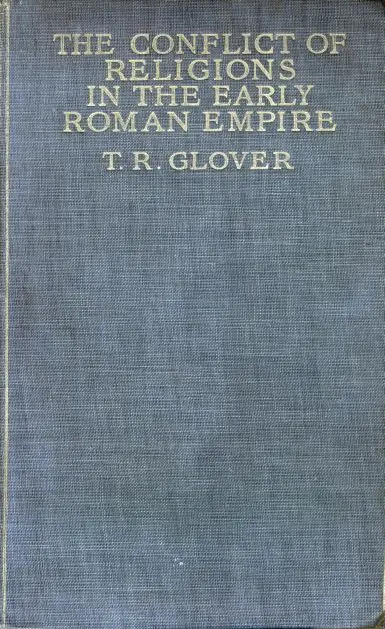
"The Conflict of Religions in the Early Roman Empire" by T. R. Glover is a historical account written in the early 20th century. The book explores the complex interactions and struggles between various religious ideologies during the early Roman Empire, particularly highlighting the emergence of Christianity alongside established pagan traditions. Glover’s aim seems to be to shed light on how these conflicts shaped the cultural and spiritual landscape of the time. The opening of the text presents a vivid portrayal of the political and social condition of Rome following the assassination of Julius Caesar, setting the stage for the subsequent turmoil and eventual consolidation of power under Augustus. Glover reflects on the chaotic aftermath of Caesar's death and the societal decline that occurred as competing factions struggled for control, leading to widespread disorder. As he introduces the dynamics of Roman religion, Glover indicates a profound concern regarding the moral and spiritual decay of society, hinting at how Augustus sought to restore stability through a revival of traditional Roman religious practices, juxtaposed with the rise of new faiths and ideas, including the nascent Christian movement. This introduction effectively frames the subsequent discussions on the interplay of religious thought and state authority in ancient Rome.
Introduction adapted from the source catalogue; source summaries may be automatically generated.
Free to read · English · 142,040 words · No account needed
MAKE TIME FOR A GOOD BOOK
On by default. Untick to stop anonymous reading totals. Each page counts after 10 seconds in view. How this works.
Anonymous counting is on unless you have switched it off.
[47] Lampridius, Alex. Sev. 29. 2.
[48] Fasti, v. 145. Cf. Prudentius, adv. Symm, ii, 445 f.
[49] Odes, iii, 23. Farre pio.
[50] On Georgic i, 302, See Varro, ap. Aug. C.D. vii, 13. Also Tert. de Anima, 39, Sic et omnibus genii deputantur, quod daemonum nomen est. Adeo nulla ferme nativitas munda, utique ethnicorum.
[51] Hor. Ep. ii. 2, 187 f. Howes' translation. Cf. Faerie Queene,
II, xii, 47.
[52] See J. H. Moulton in Journal of Theological Studies, III, 514.
[53] Burkitt, Early Eastern Christianity, p. 222.
[54] Fasti, iii, 57; Seneca, Ep. 18. 1, December est mensis: cum maxime civitas sudat, ius luxuries publicae datum est ... ut non videatur mihi errasse qui dixit: olim mensem Decembrem fuisse nunc annum.
[55] Cf. Robertson Smith, Religion of the Semites, lect. xi.
[56] Warde Fowler, Roman Festivals, pp. 106 f.
[57] Ovid, Fasti, ii, 409 f. Warde Fowler, op. cit. pp. 306 f.
[58] Ovid, Fasti, v, 490.
[59] De Divinatione, i, 1, 2.
[60] ib. i, 3, 5.
[61] ib. i, 39, 84.
[62] De Divinatione, i, 38, 82, 83. Cf. Tertullian, de Anima, 46. Sed et Stoici deum malunt providentissimum humanae institutioni inter cetera praesidia divinatricum artium et disciplinarum somnia quoque nobis indidisse, peculiare solatium naturalis oraculi.
[63] Panaetius and Seneca should be excepted from this charge.
[64] Cic. de Div. ii, 72, 149, 150. Cf. de Legg. ii, 13, 32. Plutarch also has the same remark about sleep and superstition.
[65] Cf. Odes, iii, 27.
[66] Tusculans, i, 21, 48.
[67] Hor. Ep. ii, 2, 208; Howes.
[68] Tertullian, de Idol. 9, seimus magiae et astrologiae inter se
societatem.
[69] Pliny the elder on Magic, N.H. xxx, opening sections; N.H. xxviii, 10, on incantations, polleantne aliquid verba et incantamenta carminum.
[70] Livy, xxix, 11, 14; Ovid, fasti, iv, 179 f. The goddess was
embodied in a big stone.
[71] Lucretius, ii, 608 f.
[72] Cf. Strabo, c. 470; Juvenal, vi, 511 f.
[73] See Ramsay, Church in the Roman Empire, p. 397. The Latins used the word divinus in this way--Seneca, de teata vita, 26, 8.
[74] (Lucian) Asinus, 37. The same tale is amplified in Apuleius' Golden Ass, where the episode of these priests is given with more detail, in the eighth book. Seneca hints that a little blood might make a fair show; see his picture of the same, de beata vita, 26, 8.
[75] Tertullian, ad Natt. i, 10; Apel. 6. He has the strange fancy that Serapis was originally the Joseph of the book of Genesis, ad Natt. ii, 8.
[76] Valerius Maximus, i, 3, 4.
[77] Dio C. xlvii, 15.
[78] Tibullus, i, 3, 23 f. Cf. Propertius, ii, 28, 45; Ovid, A.A.
iii, 635.
[79] Juvenal, vi, 522 f.
[80] Lucan, viii, 831, Isin semideosque canes.
[81] Ovid, Am. ii, 13, 7.
[82] Unless Isiaci coniectores is Cicero's own phrase, de Div. i,
58, 132.
[83] Cicero, Div. ii, 59, 121. For egkolmesis or incubatio see Mary Hamilton, Incubation (1906)
[84] Clem. Alex. Paedag. iii, 28, to the same effect. Tertullian on the temples, de Pud. c. 5. Reference may be made to the hierodules of the temples in ancient Asia and in modern India.
[85] Corp. Inscr. Lai. ii, 3386. The enumeration of the jewels was a
safeguard against theft.
[86] Flinders Petrie, Religion of Ancient Egypt, p. 44; Hamilton, Incubation, pp. 174, 182 f.
Your reading position is saved on this browser. Take it to another device with a library code. Reading pages adapt to text, rather than matching a printed edition.
BEHIND THE BOOK
This eBook is for the use of anyone anywhere in the United States and most other parts of the world at no cost and with almost no restrictions whatsoever. You may copy it, give it away or re-use it under the terms of the Project Gutenberg License included with this eBook or online at www.gutenberg.org. If you are not located in the United States, you will have to check the laws of the country where you are located before using this eBook. Read the source licence.
The original source file, including credits and licence, is retained by this library. Request an original-format copy at no charge. Please include the book title and Project Gutenberg identifier #39092.
KEEP YOUR CURIOSITY GOING
David Patterson (Spirit) Hatch

David Patterson (Spirit) Hatch

David Patterson (Spirit) Hatch
Cécile Tormay

Moritz Busch
John L. Ransom