THE CLASSIC COLLECTION✦Tony ButlerCLASSIC FREE BOOKS
Tony Butler
Charles Lever
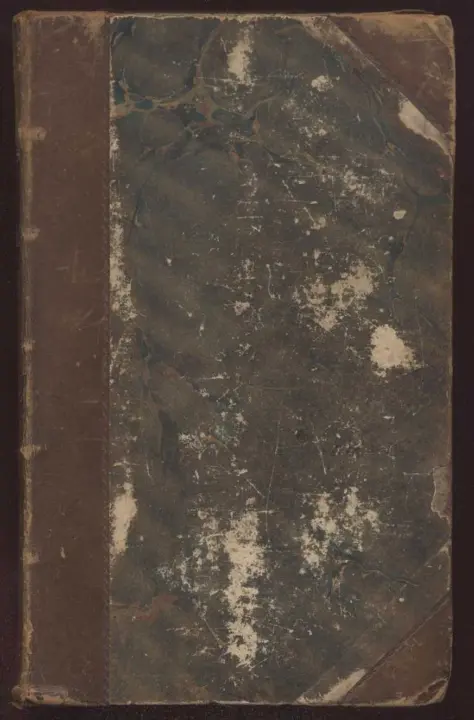
THE CLASSIC COLLECTION · 1839
"The Confessions of Harry Lorrequer — Complete" by Charles James Lever is a novel written during the early 19th century. This engaging work follows the adventures and misadventures of Harry Lorrequer, a young officer in the British army, as he navigates life, love, and the complexities of his career, particularly during his time in Ireland and beyond. At the start of the novel, we are introduced to Harry Lorrequer upon his arrival back in Cork after years of military service. The atmosphere is one of mingled joy and nostalgia, as the regiment is welcomed enthusiastically by the local citizens amid lavish celebrations. Through humorous anecdotes, Lorrequer describes the regimental festivities, his encounters with eccentric characters, and his own penchant for drama — not just on the stage but in everyday life. His adventures culminate in a series of comedic incidents, including a chaotic performance of "Othello," revealing both his charm and folly, setting the stage for further escapades in the chapters to come.
Introduction adapted from the source catalogue; source summaries may be automatically generated.
Free to read · English · 192,857 words · No account needed
MAKE TIME FOR A GOOD BOOK
On by default. Untick to stop anonymous reading totals. Each page counts after 10 seconds in view. How this works.
Anonymous counting is on unless you have switched it off.
Mr. O’Leary had scarcely concluded the narrative of his second adventure, when the grey light of the breaking day was seen faintly struggling through the half-closed curtains, and apprising us of the lateness of the hour.
“I think we shall just have time for one finishing flask of Chambertin,” said O’Leary, as he emptied the bottle into his glass.
“I forbid the bans, for one,” cried Trevanion. “We have all had wine enough, considering what we have before us this morning; and besides you are not aware it is now past four o’clock. So garcon—garcon, there—how soundly the poor fellow sleeps—let us have some coffee, and then inquire if a carriage is in waiting at the corner of the Rue Vivienne.”
The coffee made its appearance, very much, as it seemed, to Mr. O’Leary’s chagrin, who, however, solaced himself by sundry petits verres, to correct the coldness of the wine he had drank, and at length recovered his good humour.
“Do you know, now,” said he, after a short pause, in which we had all kept silence, “I think what we are about to do, is the very ugliest way of finishing a pleasant evening. For my own part I like the wind up we used to have in ‘Old Trinity’ formerly; when, after wringing off half a dozen knockers, breaking the lamps at the post-office, and getting out the fire engines of Werburgh’s parish, we beat a few watchmen, and went peaceably to bed.”
“Well, not being an Irishman,” said Trevanion, “I’m half disposed to think that even our present purpose is nearly as favourable to life and limb; but here comes my servant. Well, John, is all arranged, and the carriage ready?”
Having ascertained that the carriage was in waiting, and that the small box—brass bound and Bramah-locked—reposed within, we paid our bill and departed. A cold, raw, misty-looking morning, with masses of dark louring clouds overhead, and channels of dark and murky water beneath, were the pleasant prospects which met us as we issued forth from the Cafe. The lamps, which hung suspended midway across the street, (we speak of some years since,) creaked, with a low and plaintive sound, as they swung backwards and forwards in the wind. Not a footstep was heard in the street—nothing but the heavy patter of the rain as it fell ceaselessly upon the broad pavement. It was, indeed, a most depressing and dispiriting accompaniment to our intended excursion: and even O’Leary, who seemed to have but slight sympathy with external influences, felt it, for he spoke but little, and was scarcely ten minutes in the carriage till he was sound asleep. This was, I confess, a great relief to me; for, however impressed I was, and to this hour am, with the many sterling qualitites of my poor friend, yet, I acknowledge, that this was not precisely the time I should have cared for their exercise, and would have much preferred the companionship of a different order of person, even though less long acquainted with him. Trevanion was, of all others, the most suitable for this purpose; and I felt no embarrassment in opening my mind freely to him upon subjects which, but twenty-four hours previous, I could not have imparted to a brother.
Your reading position is saved on this browser. Take it to another device with a library code. Reading pages adapt to text, rather than matching a printed edition.
BEHIND THE BOOK
This eBook is for the use of anyone anywhere in the United States and most other parts of the world at no cost and with almost no restrictions whatsoever. You may copy it, give it away or re-use it under the terms of the Project Gutenberg License included with this eBook or online at www.gutenberg.org. If you are not located in the United States, you will have to check the laws of the country where you are located before using this eBook. Read the source licence.
The original source file, including credits and licence, is retained by this library. Request an original-format copy at no charge. Please include the book title and Project Gutenberg identifier #5240.
KEEP YOUR CURIOSITY GOING
Coulson Kernahan

Maurice Baring
Frances Wright
Cécile Tormay

Frederic Jesup Stimson

W. H. P. (William Henry Pope) Jarvis