THE CLASSIC COLLECTION✦Tony ButlerCLASSIC FREE BOOKS
Tony Butler
Charles Lever
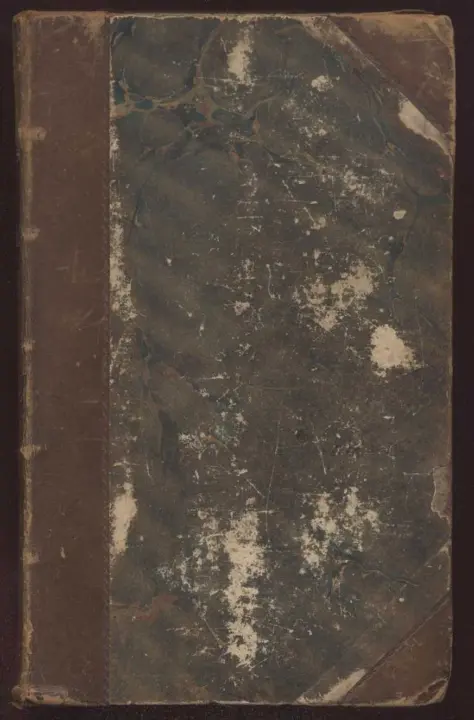
THE CLASSIC COLLECTION · 1839
"The Confessions of Harry Lorrequer — Complete" by Charles James Lever is a novel written during the early 19th century. This engaging work follows the adventures and misadventures of Harry Lorrequer, a young officer in the British army, as he navigates life, love, and the complexities of his career, particularly during his time in Ireland and beyond. At the start of the novel, we are introduced to Harry Lorrequer upon his arrival back in Cork after years of military service. The atmosphere is one of mingled joy and nostalgia, as the regiment is welcomed enthusiastically by the local citizens amid lavish celebrations. Through humorous anecdotes, Lorrequer describes the regimental festivities, his encounters with eccentric characters, and his own penchant for drama — not just on the stage but in everyday life. His adventures culminate in a series of comedic incidents, including a chaotic performance of "Othello," revealing both his charm and folly, setting the stage for further escapades in the chapters to come.
Introduction adapted from the source catalogue; source summaries may be automatically generated.
Free to read · English · 192,857 words · No account needed
MAKE TIME FOR A GOOD BOOK
On by default. Untick to stop anonymous reading totals. Each page counts after 10 seconds in view. How this works.
Anonymous counting is on unless you have switched it off.
The gen-d’arme in whose guardianship I had been left was a fine specimen of his caste; a large and powerfully built man of about fifty, with an enormous beard of grizzly brown and grey hair, meeting above and beneath his nether lip; his eyebrows were heavy and beetling, and nearly concealed his sharp grey eyes, while a deep sabre-wound had left upon his cheek a long white scar, giving a most warlike and ferocious look to his features.
As he sat apart from me for some time, silent and motionless, I could not help imagining in how many a hard-fought day he had borne a part, for he evidently, from his age and bearing, had been one of the soldiers of the empire. I invited him to partake of my bottle of Medoc, by which he seemed flattered. When the flask became low, and was replaced by another, he appeared to have lost much of his constrained air, and seemed forgetting rapidly the suspicious circumstances which he supposed attached to me—waxed wondrous confidential and communicative, and condescended to impart some traits of a life which was not without its vicissitudes, for he had been, as I suspected, one of the “Guarde”—the old guarde—was wounded at Marengo, and received the croix d’honneur in the field of Wagram, from the hands of the Emperor himself. The headlong enthusiasm of attachment to Napoleon, which his brief and stormy career elicited even from those who suffered long and deeply in his behalf, is not one of the least singular circumstances which this portion of history displays. While the rigours of the conscription had invaded every family in France, from Normandie to La Vendee—while the untilled fields, the ruined granaries, the half-deserted villages, all attested the depopulation of the land, those talismanic words, “l’Empereur et la gloire,” by some magic mechanism seemed all-sufficient not only to repress regret and suffering, but even stimulate pride, and nourish valour; and even yet, when it might be supposed that like the brilliant glass of a magic lantern, the gaudy pageant had passed away, leaving only the darkness and desolation behind it—the memory of those days under the empire survives untarnished and unimpaired, and every sacrifice of friends or fortune is accounted but little in the balance when the honour of La Belle France, and the triumphs of the grand “armee,” are weighted against them. The infatuated and enthusiastic followers of this great man would seem, in some respects, to resemble the drunkard in the “Vaudeville,” who alleged as his excuse for drinking, that whenever he was sober his poverty disgusted him. “My cabin,” said he, “is a cell, my wife a mass of old rags, my child a wretched object of misery and malady. But give me brandy; let me only have that, and then my hut is a palace, my wife is a princess, and my child the very picture of health and happiness;” so with these people—intoxicated with the triumphs of their nation, “tete monte” with victory—they cannot exist in the horror of sobriety which peace necessarily enforces; and whenever the subject turns in conversation upon the distresses of the time or the evil prospects of the country, they call out, not like the drunkard, for brandy, but in the same spirit they say—“Ah, if you would again see France flourishing and happy, let us once more have our croix d’honneur, our epaulettes, our voluntary contributions, our Murillos, our Velasquez, our spoils from Venice, and our increased territories to rule over.” This is the language of the Buonapartiste every where, and at all seasons; and the mass of the nation is wonderfully disposed to participate in the sentiment. The empire was the Aeneid of the nation, and Napoleon the only hero they now believe in. You may satisfy yourself of this easily. Every cafe will give evidence of it, every society bears its testimony to it, and even the most wretched Vaudeville, however, trivial the interest—however meagre the story, and poor the diction, let the emperor but have his “role”—let him be as laconic as possible, carry his hands behind his back, wear the well-known low cocked-hat, and the “redingote gris”—the success is certain—every sentence he utters is applauded, and not a single allusion to the Pyramids, the sun of Austerlitz, l’honneur, et al vieille garde, but is sure to bring down thunders of acclamation. But I am forgetting myself, and perhaps my reader too; the conversation of the old gen-d’arme accidentally led me into reflections like these, and he was well calculated, in many ways, to call them forth. His devoted attachment—his personal love of the emperor—of which he gave me some touching instances, was admirably illustrated by an incident, which I am inclined to tell, and hope it may amuse the reader as much as it did myself on hearing it.
Your reading position is saved on this browser. Take it to another device with a library code. Reading pages adapt to text, rather than matching a printed edition.
BEHIND THE BOOK
This eBook is for the use of anyone anywhere in the United States and most other parts of the world at no cost and with almost no restrictions whatsoever. You may copy it, give it away or re-use it under the terms of the Project Gutenberg License included with this eBook or online at www.gutenberg.org. If you are not located in the United States, you will have to check the laws of the country where you are located before using this eBook. Read the source licence.
The original source file, including credits and licence, is retained by this library. Request an original-format copy at no charge. Please include the book title and Project Gutenberg identifier #5240.
KEEP YOUR CURIOSITY GOING
Coulson Kernahan

Maurice Baring
Frances Wright
Cécile Tormay

Frederic Jesup Stimson

W. H. P. (William Henry Pope) Jarvis