THE CLASSIC COLLECTION✦Tony ButlerCLASSIC FREE BOOKS
Tony Butler
Charles Lever
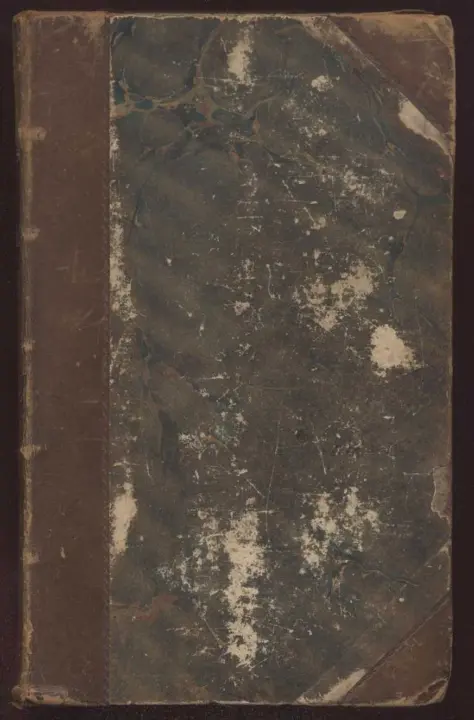
THE CLASSIC COLLECTION · 1839
"The Confessions of Harry Lorrequer — Complete" by Charles James Lever is a novel written during the early 19th century. This engaging work follows the adventures and misadventures of Harry Lorrequer, a young officer in the British army, as he navigates life, love, and the complexities of his career, particularly during his time in Ireland and beyond. At the start of the novel, we are introduced to Harry Lorrequer upon his arrival back in Cork after years of military service. The atmosphere is one of mingled joy and nostalgia, as the regiment is welcomed enthusiastically by the local citizens amid lavish celebrations. Through humorous anecdotes, Lorrequer describes the regimental festivities, his encounters with eccentric characters, and his own penchant for drama — not just on the stage but in everyday life. His adventures culminate in a series of comedic incidents, including a chaotic performance of "Othello," revealing both his charm and folly, setting the stage for further escapades in the chapters to come.
Introduction adapted from the source catalogue; source summaries may be automatically generated.
Free to read · English · 192,857 words · No account needed
MAKE TIME FOR A GOOD BOOK
On by default. Untick to stop anonymous reading totals. Each page counts after 10 seconds in view. How this works.
Anonymous counting is on unless you have switched it off.
Troubles are like laudanum, a small dose only excites, a strong one sets you to sleep—not a very comfortable sleep mayhap—but still it is sleep, and often very sound sleep; so it now happened with me. I had pondered over, weighed, and considered all the pros, cons, turnings, and windings of this awkward predicament, till I had fairly convinced myself that I was on the high road to a confounded scrape; and then, having established that fact to my entire satisfaction, I fell comfortably back in the chaise, and sunk into a most profound slumber.
If to any of my readers I may appear here to have taken a very despondent view of this whole affair, let him only call to mind my invariable ill luck in such matters, and how always it had been my lot to see myself on the fair road to success, only up to that point at which it is certain, besides—but why explain? These are my confessions. I may not alter what are matters of fact, and my reader must only take me with all the imperfections of wrong motives and headlong impulses upon my head, or abandon me at once.
Meanwhile the chaise rolled along, and the road being better and the pace faster, my sleep became more easy; thus, about an hour and a half after I had fallen asleep, passed rapidly over, when the sharp turning of an angle distended me from my leaning position, and I awoke. I started up and rubbed my eyes; several seconds elapsed before I could think where I was or whither going. Consciousness at last came, and I perceived that we were driving up a thickly planted avenue. Why, confound it, they can’t have mistaken it, thought I, or are we really going up to the house, instead of waiting at the lodge? I at once lowered the sash, and stretching out my head, cried out, “Do you know what ye are about, lads; is this all right?” but unfortunately, amid the rattling of the gravel and the clatter of the horses, my words were unheard; and thinking I was addressing a request to go faster, the villains cracked their whips, and breaking into a full gallop, before five minutes flew over, they drew up with a jerk at the foot of a long portico to a large and spacious cut-stone mansion. When I rallied from the sudden check, which had nearly thrown me through the window, I gave myself up for lost: here I was vis a vis to the very hall-door of the man whose daughter I was about to elope with, whether so placed by the awkwardness and blundering of the wretches who drove me, or delivered up by their treachery, it mattered not, my fate seemed certain; before I had time to determine upon any line of acting in this confounded dilemma, the door was jerked open by a servant in a sombre livery; who, protruding his head and shoulders into the chaise, looked at me steadily for a moment, and said, “Ah! then, doctor darlin’, but ye’re welcome.” With the speed with which sometimes the bar of an air long since heard, or the passing glance of an old familiar fact can call up the memory of our very earliest childhood, bright and vivid before us, so that one single phrase explained the entire mystery of my present position, and I saw in one rapid glance that I had got into the chaise intended for Dr. Fitzgerald, and was absolutely at that moment before the hall-door of the patient. My first impulse was an honest one, to avow the mistake and retrace my steps, taking my chance to settle with Curzon, whose matrimonial scheme I foresaw was doomed to the untimely fate of all those I had ever been concerned in. My next thought, how seldom is the adage true which says “that second thoughts are best,” was upon my luckless wager; for, even supposing that Fitzgerald should follow me in the other chaise, yet as I had the start of him, if I could only pass muster for half an hour, I might secure the fee, and evacuate the territory; besides that there was a great chance of Fitz’s having gone on my errand, while I was journeying on his, in which case I should be safe from interruption. Meanwhile, heaven only could tell, what his interference in poor Curzon’s business might not involve. These serious reflections took about ten seconds to pass through my mind, as the grave-looking old servant proceeded to encumber himself with my cloak and my pistol-case, remarking as he lifted the latter, “And may the Lord grant ye won’t want the instruments this time, doctor, for they say he is better this morning;” heartily wishing amen to the benevolent prayer of the honest domestic, for more reasons than one, I descended leisurely, as I conjectured a doctor ought to do, from the chaise, and with a solemn pace and grave demeanour followed him into the house.
Your reading position is saved on this browser. Take it to another device with a library code. Reading pages adapt to text, rather than matching a printed edition.
BEHIND THE BOOK
This eBook is for the use of anyone anywhere in the United States and most other parts of the world at no cost and with almost no restrictions whatsoever. You may copy it, give it away or re-use it under the terms of the Project Gutenberg License included with this eBook or online at www.gutenberg.org. If you are not located in the United States, you will have to check the laws of the country where you are located before using this eBook. Read the source licence.
The original source file, including credits and licence, is retained by this library. Request an original-format copy at no charge. Please include the book title and Project Gutenberg identifier #5240.
KEEP YOUR CURIOSITY GOING
Coulson Kernahan

Maurice Baring
Frances Wright
Cécile Tormay

Frederic Jesup Stimson

W. H. P. (William Henry Pope) Jarvis