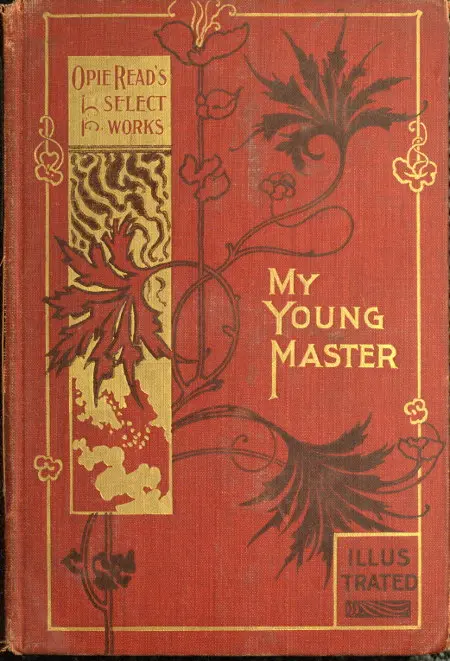
My Young Master: A Novel
Opie Percival Read
THE CLASSIC COLLECTION · 1893
"The Colossus: A Novel" by Opie Percival Read is a fictional narrative written in the late 19th century. The novel seems to explore themes of identity, belonging, and the complexities of human relationships through the experiences of the main character, Henry DeGolyer. As he navigates a life filled with hardship due to his tragic childhood, readers meet a variety of characters that impact his journey, setting the stage for his eventual transformation. At the start of the novel, readers are introduced to Henry DeGolyer, who reflects on his difficult childhood, marked by the death of his mother and a distant, alcoholic father. After being raised in a Foundlings' Home and by an old Italian woman, Henry struggles to become a journalist, facing both the highs and lows of a reporter's life. His journey takes a decisive turn when he is invited to Costa Rica by a young man named Henry Sawyer, which leads him to unexpected connections and revelations about his past. As he engages with new characters and situations, the groundwork is laid for exploring notions of heritage and personal responsibility amid the backdrop of a shifting family dynamic.
Introduction adapted from the source catalogue; source summaries may be automatically generated.
Free to read · English · 64,814 words · No account needed
MAKE TIME FOR A GOOD BOOK
On by default. Untick to stop anonymous reading totals. Each page counts after 10 seconds in view. How this works.
Anonymous counting is on unless you have switched it off.
"I didn't know what to do," Brooks replied. He stood on the hearth-rug with his hands behind him. "I was so worried that I couldn't sleep after I saw the thing late last night; and my wife was crying when I left home."
"Infamous scoundrels!" Witherspoon muttered.
"I didn't think anything could be done," Brooke continued, "but I thought it best to see you at once."
"Of course," said Witherspoon.
"But, after all, don't you think we ought to have those wretches
locked up?" Brooke asked.
"Yes," Witherspoon answered, "and we ought to have them hanged, but we might as well set out to look for Kittymunks. Ten chances to one they are not here at all; the thing might have been printed in a town three hundred miles from here."
"Yes, that's so," Brooks admitted; and addressing Henry, who stood at a window, gazing out, he added: "What do you think about it?"
Henry did not heed the question, so forgetfully was he gazing, and
Brooks repeated it.
"If you have decided not to worry," Henry answered, "it is better not to trouble yourselves at all. I doubt whether you could ever find the publishers of the paper."
"You are right," Brooks agreed.
"Character used to be regarded as something at least half way sacred," said Witherspoon, "but now, like an old plug hat, it is kicked about the streets. And yet we boast of our freedom. Freedom, indeed! So would it be freedom to sit at a window and shoot men as they pass. I swear to God that I never had as much trouble and worry as I've had lately. Everything goes wrong. What about Jordway & Co., of Aurora?"
"Oh, I forgot to tell you," Brooks answered. "Jordway has killed himself, and the affairs of the firm are in a hopeless tangle."
"Of coarse," Witherspoon replied, "and we'll never get a cent."
"I'm afraid not, sir. I cautioned you against them, you remember."
"Never saw anything like it," Witherspoon declared, not recalling the caution that Brooks had advised, or not caring to acknowledge it.
"Oh, everything may come out all right. Pardon me, Mr. Witherspoon,
but I think you need rest"
"There is no rest," Witherspoon replied.
"And yet," said Henry, turning from the window, "you took me to task for saying that I sometimes felt there was nothing in the entire scheme of life."
"For saying it at your age, yes. You have but just begun to try life and have no right to condemn it."
"I didn't condemn it without a hearing. Isn't there something wrong when the poor are wretched and the rich are miserable?"
"Nonsense," said Witherspoon.
"Oh, but that's no argument."
Your reading position is saved on this browser. Take it to another device with a library code. Reading pages adapt to text, rather than matching a printed edition.
Opie Percival Read
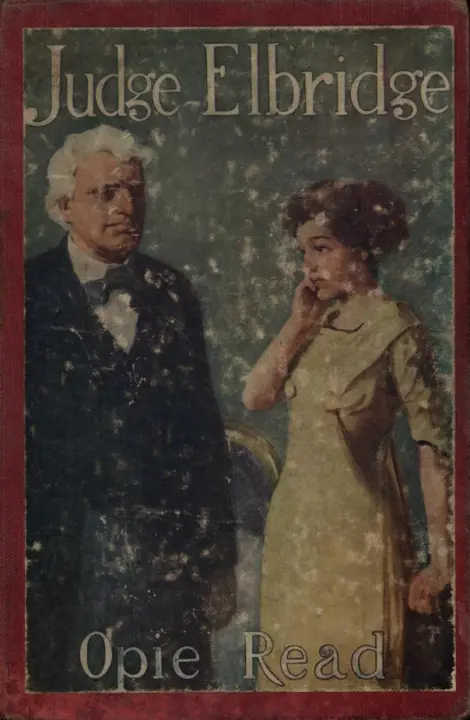
Opie Percival Read
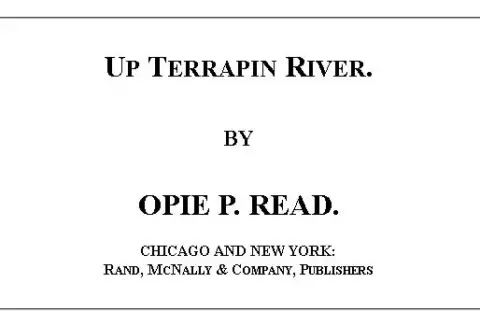
Opie Percival Read
Opie Percival Read
BEHIND THE BOOK
This eBook is for the use of anyone anywhere in the United States and most other parts of the world at no cost and with almost no restrictions whatsoever. You may copy it, give it away or re-use it under the terms of the Project Gutenberg License included with this eBook or online at www.gutenberg.org. If you are not located in the United States, you will have to check the laws of the country where you are located before using this eBook. Read the source licence.
The original source file, including credits and licence, is retained by this library. Request an original-format copy at no charge. Please include the book title and Project Gutenberg identifier #15073.
KEEP YOUR CURIOSITY GOING
Coulson Kernahan

Maurice Baring
Frances Wright
Cécile Tormay

Frederic Jesup Stimson

W. H. P. (William Henry Pope) Jarvis