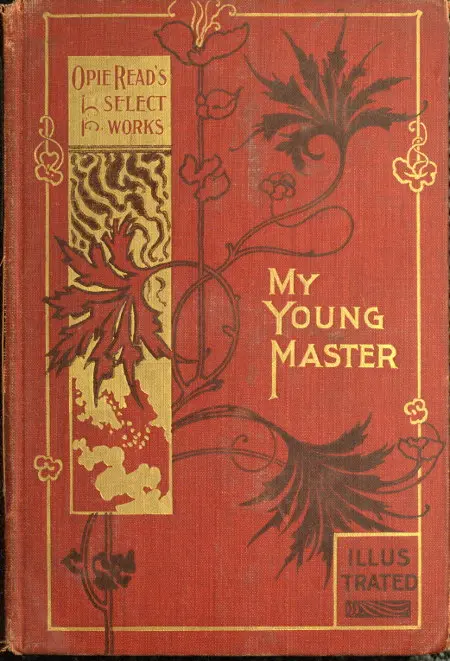
My Young Master: A Novel
Opie Percival Read
THE CLASSIC COLLECTION · 1893
"The Colossus: A Novel" by Opie Percival Read is a fictional narrative written in the late 19th century. The novel seems to explore themes of identity, belonging, and the complexities of human relationships through the experiences of the main character, Henry DeGolyer. As he navigates a life filled with hardship due to his tragic childhood, readers meet a variety of characters that impact his journey, setting the stage for his eventual transformation. At the start of the novel, readers are introduced to Henry DeGolyer, who reflects on his difficult childhood, marked by the death of his mother and a distant, alcoholic father. After being raised in a Foundlings' Home and by an old Italian woman, Henry struggles to become a journalist, facing both the highs and lows of a reporter's life. His journey takes a decisive turn when he is invited to Costa Rica by a young man named Henry Sawyer, which leads him to unexpected connections and revelations about his past. As he engages with new characters and situations, the groundwork is laid for exploring notions of heritage and personal responsibility amid the backdrop of a shifting family dynamic.
Introduction adapted from the source catalogue; source summaries may be automatically generated.
Free to read · English · 64,814 words · No account needed
MAKE TIME FOR A GOOD BOOK
On by default. Untick to stop anonymous reading totals. Each page counts after 10 seconds in view. How this works.
Anonymous counting is on unless you have switched it off.
Witherspoon started. "Ah, it's you. Did you bring the evening papers?"
"Yes, here they are," Henry answered.
"What do they say? Can't you tell me? Got the papers and can't tell me
what they say?"
"They say a great deal," Henry replied. "Brooks has made a
confession."
In an instant Witherspoon sat on the edge of the bed, with the covers jerked about him. He opened his mouth, but no word came forth.
"When he was told that Mrs. Colton had made a statement he gave up," said Henry. "The confession is not a written one, but is doubtless much fuller than if it were. I will take the Star's report. They are all practically the same, but this one has a few pertinent questions. I will skip the introduction.
"'I confess,' said Brooks, 'that I killed the old man, but I did not murder him. I was trying to keep him from killing me. I had gone into a losing speculation and was in pressing need of money. I knew that it would be useless to ask him to help me; in fact, I didn't want him to know that I had been speculating, and I decided to help myself. I knew that he kept money in the safe at home; I didn't know how much, but I thought that it was enough to help me out, and I began deliberately to plan the robbery. I knew that it would have to be done in the most skillful manner, for the old man's love of money made him as sharp as a briar when money was at stake; and I was resolved to have no confederates to share the reward and afterward to keep me in fear of exposure, I wrote a letter, and using the first name that came into my head, addressed it to "Dave Kittymunks, General Delivery, Chicago." I don't know where I picked up the name, and it makes no difference. I ran up to Milwaukee, dropped the letter in a mail box and was back here before any one knew that I was out of town. I disguised myself with black whiskers, went to the post-office and called for the letter, and took care that the delivery clerk should notice me. Colton supposed that none but members of his family knew of the safe at home, and why a robber should know must be made clear; so, wearing the same disguise, I called at the house one day and told the servant in charge that I had been sent to search for sewer-gas. I showed an order. A shrewd colored man had been discharged on account of some irregularities into which I had entrapped him, and an ignorant fellow that had agreed to work for less had just been put in his place. One evening when our family visited the Witherspoons I perfected my arrangements. I sawed the iron bars at the window and placed the black coat, with the Kittymunks letter in the pocket, as if the sash had failed and caught it. It was necessary that the coat should be found, and it was hardly natural that it should be found lying in the yard, it must appear that in his haste to get away the robber was compelled to leave his coat, and this could not be done unless he was forced to get out of it, leaving the police to suspect that he had done so with a struggle. I had torn one sleeve nearly off. But the mere falling of the sash on the tail of the coat would not do, it would pull out too easily. Then I thought of the pipe. I arranged the safe so that with a chisel I could open it easily--it was an old and insecure thing, anyway--and then placed a ladder on the ground under the window. Here there is a paved walk, so there was no necessity to make tracks. Now, there was but one thing more, and that was a noise to sound like the falling of the sash, and which was to wake the old man so that he might jump up almost in time to catch the robber. I had almost forgotten this, and now it puzzled me. The vault-room, a narrow apartment, is between the old man's room and mine, and I could have left the window up, propped with a stick, and from my window jerked out the prop, but the cool air would have shown the old man that the window was raised, and this would have ruined everything. Finally I decided that the falling of my own window--both are old-fashioned and are held up by a notched button--would arouse him and that he would think that the noise came from the vault-room. I would prop it with the edge of the button so that a slight pull on a string would throw it. But another question then arose. The weather was cold, and why should we have our window up so high? How should I explain to my wife? I would build a roaring fire in the furnace. That would heat the room too hot and give me an excuse to raise the window. But she would find it down. I could tell her that the room cooled off and that I put it down. But I was quibbling with myself. Everything was settled. The hall-door of the vault-room is but a step from my own door, and was kept fastened with a spring lock and a bolt and was supposed never to be opened. I drew back the bolt and the catch, and fixed the catch so that I could easily spring it when I went out. When everything had thus been arranged, I went to Witherspoon's to come home with the folks. The sky was clouded and the night was very dark. When we reached home the old man complained of having eaten too much--something he never had cause to complain of when he ate at home--and said that he believed he would lie down.
Your reading position is saved on this browser. Take it to another device with a library code. Reading pages adapt to text, rather than matching a printed edition.
Opie Percival Read
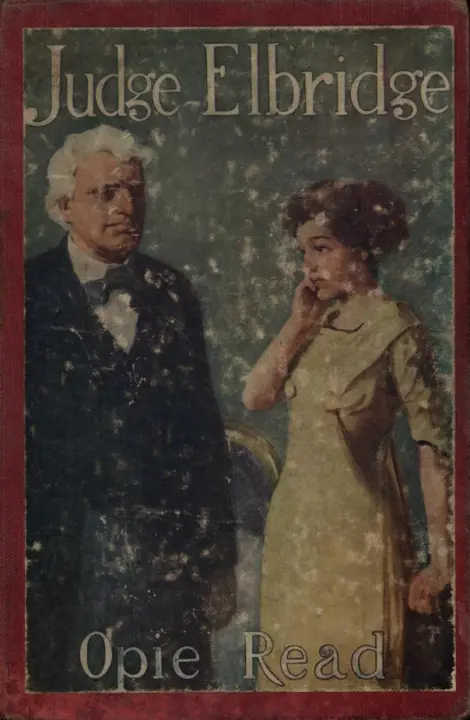
Opie Percival Read
Opie Percival Read
Opie Percival Read
BEHIND THE BOOK
This eBook is for the use of anyone anywhere in the United States and most other parts of the world at no cost and with almost no restrictions whatsoever. You may copy it, give it away or re-use it under the terms of the Project Gutenberg License included with this eBook or online at www.gutenberg.org. If you are not located in the United States, you will have to check the laws of the country where you are located before using this eBook. Read the source licence.
The original source file, including credits and licence, is retained by this library. Request an original-format copy at no charge. Please include the book title and Project Gutenberg identifier #15073.
KEEP YOUR CURIOSITY GOING
Coulson Kernahan

Maurice Baring
Frances Wright
Cécile Tormay

Frederic Jesup Stimson

W. H. P. (William Henry Pope) Jarvis