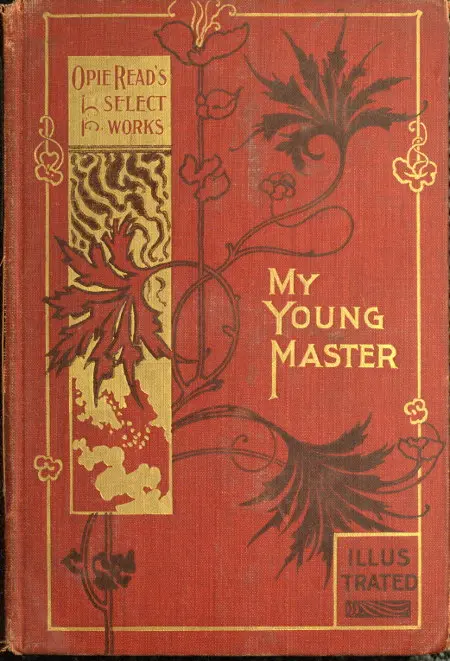
My Young Master: A Novel
Opie Percival Read
THE CLASSIC COLLECTION · 1893
"The Colossus: A Novel" by Opie Percival Read is a fictional narrative written in the late 19th century. The novel seems to explore themes of identity, belonging, and the complexities of human relationships through the experiences of the main character, Henry DeGolyer. As he navigates a life filled with hardship due to his tragic childhood, readers meet a variety of characters that impact his journey, setting the stage for his eventual transformation. At the start of the novel, readers are introduced to Henry DeGolyer, who reflects on his difficult childhood, marked by the death of his mother and a distant, alcoholic father. After being raised in a Foundlings' Home and by an old Italian woman, Henry struggles to become a journalist, facing both the highs and lows of a reporter's life. His journey takes a decisive turn when he is invited to Costa Rica by a young man named Henry Sawyer, which leads him to unexpected connections and revelations about his past. As he engages with new characters and situations, the groundwork is laid for exploring notions of heritage and personal responsibility amid the backdrop of a shifting family dynamic.
Introduction adapted from the source catalogue; source summaries may be automatically generated.
Free to read · English · 64,814 words · No account needed
MAKE TIME FOR A GOOD BOOK
On by default. Untick to stop anonymous reading totals. Each page counts after 10 seconds in view. How this works.
Anonymous counting is on unless you have switched it off.
"He did go, but I heard some of the boys say that he returned this morning. Is your work all done for to-day?"
"Yes, about all."
"Suppose we go over to the club."
"All right. Wait a moment."
Henry stepped into Miss Drury's room. "You must; forgive me," he said,
in a low tone.
"What for?" she asked, in surprise.
"For so rudely inviting you to dinner when my sister had not even
called on you."
"Oh, that's nothing," she replied, laughing. "Such mistakes are common enough with men, I should think."
"Not with sensible men. What have you here?"
"Oh, some stupid paragraphs about women."
"They'll keep till to-morrow."
"But Mr. Mitchell said he wanted them to-day."
"Tell him if he calls for them that I want them to-morrow. You'd
better go home and rest."
"Rest? Why, I haven't done anything to make me tired."
"Well, you don't know how soon you may be tired, and you'd better take your rest in advance. All right, John," he said in a louder tone, "I'm with you."
When they entered the office of the Press Club, a forensic voice, followed by laughter, bore to them the intelligence that Mr. Flummers was in the front room, declaiming his recent adventures. They found the orator measuredly stepping the short distance between this round table and the post on which was fixed the button of the electric bell. Led by fondness to believe that some one, moved to generosity, might ask him to ring for the drinks, he showed a disposition to loiter whenever he reached the post, and the light of eager expectancy and the shadow of sore disappointment played a trick pantomime on his countenance.
"Oh, ho, ho, here come two of my staff. John, I have been talking for an hour, and the bell is rusting from disuse."
"Why don't you ring it on your own account?"
"Oh, no; you can't expect one man to do everything."
"Go on with your story."
"But is there anything in it?"
"If you mean your story, I don't think there's much in it."
"If you cut it short enough," said Mortimer, "we'll all contribute."
"There spoke a disgruntled Englishman," Flummers exclaimed. "Having no humor himself, he scowls on the--the"--He scalloped the air, but it failed to bring the right word. "Jim, you'd better confine yourself to the writing of encyclopedias and not meddle with the buzz-saw of--of sharp retort."
"He appears to have made it that time," said Whittlesy.
"Now, Whit, it may behoove some men to speak, but it doesn't behoove you. Remember that I hold you in the hollow of my hand."
"Let us have the story," said Henry.
Your reading position is saved on this browser. Take it to another device with a library code. Reading pages adapt to text, rather than matching a printed edition.
Opie Percival Read
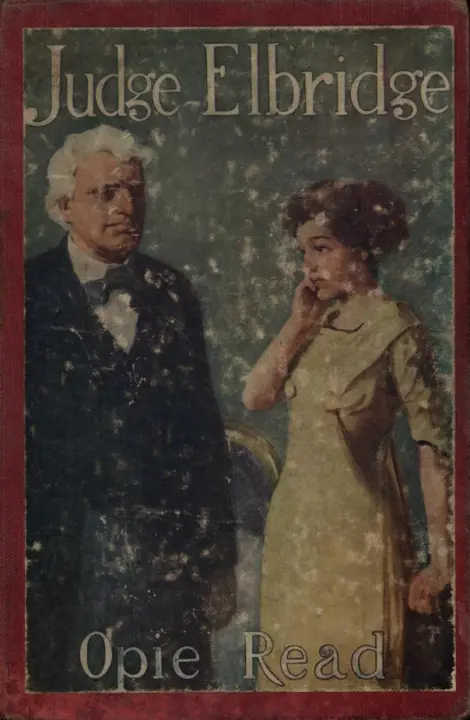
Opie Percival Read
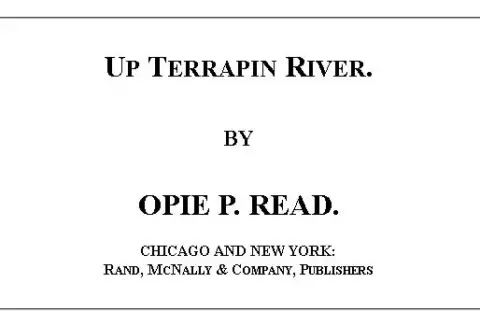
Opie Percival Read
Opie Percival Read
BEHIND THE BOOK
This eBook is for the use of anyone anywhere in the United States and most other parts of the world at no cost and with almost no restrictions whatsoever. You may copy it, give it away or re-use it under the terms of the Project Gutenberg License included with this eBook or online at www.gutenberg.org. If you are not located in the United States, you will have to check the laws of the country where you are located before using this eBook. Read the source licence.
The original source file, including credits and licence, is retained by this library. Request an original-format copy at no charge. Please include the book title and Project Gutenberg identifier #15073.
KEEP YOUR CURIOSITY GOING
Coulson Kernahan

Maurice Baring
Frances Wright
Cécile Tormay

Frederic Jesup Stimson

W. H. P. (William Henry Pope) Jarvis