THE CLASSIC COLLECTION✦An outlaw’s diary: the CommuneCLASSIC FREE BOOKS
An outlaw’s diary: the Commune
Cécile Tormay
THE CLASSIC COLLECTION · 1910
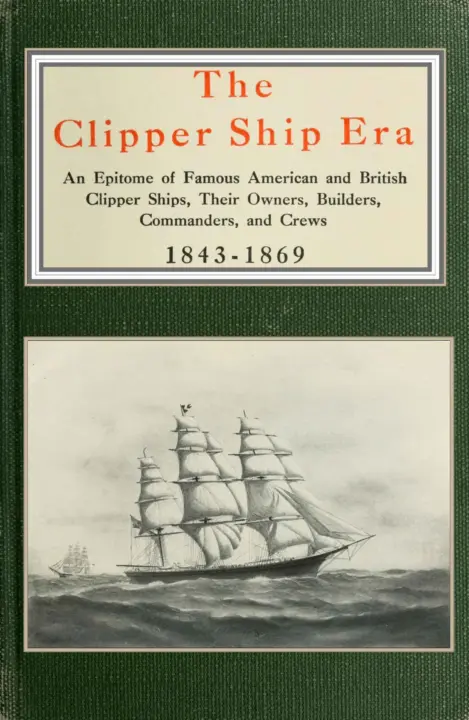
"The Clipper Ship Era" by Arthur H. Clark is a historical account written in the early 20th century. This work chronicles the thriving period of American and British clipper ships from the 1840s to the late 1860s, detailing their construction, speed, and significance in maritime history. The book likely highlights the technological advancements in shipbuilding, the cultural impacts of these vessels, and notable figures such as shipbuilders and captains from that era. The opening of the book introduces the Clipper Ship Era, noting that it began in 1843, driven by increased demand for swift tea deliveries from China and spurred by the gold rushes. Clark discusses the evolution of sailing ships, specifically focusing on the transition from traditional ships to the more agile and faster clipper ships. He emphasizes the personal connection he has with many of these vessels and their builders, sharing insights into the races and competitions among shipbuilders and mariners that characterized this exciting period on the seas. Overall, the beginning sets the stage for a detailed exploration of the maritime innovations and historical context of the clipper ships, laying a foundation for the chapters that follow.
Introduction adapted from the source catalogue; source summaries may be automatically generated.
Free to read · English · 98,778 words · No account needed
MAKE TIME FOR A GOOD BOOK
On by default. Untick to stop anonymous reading totals. Each page counts after 10 seconds in view. How this works.
Anonymous counting is on unless you have switched it off.
From 50° S. in the Pacific to the equator: Live Yankee, Mary L. Sutton, 16 days; Flying Cloud, Sweepstakes, 17 days; Celestial, Eagle, Hurricane, John Bertram, Surprise, Young America, 18 days; Belle of the West, Courser, Don Quixote, Flying Dutchman (twice), Flying Fish, Mermaid, Neptune’s Car, Ocean Telegraph, Sirocco, Starlight, Sword-Fish, Wild Pigeon, Winged Arrow, 19 days; Alarm, Archer, Electric, Flying Dragon, Golden Eagle, John Gilpin, Malay, Stag Hound, Starr King, Syren, Shooting Star, Telegraph, Unknown, 20 days.
From the equator to San Francisco: White Squall, 14 days; Flying Cloud, John Gilpin, Phantom, 15 days; Antelope, Comet, Contest, Flying Dutchman, Game-Cock, Trade Wind, 16 days; Aurora, Flying Fish (twice), Sovereign of the Seas, Surprise, Young America, 17 days; Cleopatra, Challenge, Golden City, John Bertram, Samuel Appleton, Seaman, Sea Witch, Staffordshire, Typhoon, Westward Ho, Winged Arrow, 18 days; Bald Eagle, Boston Light, Defender, Eagle, Electric, Golden Eagle, Great Republic, Hornet, N. B. Palmer, Wild Pigeon, 19 days; Celestial, Cyclone, Eureka, Governor Morton, Herald of the Morning, Intrepid, Living Age, Ocean Telegraph, Raven, Samuel Russell, Sparkling Wave, Sword-Fish, 20 days.
These records indicate the remarkable sailing qualities of the clipper ships, for, if the quickest single runs are added together--the Stag Hound’s 13 days from Boston Light to the equator with an allowance of 2 days for the run from the equator to Cape St. Roque; the Samuel Russell’s 16 days from Cape St. Roque to 50° S.; the Young America’s 6 days from 50° S. in the Atlantic to 50° S. in the Pacific; the Live Yankee’s and Mary L. Sutton’s 16 days from 50° S. to the equator; and the White Squall’s 14 days from the equator to San Francisco--we find that these six ships sailed long distances at the rate of a passage of 67 days from Boston Light to San Francisco, or 22 days less than the record of the Flying Cloud and Andrew Jackson--89 days. Yet no one of the six ships which made these splendid runs made the passage from an Atlantic port to San Francisco in less than 100 days.
The records of the other ships are even more remarkable, for allowing 20 days as the outside limit of the four longer runs, with 10 days from 50° S. in the Atlantic to 50° S. in the Pacific and 2 days from the equator to Cape St. Roque, we find that no less than 157 runs were made over distances of thousands of miles, most of them considerably within an average rate of 92 days from Sandy Hook to San Francisco, or well within 3 days of the fastest record time. These records prove, if proof were needed, that the reputation of American clipper ships for speed does not rest upon the fast passages of a few ships, but is based upon the established records of many swift vessels.
Your reading position is saved on this browser. Take it to another device with a library code. Reading pages adapt to text, rather than matching a printed edition.
BEHIND THE BOOK
This eBook is for the use of anyone anywhere in the United States and most other parts of the world at no cost and with almost no restrictions whatsoever. You may copy it, give it away or re-use it under the terms of the Project Gutenberg License included with this eBook or online at www.gutenberg.org. If you are not located in the United States, you will have to check the laws of the country where you are located before using this eBook. Read the source licence.
The original source file, including credits and licence, is retained by this library. Request an original-format copy at no charge. Please include the book title and Project Gutenberg identifier #69154.
KEEP YOUR CURIOSITY GOING
Cécile Tormay

Moritz Busch
John L. Ransom
Frances Wright
Cécile Tormay

Mabel Potter Daggett