THE CLASSIC COLLECTION✦An outlaw’s diary: the CommuneCLASSIC FREE BOOKS
An outlaw’s diary: the Commune
Cécile Tormay
THE CLASSIC COLLECTION · 1910
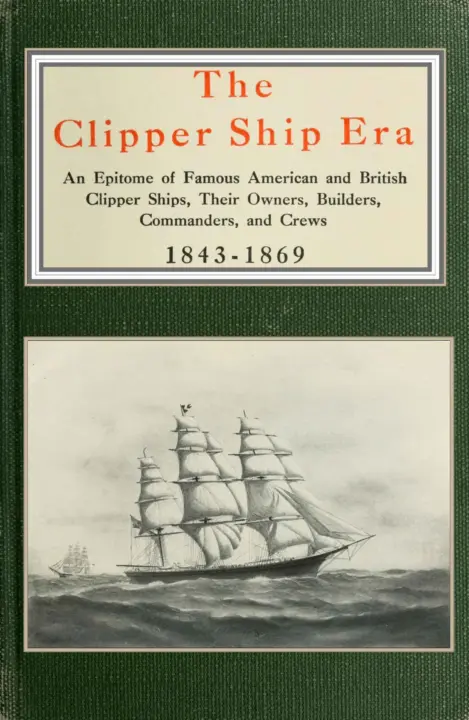
"The Clipper Ship Era" by Arthur H. Clark is a historical account written in the early 20th century. This work chronicles the thriving period of American and British clipper ships from the 1840s to the late 1860s, detailing their construction, speed, and significance in maritime history. The book likely highlights the technological advancements in shipbuilding, the cultural impacts of these vessels, and notable figures such as shipbuilders and captains from that era. The opening of the book introduces the Clipper Ship Era, noting that it began in 1843, driven by increased demand for swift tea deliveries from China and spurred by the gold rushes. Clark discusses the evolution of sailing ships, specifically focusing on the transition from traditional ships to the more agile and faster clipper ships. He emphasizes the personal connection he has with many of these vessels and their builders, sharing insights into the races and competitions among shipbuilders and mariners that characterized this exciting period on the seas. Overall, the beginning sets the stage for a detailed exploration of the maritime innovations and historical context of the clipper ships, laying a foundation for the chapters that follow.
Introduction adapted from the source catalogue; source summaries may be automatically generated.
Free to read · English · 98,778 words · No account needed
MAKE TIME FOR A GOOD BOOK
On by default. Untick to stop anonymous reading totals. Each page counts after 10 seconds in view. How this works.
Anonymous counting is on unless you have switched it off.
For an average of the two fastest passages by one ship, the record of the Flying Cloud--two in 89 days each--stands at the head. The others are: the Andrew Jackson, 98 and 100--94½ days; Flying Fish, 92 and 98--95 days; Sword-Fish, 90 and 105--97½ days; David Brown, 98 and 103--101½ days; Westward Ho, 100 and 103--101½ days; Sea Witch, 97 and 108--102½ days; Contest, 108 and 97--102½ days; Herald of the Morning, 99 and 106--102½; Phantom, 101 and 104--102½ days; John Gilpin, 93 and 115--104 days; Romance of the Seas, 96 and 113--104½ days; Ringleader, 100 and 109--104½ days; Sweepstakes, 94 and 116--105 days; Flying Dutchman, 104 and 106--105 days; Flying Dragon, 97 and 114--105½ days; Surprise, 96 and 116--106 days; Young America, 105 and 109--107 days; Neptune’s Car, 100 and 112--106; Eagle, 103 and 111--107 days; Comet, 103 and 112--107½ days; Golden Gate, 102 and 113--107½ days; Golden City, 105 and 113--109 days; Flyaway, 106 and 112--109 days; Sea Serpent, 107 and 112--109½ days; Shooting Star, 105 and 115--110 days.
The fastest three passages in 1850-1860 were made by the Flying Cloud, 89, 89, 105--94⅓ days; Andrew Jackson, 89, 100, 102--97 days; Flying Fish, 92, 98, 105--98⅓ days; Westward Ho, 103, 106, 100--103 days; Sword-Fish, 90, 105, 116--103⅔ days; Sea Witch, 97, 108, 110--105 days; Young America, 105, 107, 110--107⅓ days; Surprise, 96, 116, 117--109⅔ days; Sea Serpent, 107, 112, 115--111⅓ days.
The best four passages were made by the Flying Cloud, 89, 89, 105, 108--97¾ days; Andrew Jackson, 89, 100, 102, 103--98½ days; Flying Fish, 92, 98, 105, 106--100¼ days.
By dividing this great race-course into sections, a further comparison of the relative speed of the clipper ships may be obtained. Thus the following separate runs were made during the years in question:
From Sandy Hook to the equator: Great Republic, 16 days; Flying Cloud, Northern Light, Sea Serpent, Storm (barque), White Swallow, 17 days; Adelaide, Jacob Bell, Surprise, Sweepstakes, 18 days; Atlanta, Flying Fish, Golden Gate, Hornet, Samuel Russell, Tingqua, 19 days; Archer, Antelope, Climax, Courier, Comet, David Brown, Hazard, Sirocco, Tornado, White Squall, 20 days. In February, 1858, the Stag Hound, commanded by Captain Hussey, made the run from Boston Light to the equator in the phenomenal time of 13 days, eclipsing all records.
From Cape St. Roque to 50° S.: Samuel Russell, 16 days; Hornet, Ocean Pearl, 17 days; Bald Eagle, Comet, Electric, Hurricane, Ocean Express, Raven, 18 days; Electric Spark, Galatea, Governor Morton, John Gilpin, Sovereign of the Seas, Sword-Fish, Witch of the Wave, 19 days; Aurora, Flying Fish, Golden Gate, John Wade, Mandarin, North America, Panama, Ringleader, Seaman, Sea Witch, Skylark, Trade Wind, 20 days.
From 50° S. in the Atlantic to 50° S. in the Pacific: Young America, 6 days; Flying Fish, Flying Cloud, Robin Hood, 7 days; Flying Dutchman (twice), Herald of the Morning, Stag Hound, Sword-Fish, 8 days; Mary L. Sutton, Sovereign of the Seas, Great Republic, 9 days; Atlanta, Golden City, Hornet, Snap Dragon (barque), Sweepstakes, Typhoon, Whistler, 10 days.
Your reading position is saved on this browser. Take it to another device with a library code. Reading pages adapt to text, rather than matching a printed edition.
BEHIND THE BOOK
This eBook is for the use of anyone anywhere in the United States and most other parts of the world at no cost and with almost no restrictions whatsoever. You may copy it, give it away or re-use it under the terms of the Project Gutenberg License included with this eBook or online at www.gutenberg.org. If you are not located in the United States, you will have to check the laws of the country where you are located before using this eBook. Read the source licence.
The original source file, including credits and licence, is retained by this library. Request an original-format copy at no charge. Please include the book title and Project Gutenberg identifier #69154.
KEEP YOUR CURIOSITY GOING
Cécile Tormay

Moritz Busch
John L. Ransom
Frances Wright
Cécile Tormay

Mabel Potter Daggett